
Thigh Exercises at Home: Quad and Hamstring Workout
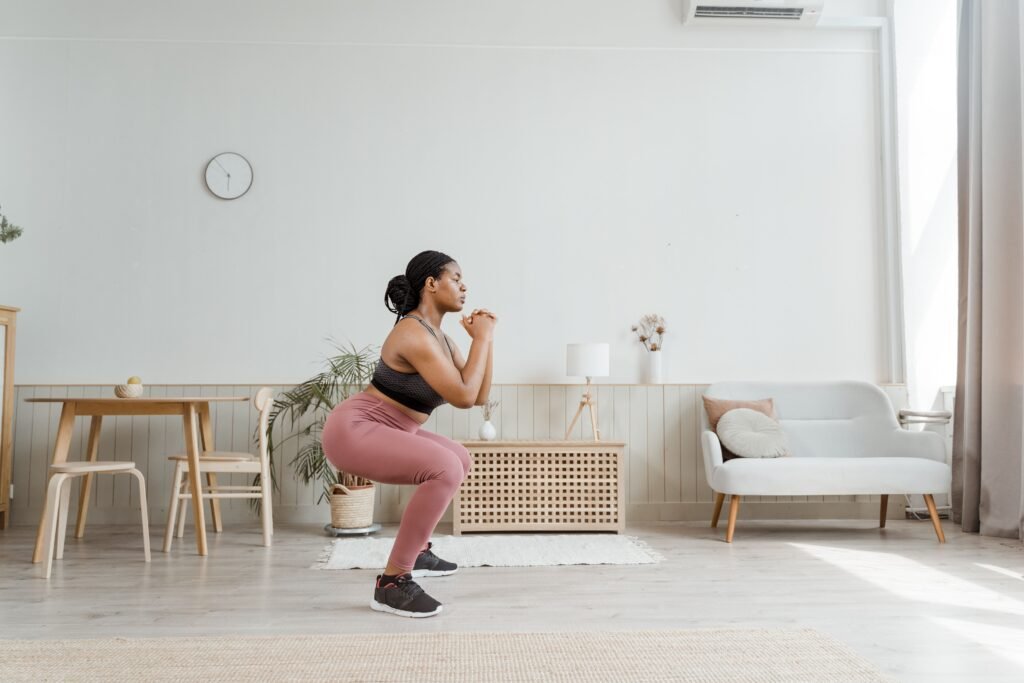
A long list of thigh exercises does not solve the main problem: you still need to know which movements train the front of the thigh, which train the back, and how to progress when the easiest version stops being challenging.
The thigh exercises at home in this guide use four complementary movement patterns to train the quadriceps and hamstrings without gym machines. Start with body weight and household support, then add a backpack, resistance band or sliders when appropriate.
Quick Answer
For a balanced home thigh workout, choose:
- One bilateral squat
- One unilateral knee-dominant exercise
- One hip-hinge exercise
- One hamstring bridge or curl
Perform 2–3 sets of each movement. Stop with approximately two controlled repetitions available and train the routine one to three times per week, depending on your wider program and recovery.
Squats and split squats provide useful front-of-thigh work, but they do not remove the need for a deliberate hamstring movement.
What Counts as the Thigh?
The thigh is the area between the hip and knee. Its main training regions include:
- Quadriceps: the muscles on the front of the thigh that extend the knee
- Hamstrings: the muscles on the back of the thigh that flex the knee and assist hip extension
- Adductors: the inner-thigh muscles that help control and move the leg toward the body
This Hub concentrates on the quadriceps and hamstrings because they form the main front-and-back framework of a general thigh workout. It does not attempt to replace dedicated inner-thigh, glute or lower-leg training.
This guide ends at the knee. To train the calves, front of the shin and outer lower leg as a separate system, use a balanced lower-leg routine covering the back, front and outside of the lower leg.
The quadriceps include the vastus lateralis, vastus medialis, vastus intermedius and rectus femoris. The hamstring group comprises the semimembranosus, semitendinosus and biceps femoris.
For a session extending beyond the thigh, use a broader home leg-training framework covering the hips, thighs and lower legs.
Choose Four Movement Patterns
A complete routine does not require a separate isolation exercise for every muscle. It requires complementary movement patterns.
| Movement Pattern | Primary Role | Beginner Example | Progression Example |
|---|---|---|---|
| Bilateral squat | Trains both thighs through knee and hip flexion | Chair Squat | Heel-Elevated or Loaded Squat |
| Unilateral knee-dominant movement | Adds single-leg control and exposes side-to-side differences | Supported Split Squat | Loaded or Bulgarian Split Squat |
| Hip hinge | Loads the posterior thigh through hip movement | Wall Hip Hinge | Backpack or Single-Leg RDL |
| Bridge or knee-flexion movement | Adds more direct hamstring work | Short-Lever Bridge | Walkout or Slider Curl |
This structure keeps the exercise list short while covering the major functions that a squat-only routine can miss.
Front-of-Thigh Exercises
The front-of-thigh section combines a bilateral squat with a supported unilateral movement.
1. Chair Squat or Bodyweight Squat
Sets and reps: 2–3 sets of 8–12 repetitions
Rest: 60 seconds
Stand in front of a stable chair with your feet around hip- to shoulder-width apart. Sit down under control, keep your feet planted and stand without bouncing off the seat.
Use a higher chair if you cannot control the descent. When the chair version becomes easy, lower the sitting surface or move to a free-standing bodyweight squat.
Stop the set if you begin dropping onto the chair, shifting heavily to one side or losing control of your knee and foot positions.
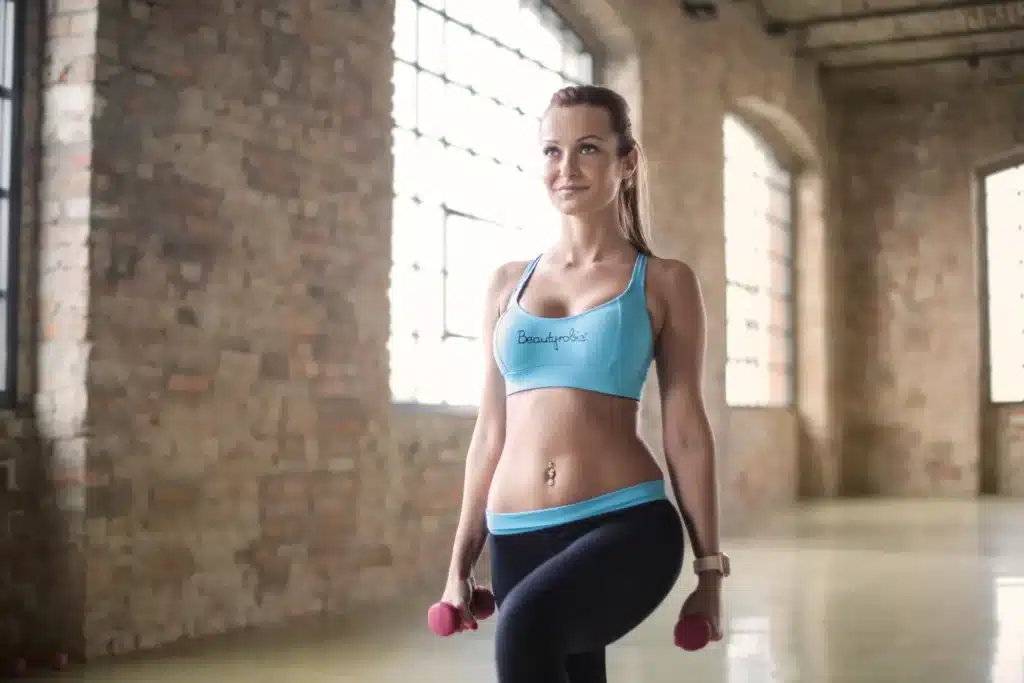
Try 4 vastus lateralis exercises at home to train your outer quads with dumbbells, step-downs, and Spanish squats. Build better quad control without machines.
2. Supported Split Squat
Sets and reps: 2 sets of 6–10 repetitions per side
Rest: 60–75 seconds
Stand in a split stance beside a wall, counter or sturdy chair. Lower vertically through a range you can control, then drive through the front foot to return.
Support reduces the balance demand so you can concentrate on the working leg. Begin with a shorter range if necessary and gradually increase depth before removing support.
Record the repetitions for each side separately rather than assuming both sides are equal.
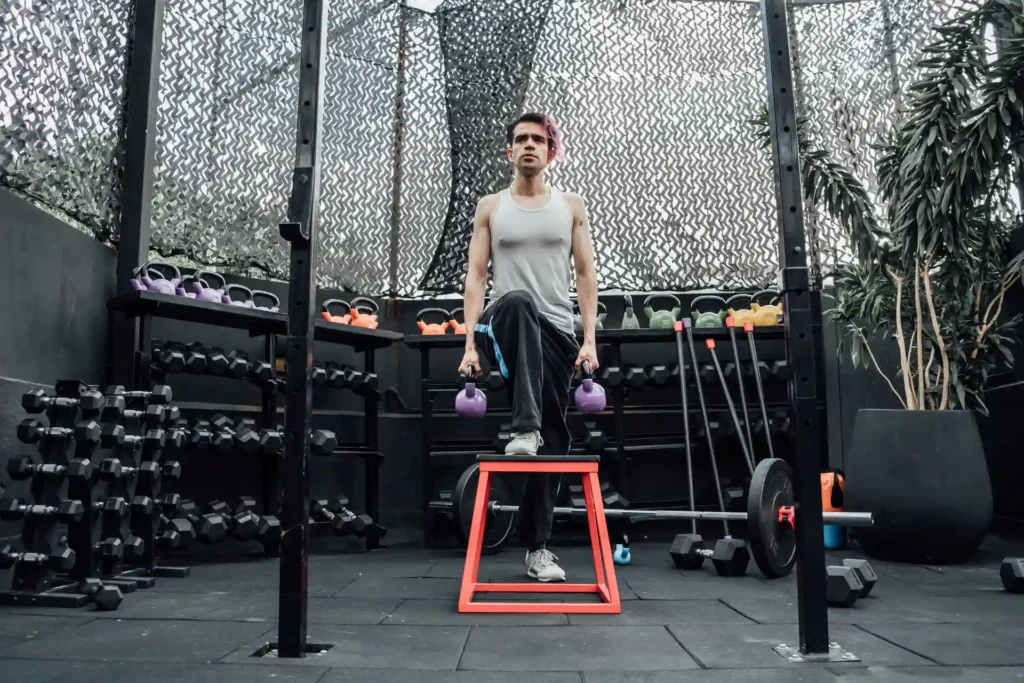
Use these vastus medialis exercises to train the inner quad with squats, step-ups, wall sits, and banded knee extensions in a simple home routine.
Why Squats Are Not the Entire Routine
Squats train several thigh muscles, but no single variation guarantees equal development of every region. Exercise depth, leverage, technique, external load and individual structure all affect the movement.
That is why this routine also includes a hip hinge and a hamstring-focused bridge. The objective is balanced movement coverage, not perfect isolation of every muscle.
Try three rectus femoris exercises at home using a band and ankle weight. Build a 15-minute routine that complements squats without a leg extension machine
Back-of-Thigh Exercises
The back-of-thigh section includes one hip-hinge movement and one bridge or curl pattern.
3. Backpack Romanian Deadlift
Sets and reps: 2–3 sets of 8–12 repetitions
Rest: 60–75 seconds
Hold a securely loaded backpack close to your body. Soften your knees, move your hips backward and lower the load only as far as you can maintain a controlled trunk position. Stand by driving the hips forward rather than turning the movement into a squat.
If the loaded version is too difficult, practise a wall hip hinge:
- Stand a short distance in front of a wall with your back facing it.
- Push your hips backward until they lightly touch the wall.
- Step slightly farther away as the pattern becomes more consistent.
Feeling some work in the glutes does not mean the hinge has failed. Reconsider the variation when control is repeatedly lost, the movement becomes squat-dominant or the intended posterior-thigh work is consistently absent.
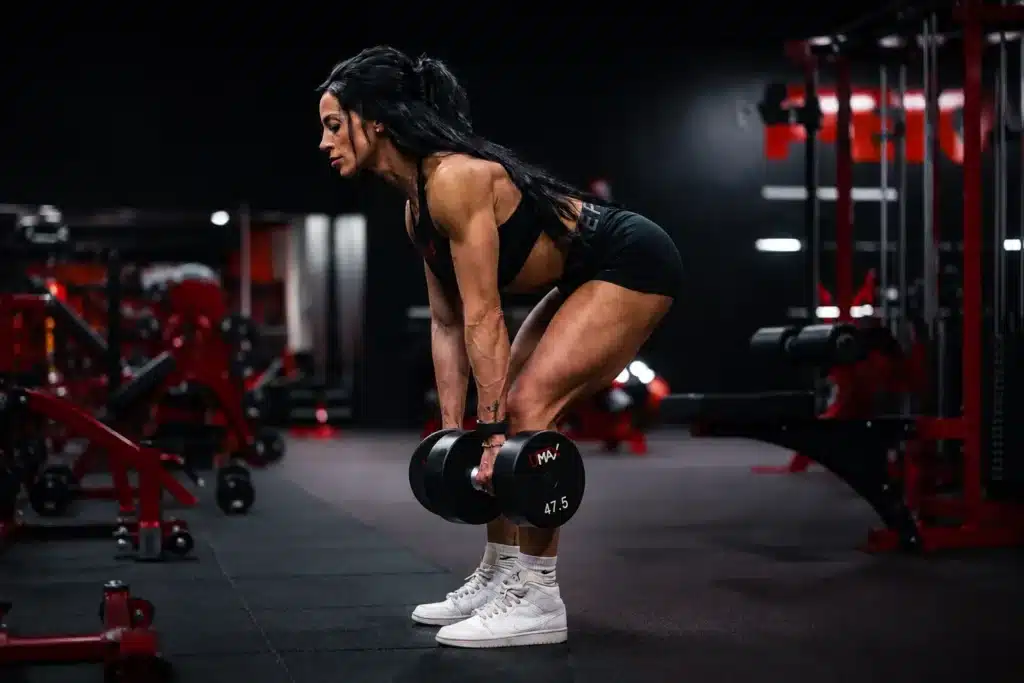
RDLs only hitting your glutes or lower back? Use 3 semimembranosus exercises at home to train hip extension and knee flexion without a leg-curl machine.
4. Long-Lever Hamstring Bridge
Sets and reps: 2 sets of 8–15 repetitions
Rest: 45–60 seconds
Lie on your back with your heels positioned farther from your hips than in a standard glute bridge. Press the heels down, raise the hips through a controlled range and lower without dropping.
If you mainly feel the movement in the glutes, check:
- whether your heels are too close to your hips;
- whether you are excessively arching your lower back;
- whether the range is larger than you can control;
- whether a short-lever bridge is currently more appropriate.
A short-lever bridge is a valid starting point. It becomes limiting only when it no longer provides a meaningful challenge.
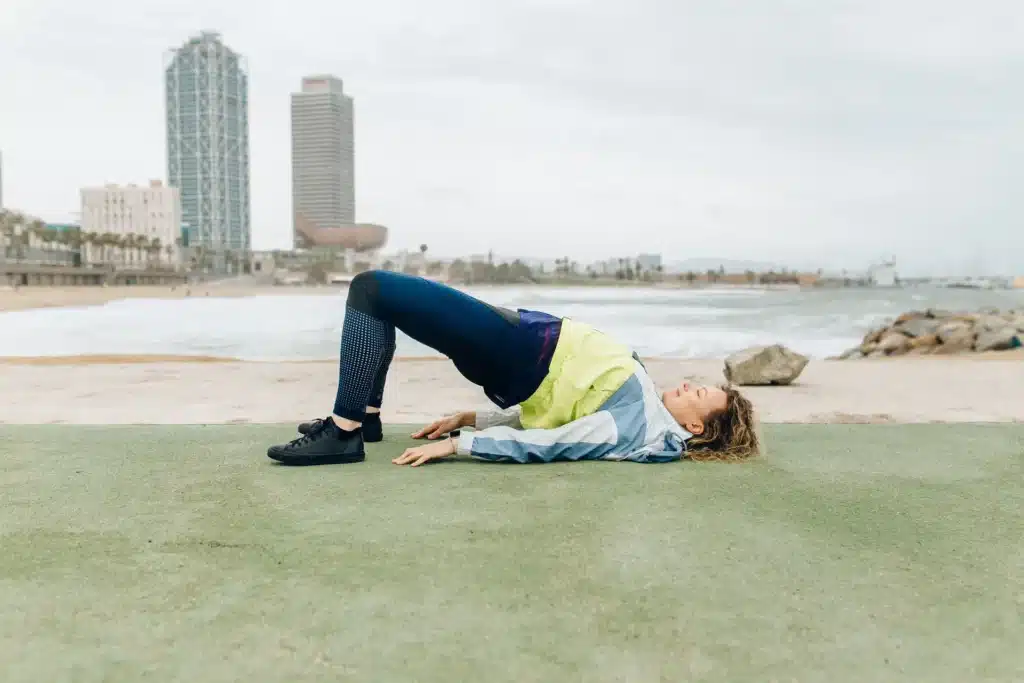
Use these semitendinosus exercises at home to train knee flexion without a leg curl machine. Includes slider curls, assisted Nordics, and walkouts.
Bridging the Hamstring Difficulty Gap
A basic bridge may eventually become too easy, while a Nordic curl may be far beyond your current ability. Use intermediate variations:
- Short-Lever Hamstring Bridge
- Long-Lever Hamstring Bridge
- Hamstring Walkout
- Two-Leg Slider Hamstring Curl
- Single-Leg Slider Hamstring Curl
- Assisted Nordic Hamstring Curl
Nordic curls are optional. Use them only when you have adequate strength and a stable setup. If your floor does not allow sliders, use hamstring walkouts or progress the bridge through range, tempo and unilateral loading.
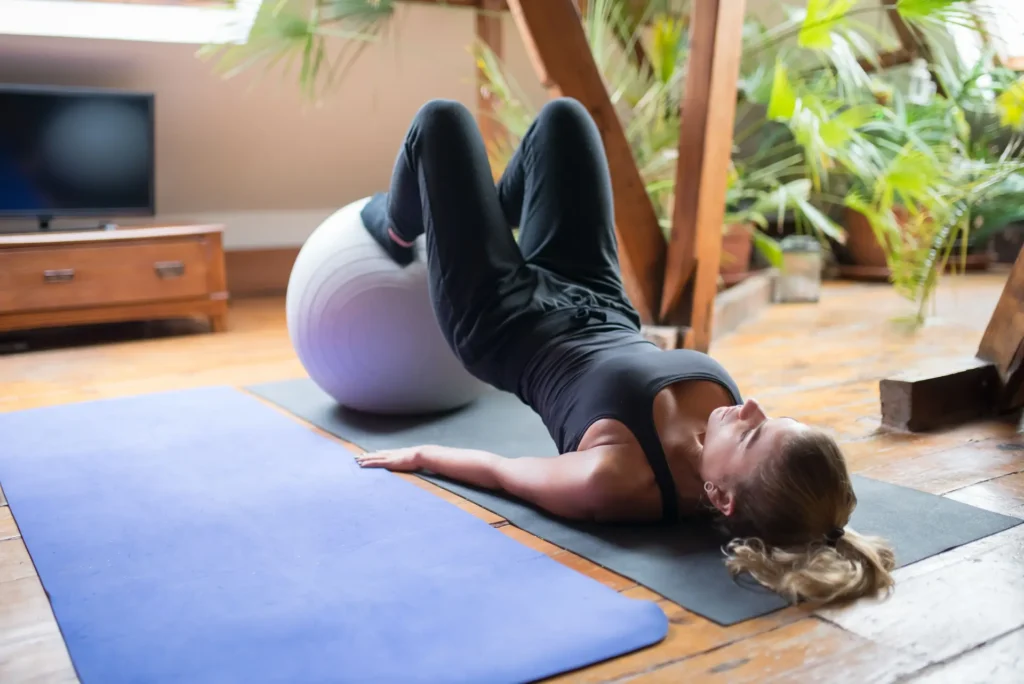
Use 3 biceps femoris exercises at home to train the long and short heads with a dumbbell hinge, band curl and Swiss-ball curl.
18–25-Minute Thigh Workout at Home
Perform the exercises in the listed order.
| Exercise | Sets | Reps | Rest | Easier Option |
|---|---|---|---|---|
| Chair Squat or Bodyweight Squat | 2–3 | 8–12 | 60 sec | High Chair Sit-to-Stand |
| Supported Split Squat | 2 | 6–10 each side | 60–75 sec | Supported Partial-Range Split Squat |
| Backpack Romanian Deadlift | 2–3 | 8–12 | 60–75 sec | Wall Hip Hinge |
| Long-Lever Hamstring Bridge | 2 | 8–15 | 45–60 sec | Short-Lever Bridge |
Choose versions that allow controlled repetitions with approximately two repetitions remaining. Do not force the listed number if your technique changes first.
An American College of Sports Medicine overview of 137 systematic reviews concluded that progressive resistance training improves strength, muscle size and physical function in healthy adults. It also identified 2–3 sets and training through a complete range of motion among the variables associated with strength development. The review supports the general training framework used here, but it did not test this exact home routine or these exercise combinations.
Technical Stop
End a set when:
- the range shortens noticeably;
- you can no longer control the repetition;
- you shift repeatedly toward one side;
- the intended movement pattern changes;
- discomfort is new, worsening or alters how you move.
You do not need to take every set to complete muscular failure. A systematic review and meta-analysis comparing failure and non-failure resistance training found no overall requirement to reach repetition failure for strength or hypertrophy. This supports stopping before control breaks down, although it does not validate an exact two-repetition reserve target for every exercise or person.
Squats, split squats and hinging movements involve the hips, but this thigh routine does not provide complete glute-specific training. For that purpose, use a separate home glute routine that combines hip extension, lateral movement and single-leg control.
10-Minute Minimum Session
When a full workout is not realistic, perform:
| Exercise | Sets | Reps |
|---|---|---|
| Chair Squat | 2 | 8–12 |
| Backpack Romanian Deadlift | 2 | 8–12 |
| Long-Lever Hamstring Bridge | 2 | 8–15 |
This preserves a bilateral knee-dominant movement, a hip hinge and direct hamstring work without adding several hurried exercises.
What Equipment Do You Need?
The default routine can be started with:
- floor space;
- a wall;
- a stable chair;
- a backpack that can hold a secure load.
Optional additions include:
- resistance bands;
- sliders or folded towels on a suitable surface;
- dumbbells;
- a stable step or low platform.
Thigh exercises without equipment are useful initially, but not every long-term progression is equally practical without resistance. A backpack, band or stable household support can make progressive loading easier.
Do not use doors, unstable furniture or improvised anchors that may move under force.
How to Progress the Quad Exercises
Use two related ladders rather than adding unlimited squat repetitions.
Bilateral squat progression
High Chair Sit-to-Stand → Lower Chair Sit-to-Stand → Counterbalanced Squat → Bodyweight Squat → Heel-Elevated Squat → Loaded Goblet or Cyclist Squat
Unilateral quad progression
Supported Partial-Range Split Squat → Supported Full-Range Split Squat → Hands-Free Split Squat → Loaded Split Squat → Bulgarian Split Squat
Increase your controlled range before assuming that more repetitions are always the best progression. A systematic review and meta-analysis comparing full and partial ranges of motion reported greater average strength and lower-body hypertrophy adaptations with full-range training.
That finding does not mean a beginner should force depth that cannot yet be controlled. Begin with a stable available range, then expand it gradually as mobility, strength and technique allow.
How to Progress the Hamstring Exercises
Progress the hip hinge and bridge patterns separately.
Hip-hinge progression
Wall Hip Hinge → Unloaded Romanian Deadlift → Backpack Romanian Deadlift → Wall-Supported Single-Leg Romanian Deadlift → Loaded Single-Leg Romanian Deadlift
Bridge and curl progression
Short-Lever Bridge → Long-Lever Bridge → Hamstring Walkout → Two-Leg Slider Curl → Single-Leg Slider Curl → Assisted Nordic Curl
A small increase in controlled range or leverage may be more appropriate than immediately adding weight.
When to Move to a Harder Version
Progress when:
- you reach the top of the prescribed range;
- you repeat that performance across at least two sessions;
- approximately two controlled repetitions remain;
- range and tempo stay consistent;
- there is no growing left-to-right difference;
- there is no new, worsening or movement-altering discomfort.
Change only one variable at a time: range, variation or load. Reaching the target once shows one successful session, not stable mastery.
Record the Left and Right Sides Separately
Start unilateral movements with the less capable side, record its controlled repetitions and match that work on the stronger side.
Track:
- exercise version;
- controlled range;
- repetitions;
- external load;
- support used;
- repeated side-to-side differences.
A small difference on one day does not automatically require extra training. Look for a pattern across several sessions.
How Often Should You Train Your Thighs?
One to three weekly sessions can work depending on session difficulty, total leg training and recovery. Beginners can commonly begin with one or two exposures and adjust from there.
Leave more time between sessions when:
- you recently increased range or load;
- the routine was performed close to technical failure;
- another workout contains substantial squatting or hinging;
- movement quality remains below its normal level.
Walking is useful daily activity, but it does not automatically replace progressive strength work. Soreness is also not the only measure of whether a workout was effective or whether you have recovered.
Adjust the Workout to Your Current Condition
| Current Condition | Decision | Adjustment |
|---|---|---|
| Normal energy and usual movement quality | Train | Perform the planned session |
| Mild fatigue but normal movement | Reduce | Remove one set, use an easier version or leave more repetitions available |
| Poor readiness after demanding training | Recover | Use comfortable walking or easy movement without creating another hard workout |
| New or worsening pain, swelling, functional limitation or altered movement | Stop | End the session and seek qualified guidance when appropriate |
Exercise versions should be selected according to ability, leverage, body weight, training history and recovery—not sex alone.
Common Mistakes
1. Training Only the Front of the Thigh
Squats and lunges are useful, but a complete thigh session also needs a deliberate hip hinge or knee-flexion movement.
2. Adding Repetitions Forever
Moving from 20 to 50 or 100 easy repetitions may add fatigue without solving the need for greater difficulty. Progress range, leverage, unilateral demand or external load when appropriate.
3. Jumping Directly From Bridges to Nordic Curls
Use long-lever bridges, walkouts and slider curls to bridge the large difficulty gap.
4. Treating Glute Sensation as Automatic Failure
Many thigh exercises involve neighbouring muscles. Judge the movement by its setup, range, control and intended pattern—not sensation alone.
5. Letting Balance Limit the Working Leg
Use a wall or stable chair when balance prevents the thigh from receiving useful work.
6. Choosing Too Many Similar Exercises
Four complementary movements usually produce a more usable routine than ten variations repeating the same task.
Frequently Asked Questions
What Are the Best Thigh Exercises?
A practical combination is a squat, supported split squat, Romanian deadlift and hamstring bridge or curl. Together, they cover bilateral knee-dominant work, unilateral control, hip hinging and more direct hamstring work.
Do Squats Train the Whole Thigh?
Squats train several thigh muscles, especially the quadriceps, and also involve the hips. However, they do not replace deliberate hip-hinge and knee-flexion work for balanced hamstring training.
Can I Train My Quads and Hamstrings Together?
Yes. Most beginners can train them in the same workout by combining one or two quad-focused movements with one hinge and one bridge or curl.
Can I Build My Thighs at Home Without Equipment?
You can establish technique and gain strength with body-weight variations. As those movements become easy, use a backpack, band, greater range, slower tempo or unilateral version.
Is Walking Enough to Strengthen My Thighs?
Walking is valuable daily activity, but its load may become too familiar to function as complete progressive strength training.
Can Thigh Exercises Reduce Fat From My Thighs?
Thigh exercises can improve strength, control and muscular development, but they cannot determine where body fat is lost. Visible changes also depend on overall energy balance, genetics, training history and time.
What Should I Do if One Thigh Is Weaker?
Start unilateral exercises with the less capable side and match its controlled work on the stronger side. Track the difference across multiple sessions rather than responding to one uneven workout.
Build a Balanced Thigh Routine
Effective thigh strengthening exercises do not require an enormous list. Begin with one bilateral squat, one supported unilateral movement, one hip hinge and one hamstring bridge or curl.
Use easier versions when necessary, progress one variable at a time and judge improvement through control, range, repetitions and load—not soreness or appearance alone.
Medical disclaimer: This article is intended for educational and informational purposes only. It is not intended as a substitute for medical advice. For health advice, contact a licensed healthcare provider.