
Back Exercises at Home: How to Build a Complete Back Workout
Finding more back exercises is easy. The harder part is deciding which movements have different jobs, which ones suit your equipment, and which row variations simply repeat work you already have.
Many back workouts at home try to solve this problem by adding more exercises. This guide uses five clear roles instead: a vertical pull, a horizontal row, a hip hinge, and two lighter shoulder-blade control exercises.
Use this guide within a broader upper-body workout structure built around home exercises and simple equipment. For pressing work, follow the separate home chest-training guide for organizing push-ups, dumbbell presses, bands, and chest-focused routines.
Quick Answer
You don’t need every type of row to build a complete home back workout.
Choose:
- One vertical pull or the closest safe substitute;
- One main horizontal row;
- One controlled hip hinge;
- One shoulder-blade retraction exercise;
- One light lower-trap control exercise.
This guide uses Band-Assisted Pull-Ups, Single-Arm Dumbbell Rows, Dumbbell Romanian Deadlifts, Prone W Raises, and Prone Y Raises.
Think of this as a practical selection system, not a rule that every person must perform exactly five movements.
What Makes a Complete Back Workout?
The best back exercises have separate roles. Adding another exercise only helps when it contributes something your current routine is missing.
| Movement Role | What It Adds | Exercise Used Here |
|---|---|---|
| Vertical pull | Downward pulling and shoulder adduction | Band-Assisted Pull-Up |
| Horizontal pull | Measurable rowing strength | Single-Arm Dumbbell Row |
| Hip hinge | Posterior-chain loading and trunk control | Dumbbell Romanian Deadlift |
| Scapular retraction | Controlled movement toward the spine | Prone W Raise |
| Lower-trap control | Controlled arm-raised shoulder-blade movement | Prone Y Raise |
Research comparing traditional, suspension, and towel pull-ups found involvement from the lats, middle trapezius, posterior deltoids, and elbow flexors. The activity patterns were not identical, so the study supports using pull-ups as vertical pulls without proving that one version is best for everyone. See the electromyographic comparison of pull-up variations.
How to Choose Back Exercises
Start With One Main Pull
Use a Band-Assisted Pull-Up when you have a properly installed bar. Keep the range controlled instead of chasing repetitions as the movement gets shorter.
If you have a safe high anchor, a Half-Kneeling Band Lat Pulldown can fill a related role. Chin-ups and lat pulldowns have both similarities and differences, so treat the pulldown as an alternative rather than an exact copy. See the chin-up and lat-pulldown comparison.
Without a bar or safe high anchor, use a Dumbbell Three-Point Row to Hip as a practical shoulder-extension-biased option. It is still a row, not a true vertical pull.
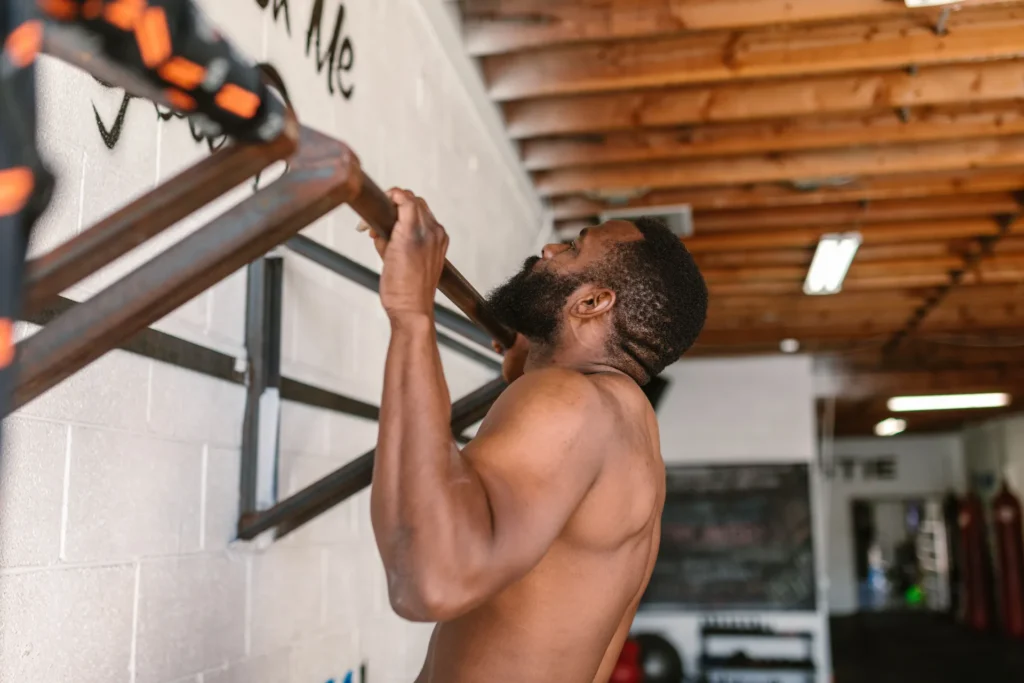
Build a wider back with these lat workouts at home: five pull-up, ring-row, dumbbell, and band exercises in a complete 20-minute routine.
Add One Main Row
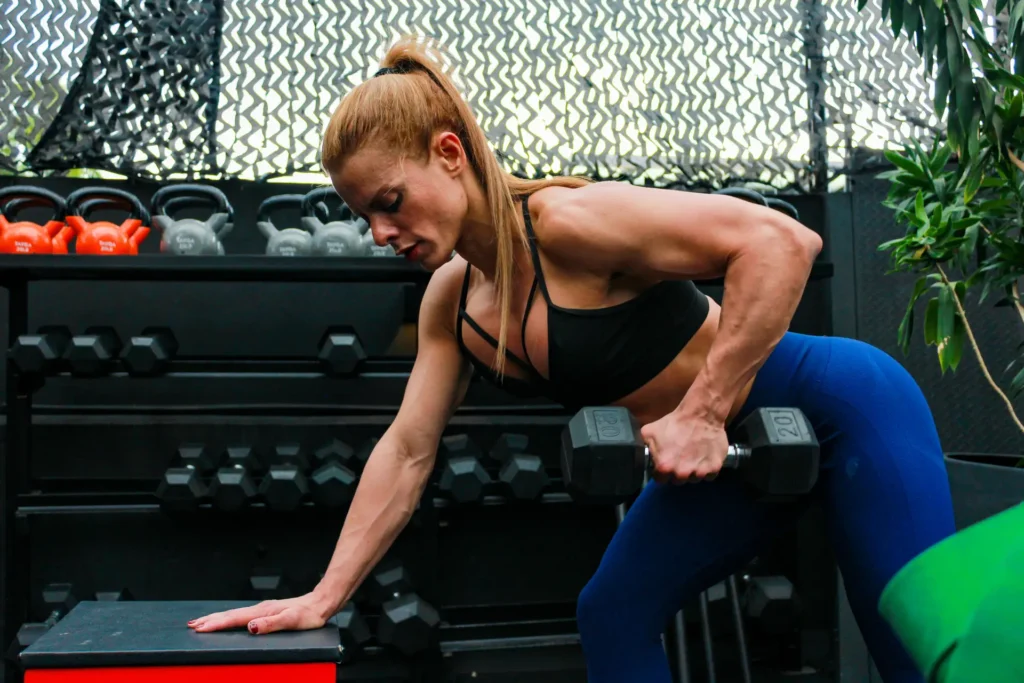
The Single-Arm Dumbbell Row gives you a horizontal pull that is easy to measure. Record the weight, repetitions, usable range, and any clear difference between sides.
Different rows create different stability and trunk demands. A study comparing inverted, bent-over, and one-arm cable rows supports choosing a row by its setup and purpose rather than treating every variation as interchangeable. It did not test this exact dumbbell version. See the comparison of different rowing exercises.
Use a Hinge Without Calling It a Lat Exercise
The Dumbbell Romanian Deadlift loads the posterior chain while your trunk maintains position. It does not replace a pull-up or row.
A review of deadlift variations found that Romanian deadlifts involve the posterior chain and erector spinae, while hamstring activity can be more prominent. That supports using the movement as a hip hinge—not describing it as a lower-back isolation exercise. See the systematic review of deadlift variations.
Direct trunk training belongs in the separate home abdominal-training guide for building core control with bodyweight, dumbbells, and resistance bands.
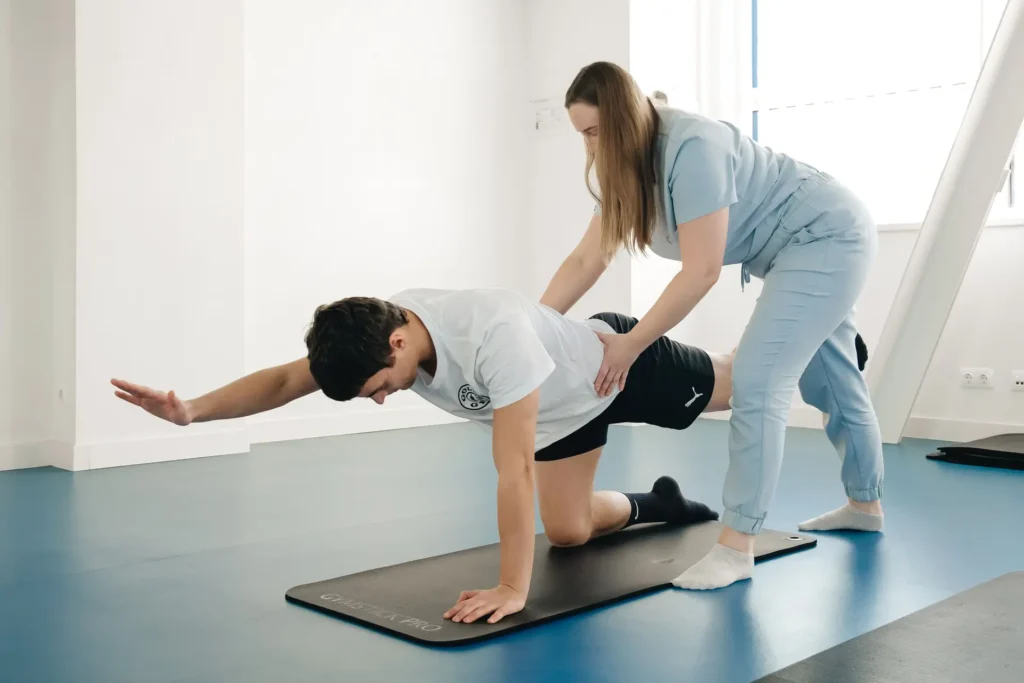
Try these lower back exercises at home with five controlled bodyweight and dumbbell moves. Build strength, improve hinge control, and follow a 15-minute workout.
Finish With Shoulder-Blade Control
Prone W Raises train retraction without adding another heavy row. Prone Y Raises add a lighter arm-raised control pattern.
Research shows that arm position and pulling direction can change the relative activity of the rhomboids and trapezius. This gives these movements a different purpose from heavy rows, but it does not mean either one perfectly isolates a single muscle. See the research on pulling direction and rhomboid activity and shoulder retraction positions.
For direct shoulder work, use the separate home shoulder-training guide for organizing presses, lateral raises, rear-shoulder exercises, and rotator-cuff control.
Choose Back Exercises by Equipment
Back exercises with dumbbells and resistance bands work best when each tool has a clear job. Dumbbell back exercises provide measurable loading, while resistance band back exercises make pulling direction easier to adjust.
| Equipment Available | Main Pull | Main Row | Control Work |
|---|---|---|---|
| Pull-up bar and dumbbells | Assisted Pull-Up | Single-Arm Dumbbell Row | Prone W/Y Raise |
| Rings and dumbbells | Ring Pull or Pull-Up | Ring Row or Dumbbell Row | Prone W/Y Raise |
| Dumbbells and safe high anchor | Band Lat Pulldown | Dumbbell Row | Pull-Apart or Prone Raise |
| Dumbbells only | Three-Point Row to Hip | Single-Arm Dumbbell Row | Prone W/Y Raise |
| Resistance band only | Anchored Band Pulldown | Band Row | Band Pull-Apart |
| No safe high anchor | Do not improvise a vertical pull | Controllable Row | Floor-based control work |
A bench is optional. You can use a stable support or perform a controlled three-point standing row.
Begin each band exercise with light tension already present. Use a high anchor for a pulldown and an anchor around chest height for a horizontal row. Choose resistance that lets you control both directions without being pulled back to the starting position.
Complete Home Back Workout
This full back workout routine covers five movement roles without filling the session with repeated rows.
| Exercise | Sets | Reps | Rest | Effort Target |
|---|---|---|---|---|
| Band-Assisted Pull-Up | 2–3 | 5–8 | 75 sec | Stop with about 2 controlled reps available |
| Single-Arm Dumbbell Row | 2–3 | 8–12 each side | 60–75 sec | Stop before the torso rotates or range shortens |
| Dumbbell Romanian Deadlift | 2 | 8–10 | 60–75 sec | Stop before the hinge or back position changes |
| Prone W Raise | 2 | 8–12 | 30–45 sec | Keep the neck relaxed and pause briefly |
| Prone Y Raise | 2 | 8–12 | 30–45 sec | Stop before shrugging replaces control |
Perform the most demanding pull first, followed by the row and hinge. Finish with the lighter control exercises.
Use the routine once or twice per week, depending on how much pulling work appears elsewhere in your training. Repeat it when your grip, elbows, and pulling performance have returned to normal.
This is a practical training template. The exact five-exercise combination has not been tested as a single routine.
Avoid Redundant Rows
Don’t add a second row just because it has a different name. Keep it only when it changes the elbow path, pulling direction, stability demand, or progression method.
If your Three-Point Row to Hip and Single-Arm Dumbbell Row use the same path and target position, remove one.
Try these rhomboid exercises at home to train shoulder-blade retraction with band, bodyweight, and dumbbell moves. Build upper-back control in 15 minutes.
12–15-Minute Minimum Session
| Exercise | Sets | Reps | Rest |
|---|---|---|---|
| Main pull or available substitute | 2 | 5–8 or 8–12 | 60–75 sec |
| Single-Arm Dumbbell Row | 2 | 8–12 each side | 60 sec |
| Dumbbell Romanian Deadlift | 2 | 8–10 | 60 sec |
If shoulder-blade control is the priority, replace the Romanian deadlift with two sets of Prone W Raises.
On a low-energy day, keep the same movement roles but remove one set, use an easier version, or stop farther from failure. There is no need to replace the entire routine with new exercises.
How to Progress Your Back Workout
| Situation | Progression |
|---|---|
| You reach the top of the range with stable form | Add a small amount of resistance |
| Your dumbbells are too light | Add reps, a pause, slower lowering, or more controlled range |
| Assisted pull-ups become easier | Reduce assistance gradually |
| Band work becomes easy | Increase starting tension slightly or use a stronger band |
| Your row loses its top position | Reduce the load instead of adding another row |
| One side completes fewer clean reps | Start with that side and match it on the other side |
Record the exercise version, resistance, completed repetitions, and any clear side-to-side difference. Change one variable at a time.
Replace an exercise when its setup is unsafe, it repeatedly causes joint discomfort, its current version can no longer be progressed, or another movement fills a genuinely missing role. Don’t replace it simply because one session produced no soreness.
Troubleshooting Your Back Exercises
| Problem | Check First | Adjustment |
|---|---|---|
| You cannot feel your back | Load and range | Reduce the load and keep every repetition consistent |
| Your arms take over | Elbow path | Move the elbow instead of curling the weight |
| Your forearms fail first | Grip pressure | Avoid unnecessary squeezing and shorten the set |
| Your shoulders shrug | Difficulty | Reduce the range or resistance |
| The band feels ineffective | Starting tension | Adjust your distance from the anchor |
| The band snaps you back | Resistance | Use a lighter band and control the return |
| You are not sore | Training record | Compare resistance, reps, range, and control |
| Several rows feel identical | Exercise purpose | Remove the version with no distinct role |
Muscle sensation can help you adjust an exercise, but controlled progress tells you more than soreness alone.
Rows and pull-ups already involve the biceps and forearms. Use the separate home arm-training guide covering biceps, triceps, and forearm exercises with simple equipment when those areas need direct work.

Try these trap workouts at home with dumbbells, bands, and bodyweight moves to train upper, middle, and lower traps in a 20-minute routine.
Safety and Stop Rules
- Confirm that pull-up bars and ring anchors are securely installed.
- Inspect bands and attachment points before every session.
- Do not load unstable furniture, doors, or improvised supports.
- Stop when your range, body position, or equipment stability changes.
- Stop for sharp pain, numbness, tingling, or unusual joint symptoms.
This is a general strength-training guide, not a pain-treatment or rehabilitation plan.
Direct external-rotation work sits outside this concise routine. Use the guide below when shoulder extension, adduction, or external rotation needs focused training.
Train both muscles with 4 teres major and minor exercises at home. Follow a 20-minute pull-up, row, and external-rotation workout with simple gear.
Frequently Asked Questions
What Is the Best Workout for Your Back?
Lorem ipsum dolor sit amet, The best back workout is one you can perform safely, record, and progress. Combine a main pull, a row, a hinge, and limited shoulder-blade control instead of repeating several similar rows.
How Many Back Exercises Do You Need?
Three exercises can form a useful minimum session. Four or five allow room for additional control work. Distinct roles matter more than a fixed number.
Is There One Best Back Exercise?
No. Pull-ups, rows, and Romanian deadlifts solve different training problems and cannot fully replace one another.
Can You Train Your Back at Home Without a Pull-Up Bar?
Yes. Use a safely anchored band pulldown when possible. Without a bar or high anchor, combine a row toward the hip, a main horizontal row, a hinge, and floor-based control work.
Conclusion
A useful back workout needs movements with different jobs, not a long list. Choose one main pull, one row, one hinge, and limited shoulder-blade work, then progress one measurable variable at a time.
Medical disclaimer: This article is intended for educational and informational purposes only. It is not intended as a substitute for medical advice. For health advice, contact a licensed healthcare provider.