
Semitendinosus Exercises at Home: 3 Knee-Flexion Moves
By Zephyr · Published Jul 14, 2026
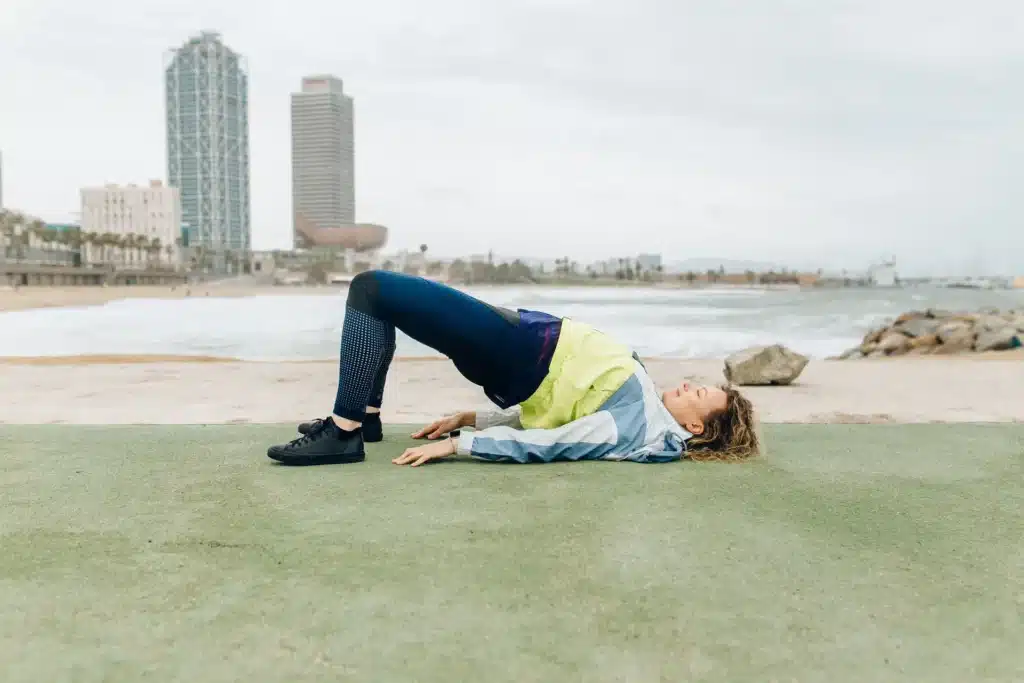
These semitendinosus exercises use three home-friendly knee-flexion movements: a slider hamstring curl, a band-assisted Nordic curl and a hamstring walkout. Together, they let you train the back of your thighs without a leg curl machine or a fully equipped gym.
The semitendinosus does not work alone, and no exercise can completely separate it from the semimembranosus, biceps femoris or other muscles involved in hip and knee movement. The practical goal is to give knee flexion a clear place in your training instead of relying entirely on squats, Romanian deadlifts and other hip-hinge exercises.
This is a focused strength routine, not a rehabilitation plan for hamstring pain, strains or tendon problems. Use it as one small part of the full home thigh workout with progression rules.
Quick Summary
- The semitendinosus is one of the hamstring muscles on the medial side of the back of the thigh.
- Semitendinosus muscle exercises can emphasize its two primary strength-training actions—knee flexion and hip extension—but they cannot completely isolate it from the other hamstrings.
- Hip hinges remain useful, but knee-flexion exercises give the hamstrings a different training task.
- This routine uses a slider curl, an assisted Nordic curl and a walkout instead of a leg curl machine.
- Start with a controllable range and progress through better control before adding resistance.
- Stop if an exercise causes sharp pain, increasing tendon discomfort or symptoms that change the way you move.
What Exercise Works the Semitendinosus?
An effective semitendinosus exercise bends the knee against resistance while allowing you to keep your hips, pelvis and foot position controlled. Slider curls, assisted Nordic curls and hamstring walkouts all meet that requirement without promising perfect muscular isolation.
The semitendinosus crosses both the hip and the knee. It helps extend the hip and flex the knee, which is why both hip hinges and leg-curl patterns can involve it. This dual role is described in the anatomical overview of how this posterior-thigh muscle contributes at both joints.
Romanian deadlifts and other hinges are still valuable, but they are not identical to resisted knee flexion. If your current leg training already contains several hinge movements, adding a controlled curl pattern can fill a task that your routine may be missing.
Exercise selection can shift relative emphasis across the hamstrings, but it cannot switch every surrounding muscle off. Keep your ankle comfortable and your foot stable rather than trying to isolate the semitendinosus by forcing an extreme toe angle.
3 Semitendinosus Exercises at Home
These three movements were selected for different roles. The slider curl establishes the basic knee-flexion pattern, the assisted Nordic introduces a more demanding eccentric task, and the walkout finishes the routine with a simple floor-based progression.
A review of hamstring exercise selection reported that hip-extension and knee-flexion movements can produce different relative activation patterns. Knee-flexion-oriented exercises have frequently shown greater relative semitendinosus involvement than some hip-extension movements, although the result depends on the exercise and testing method. See the review comparing how different movement patterns distribute work across the hamstring group.
An MRI-based exercise study also found that the tested knee-flexion conditions produced greater post-exercise T2 changes than the hip-extension condition, with the semitendinosus showing particularly large responses during knee flexion. This supports including curl-based movements in the routine, but it does not prove complete isolation or guarantee greater long-term growth. See the controlled comparison of hamstring recruitment during hip-extension and knee-flexion exercise.
If you also want a separate hip-extension block, the related home-training guide built around loadable hinge patterns and controlled single-leg work covers that role. The routine below remains centered on knee flexion so the two articles do not repeat the same training function.
1. Two-Leg Slider Hamstring Curl
Video: Dr. Beau Beard
Main Muscles Worked:
Hamstrings, with a knee-flexion emphasis.
Role in the Workout:
I would place this exercise first because the floor provides a stable setup and the movement is easy to scale. It lets you establish a smooth curl before moving to the more demanding assisted Nordic.
How to Do It:
- Lie on your back with your knees bent and your heels on towels or sliders. Keep your feet relaxed.
- Place your arms about 45 degrees away from your sides and press your palms into the floor for support.
- Lift your hips and slowly slide both heels away until you reach the longest range you can control.
- Pull your heels back toward your hips without letting your pelvis drop or your lower back overarch.
How It Should Feel:
You should feel the back of your thighs working as your heels travel away and pull back. The return should feel deliberate rather than like your hips are being dragged across the floor.
Practical Tip:
Towels usually work well on a smooth floor. On carpet, furniture sliders or firm plastic discs normally move more consistently. Reduce the distance your heels travel until you can keep your hips reasonably level throughout the repetition.
Troubleshooting:
- If your hips drop immediately, shorten the sliding range.
- If you mainly feel your calves, relax your feet and think about pulling through your heels.
- If your lower back arches, lower your hips slightly and keep your ribs down.
2. Band-Assisted Nordic Hamstring Curl
Video: Clench Fitness
Main Muscles Worked:
Hamstrings, with an eccentric knee-flexion emphasis.
Role in the Workout:
I would place this exercise second. The slider curl has already established the knee-flexion pattern, and the band now lets you practice a more demanding forward lean without requiring a full unassisted Nordic curl.
How to Do It:
- Kneel on a padded surface and secure your ankles beneath a stable support.
- Anchor a resistance band to a strong point in front of and above your body.
- Hold the band with both hands and position it across your upper traps behind your neck so it assists your body without pressing into your throat.
- Keep a straight line from your knees through your hips to your shoulders as you lean forward.
- Descend only as far as you can control, then use the band to help you return.
How It Should Feel:
You should feel strong tension through the back of your thighs while lowering. The effort should come from resisting the forward fall, not from sharply bending at the hips.
Practical Tip:
Your starting range may be small. A short, controlled lean with a stable trunk is more useful than a deeper repetition that folds at the hips.
Troubleshooting:
- If your hips fold backward, reduce the range and keep your glutes lightly contracted.
- If the pressure at your knees feels uncomfortable, add more padding and use greater band assistance.
- If you cannot return smoothly, shorten the range or choose a stronger band before the next repetition.
A nine-week Nordic training study found non-uniform adaptations across the hamstrings, with greater hypertrophy and fiber-length elongation in the semitendinosus than in the semimembranosus under that particular protocol. The study examined Nordic training rather than this exact band-assisted home variation, so it supports the exercise category without proving that every version produces identical results. See the longitudinal study that tracked how individual hamstring muscles changed during a Nordic training period.
3. Hamstring Walkout
Video: OPEX Fitness
Main Muscles Worked:
Hamstrings, with sustained tension during knee extension and flexion.
Role in the Workout:
I would put this exercise last. It requires no sliding surface or ankle anchor and gives you a controlled way to finish the hamstrings after the first two movements.
How to Do It:
- Lie on your back with your knees bent, heels down and hips lifted.
- Take several small steps away from your body until your legs are nearly straight or your hips begin to lose position.
- Pause briefly, then walk your heels back toward your hips.
- Keep the steps short and maintain control in both directions.
How It Should Feel:
You should feel steady tension through the back of your thighs as your heels move away. The hamstrings should work to stop your hips from dropping.
Practical Tip:
Do not chase the farthest possible position. Stop the outward walk at the last step where you can still return without twisting or pushing mainly through your lower back.
Troubleshooting:
- If your hips drop, take fewer outward steps.
- If one side repeatedly takes shorter steps or loses tension first, reduce the range and let the weaker side determine the distance for both legs.
- If you develop hamstring cramping, lower your hips, rest and restart with a smaller range.
15–20-Minute Semitendinosus Workout at Home
Perform this routine after a general warm-up or place it after your main squat or hinge exercise on leg day.
Main Workout
| Exercise | Sets | Reps | Rest |
|---|---|---|---|
| Two-Leg Slider Hamstring Curl | 2–3 | 8–12 | 60 sec |
| Band-Assisted Nordic Hamstring Curl | 2–3 | 4–6 | 75–90 sec |
| Hamstring Walkout | 2–3 | 6–8 complete walkouts | 45–60 sec |
How to Use This Routine
One complete walkout means walking your heels away from your body and then returning them to the starting position.
Use two sets if this is your first exposure to direct knee-flexion training. Add a third set only when your technique remains consistent and the final repetitions do not become shorter, faster or dominated by another area.
This routine does not need to replace Romanian deadlifts or other hip-extension exercises. Hinge and curl patterns train the hamstrings under different movement demands, so they can appear in the same lower-body week without being treated as interchangeable.
If hip extension is the part of your training that needs separate attention, this home-based routine shows how to organize bridges, thrusts and hinge work without letting the lower back control every repetition.
You can perform this focused routine once or twice per week, depending on your total leg-training volume and recovery. Leave enough time between sessions for normal movement and training performance to return.
If you are still developing basic balance, squat control and general lower-body strength, begin with a simpler collection of home movements that builds the foundation without requiring gym equipment before making direct hamstring work a major part of your week.
Safety: Use a stable Nordic anchor, inspect resistance bands before training and make sure towels or sliders move predictably on the chosen floor. Stop if you experience sharp pain, increasing pain near the sitting bone or inner knee, sudden weakness or symptoms that change your normal walking pattern.
Common Mistakes
1. Treating More Range as Better Range
A deeper slider curl or Nordic lean is useful only when you can return from it under control. If your hips drop, your back arches or you need to twist, the range has already exceeded your current ability.
Reduce the distance and own the smaller repetition first.
2. Folding at the Hips During the Nordic Curl
Moving the hips backward makes the exercise easier, but it changes the pattern. Keep your hips extended and shorten the forward lean if you cannot maintain the line from your knees to your shoulders.
3. Letting the Lower Back Replace the Hamstrings
During curls and walkouts, excessive arching often appears when the hips travel farther than the hamstrings can control. Keep your ribs down and use a range that lets your pelvis remain relatively stable.
4. Forcing an Inward Foot Position
Turning the feet inward is not a reliable way to isolate one medial hamstring. Forced rotation may also make the ankle or knee position less comfortable.
Use a neutral, repeatable foot position and judge the exercise by movement quality and progression rather than by a tiny change in toe angle.
5. Progressing Only by Adding Repetitions
More repetitions are not useful if each one becomes shorter or faster. You can also progress through a longer controlled range, a slower lowering phase, less band assistance or more consistent hip position.
Exercise Regressions and Progression Tips
Two-Leg Slider Hamstring Curl
Start by sliding one heel a short distance while the other foot remains closer to your hips for support. Progress to equal two-leg curls, then increase the outward range. A single-leg version should come only after the two-leg movement remains controlled.Band-Assisted Nordic Hamstring Curl
Begin with a strong band and a short forward lean. Increase the range before changing bands. Once you can lower and return without folding at the hips, move to slightly less assistance or add a slow three- to five-second lowering phase.Hamstring Walkout
Start with two or three small steps away from your hips. Add one step only when you can return without losing pelvic position. Later, pause briefly at the farthest controlled point or reduce the amount of rest between repetitions.
Progress one variable at a time. Increasing range, reducing assistance and slowing the eccentric phase simultaneously can make it difficult to tell whether your control is actually improving.
A useful progression should let you repeat the movement with similar technique, record a clear improvement and recover without escalating pain. Do not use soreness, cramping or a stronger burning sensation as your main proof of progress. Track repeatable range, cleaner control, reduced assistance and recorded resistance instead.
Muscle effort and ordinary fatigue are expected; sharp pain and worsening tendon discomfort are not progression targets.
Frequently Asked Questions
Can You Isolate the Semitendinosus?
No. People may search for semitendinosus isolation exercises, but the semitendinosus still works with the other hamstrings and with muscles that help control the hip, pelvis and knee.
Exercise selection can change relative emphasis, but that is different from complete isolation. The practical aim is to choose movements that train the function you want without claiming the other hamstrings stop working.
What Is the Difference Between the Semitendinosus and Semimembranosus?
Both belong to the medial hamstring region and contribute to hip extension and knee flexion. They are separate muscles with different structures, but they commonly work together during normal strength exercises.
For programming purposes, this article uses knee-flexion-dominant movements, while the related semimembranosus routine places more emphasis on loadable hip-extension and single-leg hinge patterns. That is a functional programming distinction, not a claim that either routine isolates only one muscle.
Do Romanian Deadlifts Work the Semitendinosus?
Romanian deadlifts can train the semitendinosus as part of the hamstrings, especially during hip extension under load. However, they do not provide the same movement task as a resisted knee curl.
You do not need to stop performing RDLs. Add knee-flexion work if your routine already contains hinges but has no direct curl pattern.
Are Squats Enough for the Semitendinosus?
Squats involve the hamstrings, but they are not a complete substitute for both hip-hinge and knee-flexion training. If hamstring development is a priority, include exercises that deliberately load those functions instead of relying on squats alone.
Are Nordic Curls Necessary?
No. Nordic curls are one option, not a requirement.
If you cannot secure your ankles or the movement causes uncomfortable knee pressure, use slider curls, resistance-band curls or walkouts. The assisted version is included because it makes the range and difficulty easier to scale.
Why Do I Feel Romanian Deadlifts Mostly in My Glutes?
The glutes are major hip extensors, so feeling them during an RDL is not automatically a problem. Check that the dumbbells stay close, the knees remain softly bent and the hips move backward without turning the exercise into a squat.
If your goal is to add a different hamstring task, use a knee-flexion exercise instead of trying to remove the glutes completely from a hinge.
Why Do My Calves Cramp During Hamstring Curls?
The gastrocnemius, one of the calf muscles, crosses the knee and can assist with knee flexion. Cramping may also occur when you point your toes aggressively, grip with your feet or attempt more range than you can control.
Relax your feet, reduce the range and rest before continuing. Persistent or painful cramping should not be trained through.
Will These Exercises Fix Hamstring Pain?
These exercises are intended for general strength training, not diagnosis or rehabilitation. Hamstring pain may involve muscle, tendon, nerve or referred symptoms that cannot be identified from an exercise list.
If pain is persistent, worsening, associated with bruising or weakness, or located near the sitting bone or inner knee, seek an assessment from a qualified healthcare professional.
Conclusion
Semitendinosus exercises do not need to be an oversized collection of deadlift variations or an attempt to isolate one small part of the hamstrings perfectly.
A two-leg slider curl gives you a stable introduction to resisted knee flexion. A band-assisted Nordic curl adds a more demanding eccentric task, and a hamstring walkout provides a simple floor-based finish. Together, they create a short semitendinosus workout that fits into home training without requiring a leg curl machine.
Keep the range repeatable, progress one variable at a time and treat this routine as a focused addition to balanced lower-body training—not as a replacement for every squat, hinge or unilateral leg exercise.
Medical disclaimer: This article is intended for educational and informational purposes only. It is not intended as a substitute for medical advice. For health advice, contact a licensed healthcare provider.