
Glute Exercises at Home for Beginners: A Complete 4-Move Routine
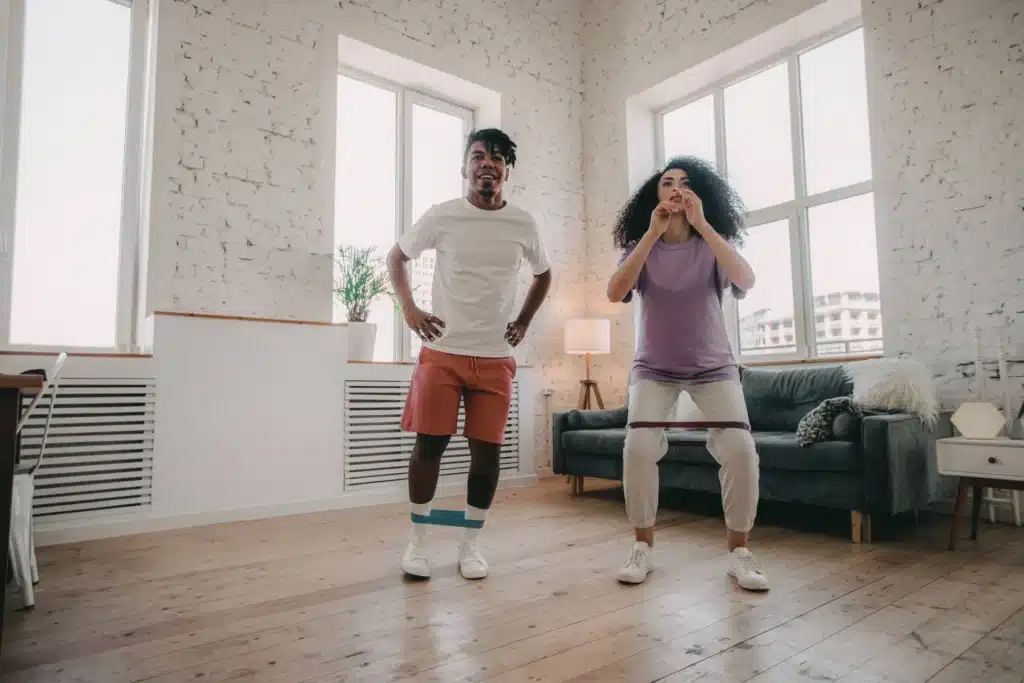
A useful home glute routine does not require dozens of movements. It needs a small number of exercises that cover the glutes’ main jobs: extending the hip, assisting lower-body compound movements, controlling the pelvis during single-leg work and moving the thigh outward.
The four-exercise session below uses body weight and optional simple equipment. It is suitable for beginners who want a repeatable starting point rather than another long list of glute exercises.
Quick Answer
The best glute exercises for beginners at home are movements that collectively train:
- Hip extension;
- A knee-dominant pattern;
- Lateral hip control;
- A controlled single-leg hinge.
A practical starting routine is:
- Glute Bridge;
- Supported Split Squat;
- Lateral Band Walk;
- Supported Single-Leg Romanian Deadlift.
Perform two or three sets of each movement while stopping with approximately two or three controlled repetitions still available. Resistance bands, dumbbells or a loaded backpack can be added, but they are not required for the easiest versions.
What the Three Glute Muscles Do
| Muscle | Main Role in This Routine | Example Movement |
|---|---|---|
| Gluteus maximus | Hip extension and force production | Glute Bridge |
| Gluteus medius | Side-to-side pelvic control and hip abduction | Lateral Band Walk |
| Gluteus minimus | Deeper lateral control and assistance with hip stability | Controlled lateral and single-leg work |
This map is deliberately simplified. The muscles do not switch on and off independently, and one exercise may involve several regions at the same time.
The purpose of dividing them is not to promise perfect isolation. It is to prevent a routine from relying exclusively on one movement pattern.
Do Squats Train All Three Glute Muscles?
Squats can provide useful gluteus maximus work, particularly when the movement uses a controlled range of motion and sufficient resistance. However, a squat does not remove the need for deliberate hip-extension and lateral-control work.
In a nine-week study comparing back squats and hip thrusts in untrained adults, both exercises produced similar increases across the measured gluteus maximus regions, while the combined gluteus medius and minimus measure changed little in either group. This supports treating squats as useful hip-extension work—not as proof that one squat variation trains every glute region or validates this home routine.
A beginner who only performs squats and lunges may receive substantial lower-body training, but the routine may still lack:
- Direct hip extension;
- Lateral hip control;
- A deliberate single-leg hinge;
- A clear method for increasing difficulty.
Activation Is Preparation, Not the Main Workout
Light clamshells, unresisted bridges and short band walks can help you rehearse positions before training. They should not automatically be treated as substitutes for progressive strength work.
An activation drill is appropriate when it helps you:
- Learn the movement;
- Find a stable starting position;
- Check band placement;
- Prepare for a more demanding version.
The same movement can become strength work when its resistance, range, leverage and volume make the final repetitions meaningfully challenging.
A burning sensation is not required for an exercise to be effective. Likewise, feeling a muscle does not prove that the movement provides enough training stimulus. Use movement quality, difficulty, controlled repetitions and progression over time as your main indicators.
What You Need
The default routine can be completed with:
- Floor space;
- A wall or stable chair for support;
- A bench, sofa edge or similarly stable raised surface if available.
Optional equipment includes:
- A resistance band or miniband;
- One or two dumbbells;
- A securely closed backpack containing a manageable load;
- A folded mat for comfort.
Some glute exercises without equipment become too easy after consistent practice. When that happens, first consider increasing the range of motion, using a less favourable leverage position or moving to a controlled unilateral version. External load is another option—not an automatic requirement.
Complete Beginner Glute Routine
Perform the movements in the listed order.
| Exercise | Sets | Reps | Rest | Effort Target | Easier Option |
|---|---|---|---|---|---|
| Glute Bridge | 2–3 | 8–15 | 45–60 sec | Stop with 2–3 controlled reps available | Reduced-range floor bridge |
| Supported Split Squat | 2–3 | 6–10 each side | 60–75 sec | Stop before balance or depth deteriorates | Sit-to-Stand or reduced-range split squat |
| Lateral Band Walk | 2–3 | 8–12 steps each direction | 45 sec | Keep steps controlled and pelvis level | Side-Lying Hip Abduction without a band |
| Supported Single-Leg RDL | 2–3 | 6–10 each side | 60 sec | Stop before the pelvis rotates or the back position changes | Kickstand RDL or two-leg hip hinge |
Beginners can start with two sets. Add a third set only when the existing work remains controlled and recovery is stable.
Why These Four Movements Are Used
1. Glute Bridge: Establish Hip Extension
Lie on your back with your knees bent and feet planted. Brace gently, press through the floor and raise your hips without forcing the lower back into a large arch.
Pause briefly at the top, then lower under control.
If you mostly feel the movement in your hamstrings:
- Bring your feet slightly closer to your hips;
- Reduce the height of the bridge;
- Keep your ribs from flaring upward;
- Press through the whole foot rather than pulling the heels backward.
Some hamstring participation is normal. The movement only needs adjustment when cramping, loss of control or excessive lower-back extension prevents you from performing the intended pattern.
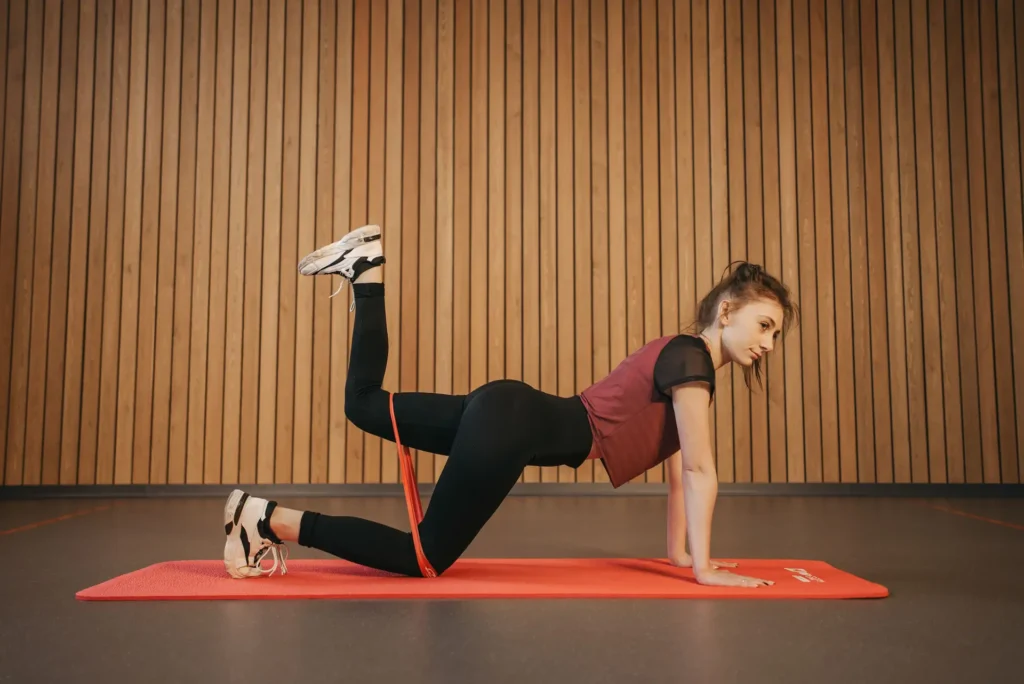
Try these gluteus maximus exercises at home to train hip extension, feel your glutes working, and stop your lower back or hamstrings taking over.
2. Supported Split Squat: Add a Knee-Dominant Pattern
Stand in a split stance beside a wall or stable chair. Lower through a comfortable range while keeping the front foot planted and the front knee moving in the same general direction as the toes.
Support is not cheating. It reduces the balance demand so you can practise the intended leg action.
If a full split squat is not yet manageable, use:
- A shorter range of motion;
- A higher starting position;
- A Sit-to-Stand;
- Light hand support.
The purpose of this movement is to complement the bridge, not repeat it. The bridge emphasizes hip extension from the floor, while the split squat integrates the glutes into a supported knee-dominant pattern.
3. Lateral Band Walk: Train Side-Hip Control
Place a miniband above the knees or around the ankles. Use the position that allows you to keep your feet, knees and pelvis controlled.
Take small steps to one side without leaning heavily or allowing the knees to collapse inward. Complete the prescribed steps before returning in the opposite direction.
A harder band is not automatically better. Excessive resistance often shortens the steps and encourages the trunk or pelvis to compensate.
A small laboratory study of nine healthy men found that moving the resistance band farther down the legs increased gluteus medius activation during resisted walking variations. This does not prove greater long-term muscle growth or validate this routine, but it supports using band placement as one way to adjust the difficulty of lateral stepping. Read the laboratory study comparing resistance-band positions during lateral walking exercises.
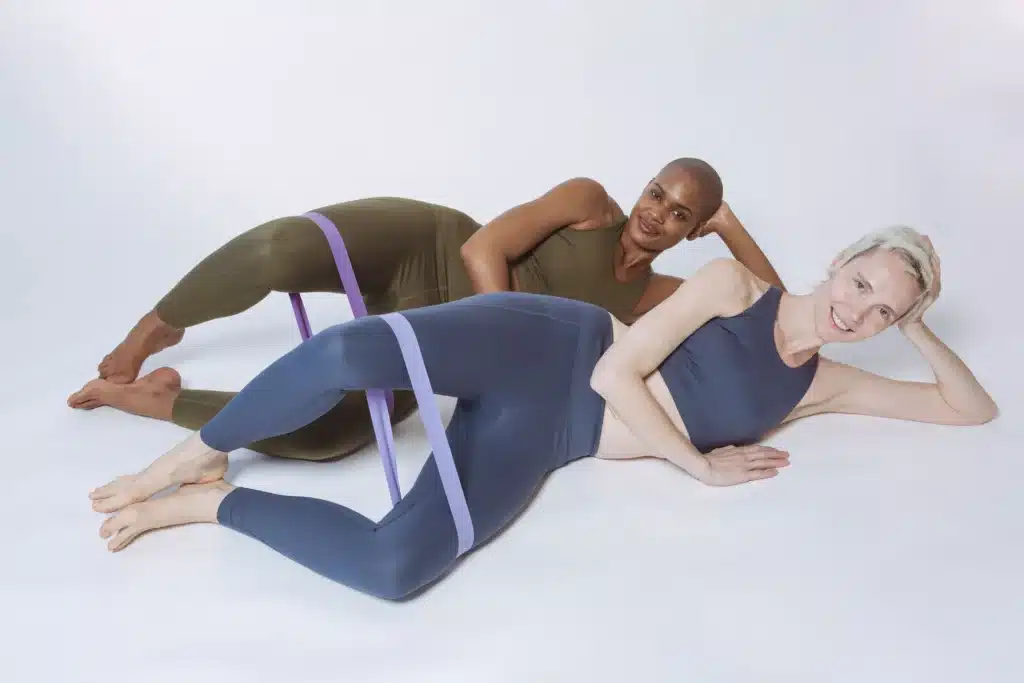
These gluteus medius exercises help you train side-glute control at home with clamshells, band walks, hip hitches, and clean form cues.
Lateral control draws from both the gluteus medius and gluteus minimus. For more focused work on the deeper layer of side-hip control, use the following guide.
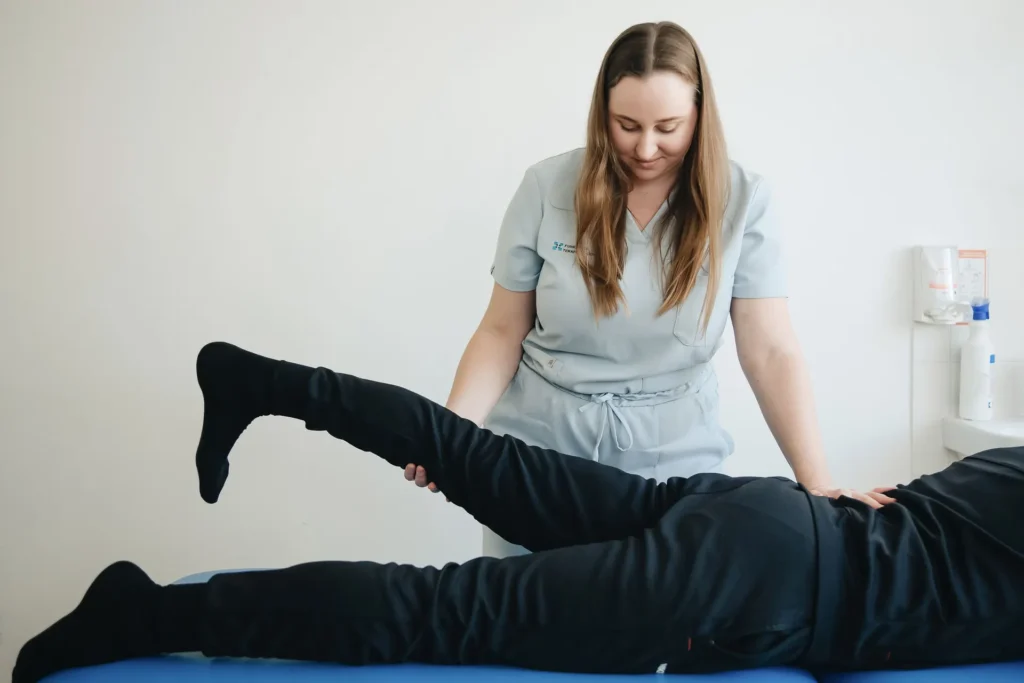
Try 4 gluteus minimus exercises at home to build deeper side-hip control, reduce TFL takeover, and train a simple 18-minute routine.
4. Supported Single-Leg RDL: Finish With a Controlled Hinge
Stand beside a wall or chair and use one hand for balance. Keep a slight bend in the working knee, move the hips backward and allow the torso to incline without twisting the pelvis.
Stop the descent when you can no longer maintain control. Return by driving the working foot into the floor and bringing the hips forward.
It is normal to feel the hamstrings during an RDL. The hamstrings and gluteus maximus both participate in the hinge pattern. Feeling the hamstrings does not automatically mean that the exercise has failed.
Regress the movement if you:
- Cannot prevent the pelvis from opening;
- Lose your back position;
- Cannot control the lowering phase;
- Feel unstable despite using support.
A kickstand RDL provides a useful bridge between a two-leg hinge and a fully unilateral version.
Why This Order Works
The session begins with a stable floor-based movement before adding more balance and coordination.
- Glute Bridge: rehearses hip extension;
- Supported Split Squat: adds a knee-dominant compound pattern;
- Lateral Band Walk: trains side-to-side control;
- Supported Single-Leg RDL: finishes with the most coordination-dependent movement.
This is an editorial training sequence designed for practical beginner use. It has not been validated as a uniquely superior order in a controlled study.
How to Make the Routine Easier
Use the easiest version that still lets you perform controlled work.
| Standard Movement | Easier Starting Version |
|---|---|
| Glute Bridge | Short-range bridge or isometric bridge hold |
| Supported Split Squat | Sit-to-Stand |
| Lateral Band Walk | Unbanded Side-Lying Hip Abduction |
| Supported Single-Leg RDL | Two-Leg Hip Hinge or Kickstand RDL |
Your starting version should be based on current strength, control, leverage, equipment and training history—not sex.
If you cannot complete the first set with stable technique, shorten the range, increase support or choose the easier version. Do not continue collecting poor-quality repetitions simply to reach the number in the table.
How to Progress Glute Exercises at Home
Use the following order instead of adding repetitions indefinitely:
- Improve control within the current range;
- Increase the range of motion gradually;
- Use a harder leverage position;
- Move from bilateral to supported unilateral work;
- Add a band, dumbbell or backpack load.
Change one main variable at a time. If you add resistance, do not simultaneously increase the number of sets, repetitions and training days.
Move-On Rule
Move to a harder variation only when you can complete the upper end of the target range with:
- Consistent range of motion;
- Stable balance;
- Controlled tempo;
- No new compensation;
- Approximately two repetitions still available.
Meet that standard with the same version in two or three consecutive sessions before progressing.
One successful workout is a useful test, not proof that you have permanently mastered the movement.
If the Next Version Is Too Difficult
A large gap between two exercise versions does not mean you failed. Use a bridge variation.
Examples include:
- Two-leg bridge → staggered bridge → single-leg bridge;
- Sit-to-Stand → supported split squat → deeper split squat;
- Unbanded hip abduction → light band → stronger band;
- Two-leg hinge → kickstand RDL → supported single-leg RDL.
Return to the previous version if the harder movement immediately reduces your range, balance or control.
Record Both Sides Separately
For unilateral exercises, record the left and right sides separately.
Start with the less capable side. Match the stronger side to the controlled work completed by the weaker side instead of adding unlimited extra repetitions.
A small difference between sides is common. The goal is to observe the trend, not force both sides to become identical in one session.
Common Mistakes
1. Treating Squats as the Entire Glute Program
Squats are useful, but they do not replace deliberate hip extension, lateral control and single-leg hinge work.
2. Turning Every Session Into Activation Work
Light drills may improve preparation, but endlessly repeating easy movements without increasing range, leverage or resistance is not a complete progression strategy.
3. Chasing Muscle Burn
A strong burning sensation is not required. Prioritize controlled repetitions and appropriate difficulty.
4. Arching the Lower Back During Bridges
Reduce the range and keep the ribs controlled. The goal is hip extension, not maximum spinal extension.
5. Using Too Much Band Resistance
If the band shortens your steps or pulls your knees out of position, use a lighter band.
6. Progressing After One Good Session
Repeat the performance standard across two or three sessions before changing versions.
How Often Should Beginners Train Their Glutes?
Most beginners can use this routine one or two times per week as part of their broader leg training.
Leave enough time between sessions for movement quality and performance to return to their usual level. Training frequency should reflect the total workload from squats, lunges, hinges, sports and other lower-body sessions—not this routine in isolation.
Walking and normal daily activity can support general activity levels, but they do not necessarily provide the same progressive strength stimulus as the exercises above.
For a broader explanation of how the front and back of the thigh should be trained together, see a balanced approach to training the front and back of the thigh.
The calves, shins and outer lower leg require a different movement map. They are covered in the separate guide to training the calves, shins and outer lower leg.
To place all three regions into a wider lower-body structure, use the broader home leg-training guide that combines every lower-body region.
What Results Can Glute Training Change?
Consistent glute strengthening exercises can improve your ability to perform the trained movements and may contribute to strength, control and muscular development.
Results depend on:
- Training consistency;
- Exercise difficulty;
- Weekly workload;
- Recovery;
- Nutrition;
- Starting point;
- Individual response.
Exercise cannot determine precisely where your body loses fat. It also cannot guarantee a particular hip shape because skeletal structure, muscle distribution and genetics influence appearance.
Do not judge the routine only by soreness. A more useful review includes:
- Better control;
- More stable repetitions;
- Greater range of motion;
- A harder variation;
- More load at similar technique;
- Improved left-to-right consistency.
When to Stop and Seek Qualified Help
Normal muscular effort and temporary fatigue are different from warning signs.
Stop the session and seek qualified medical guidance if you experience:
- Sharp or escalating pain;
- New swelling;
- Sudden loss of strength;
- Numbness or tingling;
- Difficulty bearing weight;
- Pain that changes normal walking;
- Symptoms that persist or worsen despite reducing the exercise.
This routine is general training information and is not a diagnosis, rehabilitation plan or treatment for an injury.
Frequently Asked Questions
What Are the Best Glute Exercises for Beginners at Home?
A practical starting combination is a Glute Bridge, Supported Split Squat, Lateral Band Walk and Supported Single-Leg RDL. Together, these movements cover hip extension, a knee-dominant pattern, lateral control and a unilateral hinge.
Do Squats Train All Three Glute Muscles?
Squats can train the glutes, especially the gluteus maximus, but they should not be treated as a complete three-region glute routine. Adding hip-extension and lateral-control work creates broader coverage.
Can I Build My Glutes Without Weights?
You can begin without weights by using range of motion, leverage, unilateral variations and controlled tempo. As the exercises become easy, bands, dumbbells or a loaded backpack can make continued progression more practical.
Should I Use Glute Activation Exercises?
Activation drills are optional. Use them when they improve your setup or movement control, but do not let them replace the progressive work in the main routine.
Why Do I Feel Glute Bridges in My Hamstrings?
The hamstrings can assist hip extension, so some participation is normal. Move your feet slightly closer, reduce the bridge height and avoid pulling the heels backward if the hamstrings consistently dominate or cramp.
Is Walking Enough to Build the Glutes?
Walking contributes to daily activity, but ordinary walking does not offer the same adjustable resistance and progression as structured strength work. Treat it as activity rather than a direct replacement for the routine.
Can Men and Women Use the Same Glute Exercises?
Yes. Exercise versions should be selected according to ability, leverage, equipment, training history and goals—not sex alone.
How Long Does It Take to Build the Glutes?
There is no fixed deadline. Strength, movement quality and visible muscular development do not always change at the same speed. Track performance across several weeks instead of expecting a guaranteed appearance change within a short period.
Conclusion
A complete beginner glute routine does not need a large exercise library. It needs a small set of movements with different jobs and a clear method for making them harder.
Begin with the four-movement session, use support when necessary and record your performance. Continue the current version while it remains challenging, progress after two or three stable sessions, and reduce the difficulty when control breaks down.
Medical disclaimer: This article is intended for educational and informational purposes only. It is not intended as a substitute for medical advice. For health advice, contact a licensed healthcare provider.