
Rhomboid Exercises at Home: 5 Moves for Upper-Back Retraction
By Zephyr · Published Jun 16, 2026
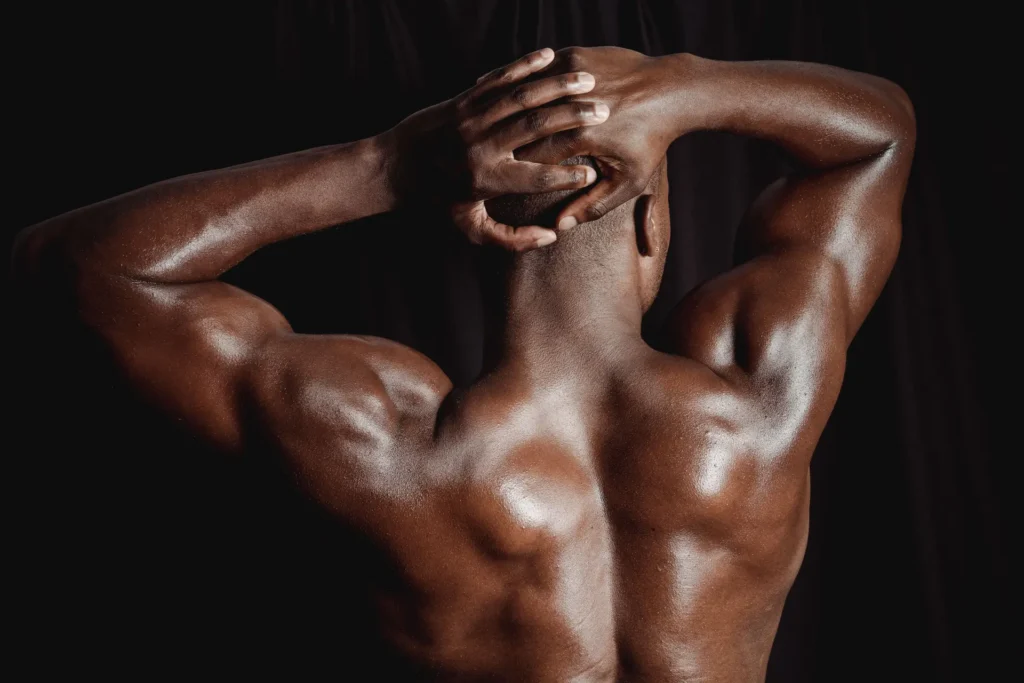
These rhomboid exercises train your upper back by teaching your shoulder blades to move toward your spine before your arms take over. This home routine includes five movements:
- Standing Scapular Retraction
- Resistance Band Pull-Apart
- Prone W Raise
- Inverted Row
- Bent-Over Wide Dumbbell Row
How to do it: perform 2–3 sets per exercise, use 8–15 controlled reps, pause briefly at the top of each rep, and rest 30–60 seconds between sets.
Rows, pull-aparts, and W raises can all be useful rhomboid exercises. The mistake is assuming the exercise name is enough.
A row does not automatically train the rhomboids well. If the elbows bend first, the arms do most of the work. If the shoulders climb, the upper traps take over. If the elbows drive down toward the hips, the movement shifts toward the lats.
For this article, I would rather make the first rep cleaner than give you a longer exercise list. The goal is simple: learn to move the shoulder blades toward the spine first, then use bands, bodyweight, and dumbbells to make that pattern stronger.
That is why the workout starts with scapular retraction before moving into pull-aparts, prone W raises, inverted rows, and dumbbell rows. It also fits naturally inside a home back-training framework that separates vertical pulls, rows, hinges, and shoulder-blade control without turning this focused session into another general back workout.
Quick Summary
- Rhomboid training is mainly about pulling the shoulder blades toward the spine, not just pulling the hands backward.
- The progression here is simple: awareness, light band resistance, prone control, bodyweight pulling, and dumbbell loading.
- If your neck, arms, rear delts, or lats take over, reduce the difficulty and bring back the top pause.
- Each rep should include a short controlled squeeze between the shoulder blades.
- This is a training guide, not a rhomboid pain relief or rehab plan.
What Exercises Hit Your Rhomboids?
The best movements for your rhomboids involve scapular retraction: your shoulder blades move inward toward your spine while your arms assist the movement. Rows, band pull-aparts, prone W raises, and some bodyweight pulling exercises can all train that pattern.
The order matters. Your shoulder blades should begin the rep, and your elbows should follow. If the elbows pull first, the movement often shifts toward the arms, lats, rear delts, or upper traps.
A basic anatomy reference describes the rhomboids as muscles that help retract, elevate, and rotate the scapula. That is why this workout focuses on shoulder-blade motion first, not just pulling the hands backward.
NCBI Bookshelf: Anatomy, Back, Rhomboid Muscles
This also separates rhomboid work from nearby topics. Serratus anterior training helps the shoulder blades move forward around the ribs, while serratus anterior exercises for the opposite shoulder-blade action have a different goal. Lat work is more about pulling the elbow down and back, which is why lat workouts built around elbow path and back width should not be treated as the same thing.
Teres major and minor work is more about shoulder extension, adduction, and rotation around the upper arm. Rhomboid work is about moving the shoulder blade itself toward the spine.
5 Best Rhomboid Exercises at Home
These are not chosen just because they are common upper-back moves. Each one has a job: teach shoulder-blade retraction, add light resistance, control the top position, bring the pattern into bodyweight pulling, then add measurable load.
For this guide, a good rhomboid exercise has to meet three standards: the shoulder blades can move first, the top position can be paused, and the movement does not turn into a shrug or lat row.
Research on scapular retraction exercises found that different retraction drills create different scapular movement patterns and muscle activity. That supports choosing exercises by the shoulder-blade action they train, rather than treating every row or pull-apart as the same.
Scapular kinematics and muscle activity during retraction exercises
1. Standing Scapular Retraction
Video: Wellen
Main Muscles Worked
- Rhomboids
- Middle traps assist
How to Do It
- Stand tall with your feet about hip-width apart.
- Keep your ribs down, neck relaxed, and chin neutral.
- Pull your shoulder blades gently back toward your spine.
- Hold the squeezed position for 1–2 seconds.
- Slowly release your shoulder blades back to a neutral position and repeat.
Practical Tips
- Do not turn the movement into a big chest flare. Keep the ribs quiet.
- Use a small, controlled range instead of forcing the shoulder blades together.
- If your shoulders rise toward your ears, reset and use less effort.
How to Feel Your Rhomboids
The sensation should sit between the inner edges of your shoulder blades. It should feel like a light upper-back squeeze, not neck tightness or low-back arching.
Troubleshooting
- Neck gets tight: You are probably shrugging. Relax the shoulders before each rep.
- Low back arches: Keep the ribs down and avoid pushing the chest forward.
- No upper-back feeling: Slow down and hold the retracted position slightly longer.
Role in the Routine
Use this drill to learn the basic movement all the other exercises build on: pulling the shoulder blades toward the spine before the arms do the work.
2. Resistance Band Pull-Apart
Video: Wellen
Main Muscles Worked
- Rhomboids
- Middle traps assist
How to Do It
- Hold a resistance band in front of your chest with your arms straight or slightly bent.
- Stand tall with your ribs down and shoulders relaxed.
- Pull the band apart until your chest opens and your shoulder blades move back.
- Pause briefly at the end range.
- Return slowly to the starting position.
Practical Tips
- Choose a light enough band to control both the pull and the return.
- Keep the wrists quiet and avoid yanking the band apart with your hands.
- Stop the set if every rep turns into a fast arm swing.
How to Feel Your Rhomboids
At the end of the pull, focus on the space between your shoulder blades. You should feel the shoulder blades draw inward before the arms feel tired.
Troubleshooting
- Rear delts take over: Reduce the range and slow the last few inches.
- Upper traps burn: Keep the shoulders away from your ears.
- Band snaps you back: Use a lighter band and control the return.
Role in the Routine
The band adds light resistance to scapular retraction and teaches you to pause at the end of the movement before moving into harder pulling exercises. Among resistance band rhomboid exercises, this is one of the easiest to scale because you can change band tension, hand spacing, and tempo.
For rhomboid exercises with bands, the pause matters more than stretching the band as far as possible.
3. Prone W Raise
Video: Rodeo Athletic
Main Muscles Worked
- Rhomboids
- Middle traps assist
How to Do It
- Lie face down on the floor or a mat.
- Bend your elbows so your arms form a W shape.
- Keep your neck long and your eyes toward the floor.
- Lightly retract your shoulder blades, then lift your elbows and hands off the floor.
- Pause at the top for 1 second.
- Lower with control.
Practical Tips
- Do not chase height. A small clean lift is better than a high, sloppy one.
- Keep the ribs and hips grounded instead of lifting your whole torso.
- Use the W arm position to keep the movement controlled and reduce swinging.
How to Feel Your Rhomboids
At the top, the effort should gather around the inner shoulder blades. If your low back or neck is doing most of the work, the lift is too high.
Troubleshooting
- Low back works too hard: Lower the lift and keep the torso quieter.
- Neck gets tight: Look down and avoid leading with the head.
- Back of shoulder dominates: Make the movement smaller and hold the top position.
Role in the Routine
The Prone W Raise builds upper-back control without external load. It helps you practise scapular retraction before the routine moves into bodyweight rows.
A fine-wire EMG study on scapular muscle exercises measured rhomboid major activity directly and found meaningful rhomboid activation across several scapular-control drills. The exercises were not the exact same as this routine, so the point is not to copy them one-for-one; it supports the broader idea that controlled scapular movement can train the rhomboids without needing heavy equipment.
Fine-wire EMG study of scapular muscle exercises
4. Inverted Row
Video: The Active Life
Main Muscles Worked
- Rhomboids
- Lats assist
How to Do It
- Set up under a stable low bar, rings, or another secure pulling point.
- Hold the support and keep your body in a straight line.
- Start each rep by drawing your shoulder blades back.
- Pull your chest toward the bar or rings.
- Pause briefly at the top.
- Lower with control while keeping your body stable.
Practical Tips
- Pull toward your chest or upper ribs, not toward your hips.
- Make the exercise easier by standing more upright or raising the bar/rings.
- If you do not have a low bar or rings, look up a safe YouTube tutorial for table rows, bedsheet rows, or doorway row alternatives, and only use a setup that is truly stable.
Easy Version
Use a more upright body angle, or set the bar/rings higher so less of your bodyweight is loaded.
How to Feel Your Rhomboids
At the top, the chest should move toward the support as the shoulder blades move toward the spine. If the only thing you feel is your arms bending, reset and start the next rep with the shoulder blades.
Troubleshooting
- Arms tire first: Begin with scapular retraction before bending the elbows.
- Hips drop: Squeeze the glutes and shorten the set.
- Lats take over: Avoid dragging the elbows down toward the hips.
Role in the Routine
The Inverted Row brings scapular retraction into a real bodyweight pulling pattern. The angle can be adjusted, so it works well before heavier dumbbell loading.
5. Bent-Over Wide Dumbbell Row
Video: FITASTIC
Main Muscles Worked
- Rhomboids
- Middle traps assist
How to Do It
- Hold a dumbbell in each hand and hinge at the hips.
- Keep your back steady, core braced, and neck neutral.
- Pull your elbows back and slightly out instead of keeping them tight to your sides.
- Row the dumbbells toward your upper ribs or lower chest area.
- Pause briefly at the top.
- Lower the weights with control.
Practical Tips
- Use a moderate weight that allows a clear top pause.
- Keep the torso angle steady instead of bouncing the weights up.
- This is not a lat-focused row, so do not drag the elbows toward the hips.
How to Feel Your Rhomboids
At the top, think less about lifting the dumbbells high and more about bringing the inner edges of the shoulder blades toward each other.
Troubleshooting
- Low back gets tired: Reduce the weight or use a slightly higher torso angle.
- Rear delts dominate: Keep the elbows from flaring too high.
- Arms take over: Lower the load and start each pull from the shoulder blades.
Role in the Routine
This row gives the workout a measurable loading option. After the earlier drills build control, it lets you add resistance without turning the movement into a standard lat row. For rhomboid exercises with dumbbells, a controlled top pause is more useful than chasing the heaviest possible load.
15-Minute Rhomboid Workout at Home
Two-Minute Preparation
- Standing Scapular Retraction: 8 controlled reps
- Resistance Band Pull-Apart: 8 easy reps
- Prone W Raise: 5 slow reps
Main Workout
| Exercise | Sets | Reps | Rest |
|---|---|---|---|
| Standing Scapular Retraction | 2 | 8–10 | 30 sec |
| Resistance Band Pull-Apart | 2 | 10–15 | 30–45 sec |
| Prone W Raise | 2 | 8–12 | 30–45 sec |
| Inverted Row | 2–3 | 6–10 | 45–60 sec |
| Bent-Over Wide Dumbbell Row | 2 | 8–12 | 45–60 sec |
How to Use This Routine
Use this rhomboid workout at home 1–2 times per week. It can fit after a back day, after upper-body training, or as a short focused session when your rows usually feel like arms and lats.
If you cannot feel the upper back working, do not add more weight yet. Add a longer top pause to the first three exercises. If the inverted row is too hard, raise the bar or rings. If the dumbbell row loses the squeeze at the top, reduce the load.
Safety Tips: Warm up your shoulders and upper back before training. Stop if you feel sharp pain, numbness, or unusual joint discomfort. This article is for general strength training, not injury diagnosis or rehabilitation.
Common Mistakes That Stop Your Rhomboids From Working
1.Pulling With the Arms First
If the elbows bend before the shoulder blades move, the rep becomes an arm pull. Start each row by letting the shoulder blades move back first, then let the elbows follow.
2.Shrugging Instead of Retracting
Shrugging sends the work toward the upper traps. The shoulders should not climb toward your ears. If this keeps happening, reduce the load and return to scapular retraction holds.
Pulling direction matters. One EMG study found that changing the arm angle during a pulling exercise changed rhomboid and upper-trapezius activity. For this article, the practical takeaway is simple: do not let every pull turn into a shrug or random arm motion.Effects of pulling direction on upper trapezius and rhomboid activity
For a full breakdown of upper, middle, and lower trap training, use trap workouts that separate shrugging, retraction, and lower-trap control instead of trying to make shrugs solve every upper-back problem.
3.Turning Every Row Into a Lat Row
A lat-focused row usually pulls the elbow down and back toward the hip. That can be useful, but it is not the same as rhomboid-focused retraction. For this workout, row toward the chest or upper ribs and pause with the shoulder blades close to the spine.
4.Swinging Through Band Pull-Aparts
Fast pull-aparts often become arm swings. Use a lighter band, slow the return, and hold the end position for a moment.
5.Adding Weight Before You Can Pause
If the top position disappears, the load is too heavy. Progress should not come from heavier weights alone. A clean pause is part of the exercise.
6.Arching the Low Back to Fake Retraction
Some people create the look of shoulder-blade squeeze by flaring the ribs and arching the back. Keep the ribs down and let the shoulder blades do the moving.
Progression Tips for Rhomboid Muscle Exercises
Progression for rhomboid muscle exercises should come from control first, load second.
Hold the top position longer
Start with a 1-second pause. Build toward 2–3 seconds without neck tension.Add reps before adding resistance
If you can only feel your arms after 6 reps, more weight is not the answer yet.Increase band tension gradually
Use a stronger band only if you can still control the final inch of the pull-apart.Lower the body angle on inverted rows
A more horizontal body position makes the row harder. Keep the top squeeze before increasing the angle.Add dumbbell weight carefully
Increase weight only when the row still finishes with the shoulder blades moving inward.Track the quality of each set
Record reps, band tension, row angle, dumbbell weight, and whether the upper back stayed active.
Good rhomboid exercises should become harder without turning into neck work, arm work, or a lat-dominant pull. That is the standard to use before progressing.
Frequently Asked Questions
Can You Isolate Rhomboids?
You cannot fully isolate the rhomboids because upper-back exercises also involve the middle traps, rear delts, lats, and arms. But you can increase rhomboid involvement by focusing on scapular retraction, using a top pause, and choosing angles that do not turn every row into a lat pull.
The goal is not perfect isolation. The goal is to make the shoulder blades move toward the spine before the arms finish the rep.
Do Shrugs Hit Rhomboids?
Shrugs are not the main answer for rhomboid training. They mainly emphasize shoulder elevation, which is more connected to the upper traps. Rhomboids are better trained when the shoulder blades move back toward the spine.
That is why this routine uses retraction drills, pull-aparts, W raises, rows, and wide dumbbell rows instead of building the plan around shrugs.
Are Rhomboids Hard to Grow?
Rhomboids can be hard to feel because they are not a large show muscle like the lats or traps. They also work with nearby muscles, so it is easy for the arms, rear delts, or upper traps to take over.
If you want stronger rhomboids, start by improving control. Then add volume and load while keeping the top pause.
How to Tell if Rhomboids Are Weak?
This article cannot diagnose weakness. From a training standpoint, signs that your rhomboid work needs attention may include rows where your arms fatigue first, pull-aparts that only hit the rear delts, or an inability to pause with the shoulder blades pulled back.
If you have pain, numbness, injury history, or persistent discomfort, get assessed by a qualified professional instead of treating it as a normal training issue.
Can You Train Rhomboids at Home Without Machines?
Yes. You do not need machines or cables to train the rhomboids. Bodyweight rhomboid exercises, band work, and dumbbell rhomboid exercises can all be useful if they keep the focus on shoulder-blade retraction.
The best home setup is simple: a light band, a safe pulling point for inverted rows, and a pair of dumbbells. If you only have bodyweight, start with scapular retraction holds and prone W raises, then add a safe row variation when possible.
Conclusion
A better rhomboid workout does not need to be complicated. It needs to stay controlled.
If the shoulder blades move first, the exercise has a chance to train the upper back the way you want. If the arms, neck, or lats take over, adding more reps or more weight only makes the wrong pattern stronger.
I would progress this workout in one order: first hold the squeeze, then add reps, then make the row angle harder or increase the dumbbell weight. Skip that order, and the movement usually stops feeling like rhomboid work.
Use this session the next time your rows feel like arms and lats. Record the version you can control, then make only one thing harder at a time.
Medical disclaimer: This article is intended for educational and informational purposes only. It is not intended as a substitute for medical advice. For health advice, contact a licensed healthcare provider.