
Serratus Anterior Exercises at Home: 5 Moves and a 20-Minute Home Workout
By Zephyr · Published Jun 12, 2026
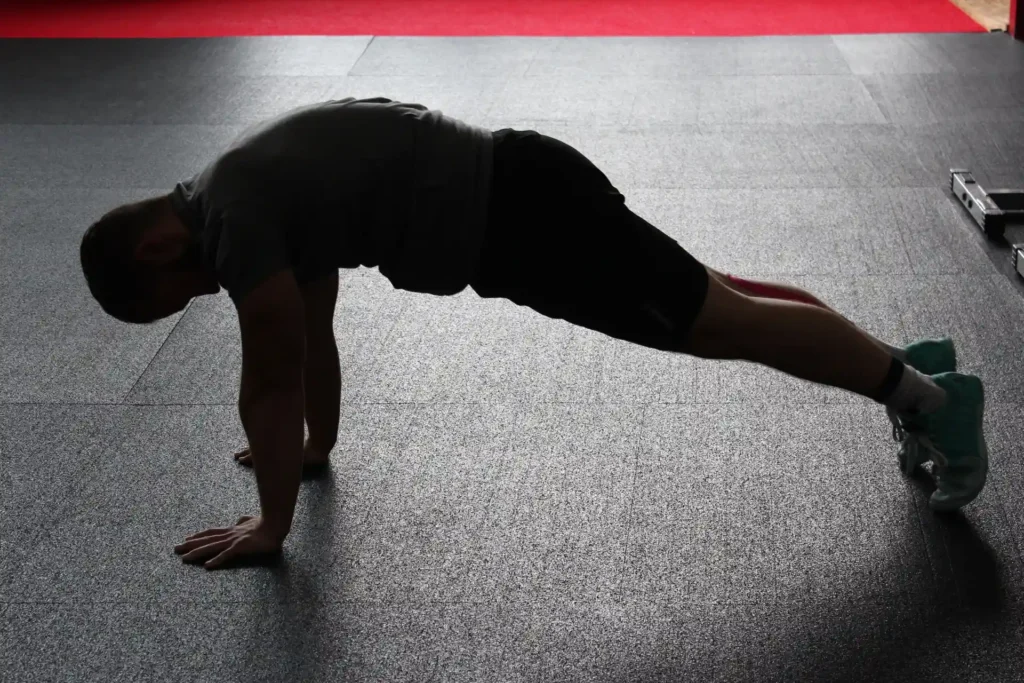
These serratus anterior exercises train scapular protraction, upward rotation, and control through five home-friendly movements:
- Serratus Foam Roll Wall Slide
- Push-Up Plus
- Bear Plank Plus Isometric With Chin Tuck
- Single-Arm Banded Serratus Punch
- Supine Dumbbell Serratus Punch
Perform 2–3 controlled sets of each movement. With preparation and transitions, the workout takes about 20 minutes.
The serratus anterior is easy to overlook because its movement is not as obvious as bending an elbow or pressing a weight overhead. In training sessions, I often see students complete the entire workout without realizing that their shoulder blades barely moved.
The clues usually appear elsewhere: the neck tightens, the ribs lift, or the upper back rounds to create extra reach. The exercise looks complete, but the serratus never gets a clear job.
In this serratus anterior workout, I use five movements to make that hidden shoulder-blade action easier to recognize before adding resistance. These practical serratus anterior exercises at home progress from movement control to bodyweight, isometric, band, and dumbbell work.
Use this session as focused accessory work within a complete home shoulder routine that combines pressing, raises, rotation control, and shoulder-blade movement.
Quick Summary
- Scapular protraction means moving the shoulder blades forward around the rib cage, not forcing the entire back to round.
- Upward rotation helps the shoulder blades follow the arms overhead. It is not the same as shrugging.
- Wall Slides teach the movement, while Push-Up Plus adds dynamic bodyweight resistance.
- Bear Plank Plus develops isometric control; band and dumbbell punches add external resistance.
- The main serratus anterior muscle function is to control the shoulder blade during reaching, pressing, and overhead movement.
- Bodyweight serratus anterior exercises work well, but bands and dumbbells offer clearer ways to increase resistance.
- Building the serratus may make the “boxer’s muscle” outline more visible, although body fat and individual anatomy also affect its appearance.
What Exercise Works the Serratus Anterior?
The serratus anterior connects the upper ribs to the inner border of the shoulder blade. It pulls the scapula forward around the rib cage and works with the trapezius during upward rotation as the arm rises. This relationship is described in this (serratus anterior anatomy and function reference).
Once that relationship is clear, how to train serratus anterior becomes easier to understand. Moving the hand farther does not necessarily mean the shoulder blade moved correctly.
Effective serratus anterior muscle exercises generally involve at least one of these tasks:
- Reaching farther while keeping the elbow stable
- Pushing the floor away at the top of a push-up
- Guiding the shoulder blade as the arm rises overhead
- Holding the scapula against the rib cage under load
Good serratus anterior training also requires control elsewhere. Keep the neck relaxed, the ribs reasonably stacked over the pelvis, and the torso still enough that it cannot create false range.
Push-Up Plus trains dynamic protraction. Wall Slides practise upward rotation as the arms rise. Punch variations add unilateral or external resistance.
That control also matters in upward pressing patterns, including the elevated push-up variations in this home upper-chest workout without an incline bench.
You may feel tension beneath the armpit or along the side ribs, but the serratus does not always produce a strong isolated pump. A better test is whether the shoulder blade moves smoothly without excessive shrugging, spinal rounding, or rib flare.
5 Best Serratus Anterior Exercises for Home Training
These movements are arranged by purpose rather than popularity.
The Wall Slide introduces upward rotation. Push-Up Plus adds dynamic protraction. Bear Plank Plus asks you to hold that control under isometric tension. The band punch adds unilateral resistance, and the dumbbell punch finishes with a measurable load.
Together, these serratus exercises cover movement practice, bodyweight strength, isometric stability, and external resistance. That makes the sequence more useful than a longer list of nearly identical drills.
The best serratus anterior strengthening exercises let the shoulder blade move while the neck, ribs, and lower back remain controlled.
1. Serratus Foam Roll Wall Slide
Video: TrueFix Physical Therapy
Muscles worked:Serratus anterior,Lower trapezius
How to Do It
- Stand facing a wall with a foam roller positioned horizontally against it.
- Place both forearms on the roller with your elbows bent to about 90 degrees.
- Press lightly into the wall while keeping your neck relaxed and ribs controlled.
- Roll your forearms upward and allow your shoulder blades to rotate naturally.
- Stop at the highest position you can control, then return slowly.
Practical Tips
- Picture your shoulder blades sliding outward and upward along your ribs. Do not squeeze them together as your arms rise.
- Keep your abdomen lightly braced. The extra height should come from shoulder-blade movement, not an arched lower back.
- Wall Slides are sometimes included among serratus anterior exercises for posture because they teach coordination between the scapula and rib cage. They cannot correct every postural difference by themselves.
In a study of 20 healthy participants, serratus activity increased as arm elevation rose during the Wall Slide. This supports using the movement to practise serratus involvement above shoulder height. The study tested a regular Wall Slide, not the foam-roller version shown here. (Wall Slide muscle-activation study)
Troubleshooting
- Your neck or upper traps fatigue first: Lower the finishing position and stop forcing your shoulders toward your ears.
- Your lower back arches: Brace your abdomen and keep your ribs stacked over your pelvis.
- The roller keeps slipping: Maintain gentle pressure into the wall as you slide upward.
- Your shoulder feels uncomfortable: Shorten the range instead of forcing a higher position.
Role in the Routine
This opening movement introduces upward rotation and rib control before fatigue or resistance makes the pattern harder to recognize.
2. Push-Up Plus
Video: Matthew Stevens
Muscles worked:Serratus anterior,Pectoralis major
How to Do It
- Begin in a high plank with your hands beneath or slightly wider than your shoulders.
- Brace your core and glutes, keeping your body in a straight line.
- Perform a controlled push-up and return to the top.
- Keep your elbows straight and continue pushing the floor away.
- Let your shoulder blades move forward around the rib cage to complete the “plus.”
- Return to the normal top position before beginning the next rep.
Practical Tips
- The extra shoulder-blade movement at the top is what separates this serratus anterior exercise from a regular push-up.
- Keep your elbows straight during the plus phase. The range may look small when the scapulae are moving without an exaggerated rounding of the spine.
- If the standard version is too difficult, progress through:
- Wall Push-Up Plus
- Hands-Elevated Push-Up Plus
- Kneeling Push-Up Plus
- Standard Push-Up Plus
A systematic review and meta-analysis of 19 studies found high serratus activity during the standard Push-Up Plus. A stable surface and full elbow extension also supported serratus activity without unnecessarily increasing upper-trapezius demand. (Push-Up Plus systematic review and meta-analysis)
These results support the exercise choice, but short-term muscle activity does not automatically predict long-term muscle growth.
Troubleshooting
- You only feel your chest and triceps: Pause for 1–2 seconds during the plus phase.
- Your elbows keep bending: Reduce the reach and keep your arms stable.
- Your lower back sags: Brace your core or choose an easier variation.
- Your shoulders move toward your ears: Relax your neck and avoid replacing protraction with a shrug.
- Your wrists feel uncomfortable: Use push-up handles or elevate your hands.
Role in the Routine
Push-Up Plus is the main dynamic bodyweight exercise. It places active scapular protraction inside a complete pressing movement.
Scapular control also matters during chest-focused pressing, including the push-up and dip variations in this home workout focused on lower-chest pressing.
3. Bear Plank Plus Isometric With Chin Tuck
Video: E3 Rehab Exercise Library
Muscles worked:Serratus anterior,Core muscles
How to Do It
- Begin on all fours with your hands beneath your shoulders and knees beneath your hips.
- Tuck your toes, brace your core, and lift your knees slightly off the floor.
- Keep your elbows straight and actively push the floor away.
- Hold your shoulder blades against the rib cage without changing your back or pelvic position.
- Gently tuck your chin so your head stays aligned with your spine.
- Hold for the prescribed time, then lower your knees under control.
Practical Tips
- Your knees only need to hover slightly above the floor. Lifting your hips changes the exercise and reduces the intended stability challenge.
- Keep breathing throughout the hold. The goal is to maintain shoulder-blade and trunk position, not to create maximum tension by holding your breath.
- This is one of the isometric serratus anterior exercises in the routine because you maintain the scapular position rather than repeatedly moving through it.
Troubleshooting
- Your hips rise: Keep your knees beneath your hips and shorten the hold.
- Your back sags or ribs flare: Brace your abdomen and gently bring your ribs down.
- Your shoulder blades lift away from the ribs: Practise with your knees on the floor.
- Your neck feels tense: Use a gentle chin tuck rather than looking forward.
- You cannot breathe normally: Shorten the interval.
Role in the Routine
Bear Plank Plus trains the serratus anterior to maintain shoulder-blade position while the trunk resists movement.
4. Single-Arm Banded Serratus Punch
Video: Peter Barbour
Muscles worked:Serratus anterior,Anterior deltoid
How to Do It
- Anchor the resistance band behind you at approximately shoulder height.
- Face away from the anchor and hold the band in one hand.
- Raise your arm close to shoulder height with a slight elbow bend.
- Keep your torso stable and reach forward.
- At the end of the reach, let your shoulder blade move farther forward around the ribs.
- Pause briefly, then return slowly.
Practical Tips
- The final part of the reach should come from the shoulder blade, not just the arm.
- Keep your chest and pelvis facing forward. Rotating your torso may move the hand farther without adding useful scapular motion.
- Serratus anterior exercises with resistance band allow small increases in load without requiring a cable machine or heavy equipment.
- A TheraBand-style band works too, provided the anchor is secure and you can control the return.
Troubleshooting
- Your torso rotates: Reduce the resistance and use a staggered stance.
- Your neck or shoulder fatigues first: Lower your arm slightly and stop shrugging.
- You only feel your arm: Pause at full reach and let the shoulder blade finish the movement.
- The band pulls your arm back: Use a lighter band and slow the return.
- One side is less controlled: Match both sides to the quality and reps of the weaker side.
Role in the Routine
This movement provides adjustable unilateral resistance and lets you train each shoulder blade independently.
5. Supine Dumbbell Serratus Punch
Video: Puckett Sports Rehab and Physical Therapy
Muscles worked:Serratus anterior,Anterior deltoid
How to Do It
- Lie on the floor with your knees bent and feet planted.
- Hold a dumbbell in one hand with your arm extended toward the ceiling.
- Keep your elbow nearly straight and your shoulder controlled.
- Without rotating your torso, reach the dumbbell slightly higher.
- Let the same-side shoulder blade lift gently away from the floor.
- Pause briefly, then lower the shoulder blade under control.
Practical Tips
- The movement is deliberately small. Focus on lifting the shoulder blade instead of pushing the dumbbell as high as possible.
- Keep the elbow stable so the exercise does not become a one-arm chest press. Start without weight if the scapular movement is difficult to identify.
- The dumbbell serratus punch provides a clearer loading progression than repeatedly adding more low-resistance activation drills.
- Among dumbbell serratus anterior exercises, the supine position is useful because the floor provides feedback and makes torso rotation less tempting.
A scapular muscle-activation study found that the Supine Scapular Punch produced moderate-to-high serratus anterior activity while upper-trapezius activity remained very low. (Supine Scapular Punch activation study)
- This supports the movement as a targeted loading option, but muscle activation does not establish a specific long-term hypertrophy result.
Troubleshooting
- The movement becomes a chest press: Keep your elbow straight and move through your shoulder blade.
- Your torso rotates: Brace your abdomen and reduce the weight.
- Your shoulder moves toward your ear: Shorten the reach.
- You cannot feel the shoulder blade moving: Practise without a dumbbell.
- The dumbbell feels unstable: Use a lighter load and keep your wrist above your shoulder.
Role in the Routine
This final movement provides measurable external resistance in a stable position.
20-Minute Serratus Anterior Workout at Home
Preparation, working sets, rest periods, and transitions take approximately 20 minutes.
Two-Minute Preparation
- Easy Serratus Foam Roll Wall Slide: 6 reps
- Wall or Hands-Elevated Push-Up Plus: 6 reps
Main Workout
| Exercise | Sets | Reps or Time | Rest |
|---|---|---|---|
| Serratus Foam Roll Wall Slide | 2 | 8–10 reps | 30 sec |
| Push-Up Plus | 3 | 8–12 reps | 45 sec |
| Bear Plank Plus Isometric | 2 | 20–30 sec | 30 sec |
| Single-Arm Banded Serratus Punch | 2 | 10–12 per side | 30 sec |
| Supine Dumbbell Serratus Punch | 2 | 10–12 per side | 45 sec |
This serratus anterior workout at home begins with movement control before progressing to harder bodyweight and externally loaded exercises.
A useful workout for serratus anterior development should not simply exhaust your shoulders. End each set before shrugging, rib flare, or spinal movement replaces the intended scapular action.
Most serratus anterior workouts can be performed once or twice per week alongside regular upper-body training. Account for the push-up, pressing, and overhead work already in your program before adding more sets.
Beginners can complete the first four movements and add the dumbbell punch after learning to identify and control scapular protraction.
Why this order works: The Wall Slide introduces upward rotation and rib control. Push-Up Plus adds dynamic bodyweight resistance. Bear Plank Plus challenges isometric control, the band punch introduces unilateral resistance, and the dumbbell punch finishes with a measurable load.
Safety Tips: Check the resistance band and anchor before training. Begin the dumbbell punch with a light load. Stop a movement if it causes sharp discomfort or a sudden loss of control. Do not judge exercise quality by muscle sensation alone.
Common Mistakes That Hide the Scapular Movement
1. Rounding the Back Instead of Protracting the Scapulae
Rounding the upper spine can move the shoulders forward without requiring the shoulder blades to travel correctly around the ribs.
During a serratus anterior muscle exercise, keep the trunk relatively stable and create the reach through the shoulder blades. Some upper-back movement is normal, but it should not provide most of the range.
2. Shrugging Instead of Controlling Upward Rotation
The shoulder blades need to move during overhead exercises. Trying to pin them permanently down and back is not the goal.
Shrugging becomes a problem when the shoulders crowd the ears while the neck tightens and the ribs lose position. Reduce the height or resistance until you can control the movement again.
3. Flaring the Ribs to Reach Higher
Arching the lower back can make a Wall Slide look more complete without improving scapular control.
During exercises for serratus anterior development, the highest position is useful only while the ribs remain reasonably stacked over the pelvis.
4. Chasing a Burn Instead of Checking the Movement
The serratus anterior may create tension beneath the armpit or along the side ribs, but not everyone experiences a distinct isolated burn.
Muscle sensation is useful feedback, not the only standard. Check whether your neck stays relaxed, your ribs remain controlled, and the shoulder blade follows the same path from rep to rep.
Progression Tips Without Losing Scapular Control
Use this progression order:
- Learn the shoulder-blade movement with an easy variation.
- Increase the range you can control.
- Extend the Bear Plank hold toward 30 seconds.
- Progress from a wall or elevated Push-Up Plus to the floor.
- Increase band resistance gradually.
- Add small amounts of dumbbell weight.
- Add another set only when you recover well from the existing volume.
When performing serratus anterior exercises with weights, a heavier load is helpful only if the shoulder blade still completes the intended movement.
If more resistance causes shrugging, elbow bending, torso rotation, spinal rounding, or rib flare, return to the previous load. The goal is not to make the exercise harder at any cost. It is to challenge the same scapular action under gradually greater demand.
Serratus Anterior Exercises: Q&A
Is It Worth Training the Serratus Anterior?
Direct training can help when shoulder-blade control limits your push-ups, pressing, reaching, or overhead movements.
If you already perform those movements with good control, you may need only a small amount of additional work. Use these exercises as accessories rather than creating another high-volume training day.
How Often Should You Train the Serratus Anterior?
One or two focused sessions per week is a practical starting point because the serratus already works during push-ups, pressing, reaching, and overhead exercises.
Account for your existing upper-body workload. More direct training is not necessarily better if your shoulders and pressing muscles have not recovered.
Where Should You Feel Serratus Anterior Exercises?
You may feel tension beneath the armpit or along the side ribs. It may not feel as obvious as a biceps or chest pump.
Use that sensation alongside movement quality. The shoulder blade should travel along the rib cage without your neck tightening, ribs lifting, or torso rotating.
Can Training Make the Boxer’s Muscle More Visible?
Building the serratus anterior may make the serrated outline along the side ribs easier to see.
Visibility also depends on overall muscular development, body-fat level, rib-cage structure, and individual anatomy. Training cannot guarantee a particular appearance or timeline.
Conclusion
Progress may first show up as a steadier Push-Up Plus, a Wall Slide without the ribs lifting, or a band punch completed without the torso rotating. These changes show that the shoulder blade is doing its share instead of borrowing range from the neck, spine, or arm.
That is what I want students to establish before adding more resistance. Use these serratus anterior exercises consistently enough to learn the difference, and record your Push-Up Plus variation, Bear Plank hold, band resistance, and dumbbell weight. Increase the difficulty only while the same clean shoulder-blade movement remains.
Medical disclaimer: This article is intended for educational and informational purposes only. It is not intended as a substitute for medical advice. For health advice, contact a licensed healthcare provider.