
9 Bodyweight Leg Exercises for Beginners (No Equipment)
By Zephyr · Published Jun 01, 2026
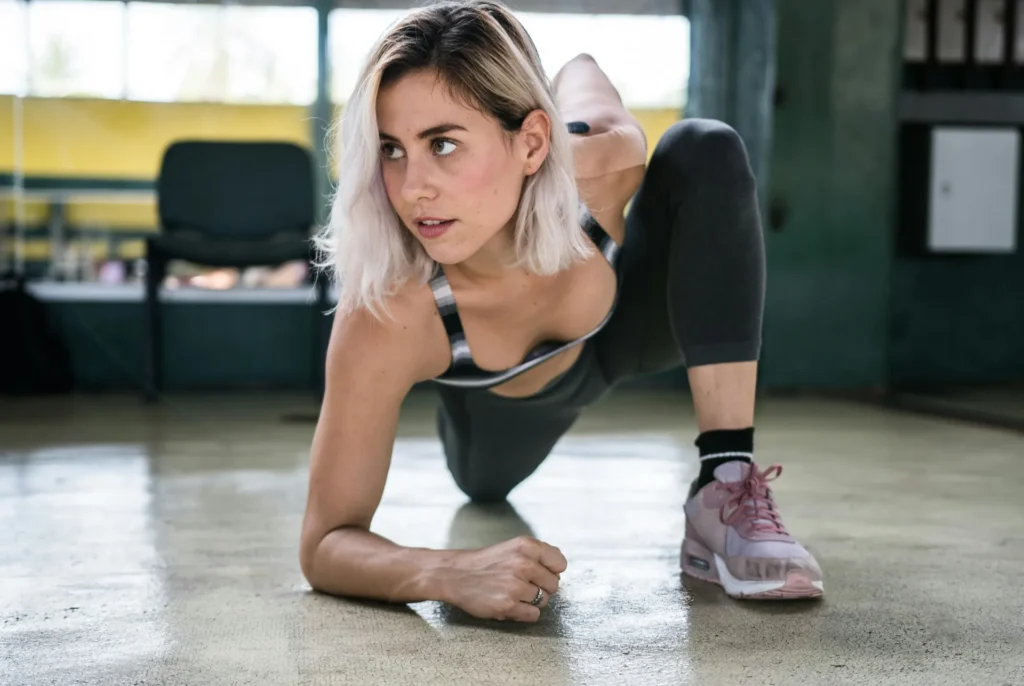
These bodyweight leg exercises train your quads, glutes, hamstrings, calves, and inner thighs — no equipment needed. This beginner routine includes 9 movements:
- Lateral Lunge to Reverse Lunge
- Alternating Reverse Lunge
- Bulgarian Split Squat
- Lateral Squat Walk
- Bent-Over Standing Glute Kickback
- Single-Leg Glute Bridge
- Bent-Over Calf Raise
- Standing Toe Raise
- Seated Calf Raise
How to do it: 8–12 reps per side, 2 sets each, 30 seconds rest between sets. Total time: about 20 minutes.
When I couldn’t make it to the gym for a week, I decided to see what I could do using just the floor and my own bodyweight. By the next morning, my quads and glutes were noticeably sore — a clear sign that even simple exercises can work when done right. That’s when I realized bodyweight training could actually build leg strength at home.
These bodyweight leg exercises are now my go-to for any beginner asking how to get stronger legs without equipment. The key is picking the right moves and controlling every rep — no swinging, no shortcuts. Done properly, even a short session can give your legs a real workout and help you build strength safely and effectively.
Quick Summary
- 9 bodyweight leg exercises, no equipment needed
- Covers quads, glutes, hamstrings, calves, and inner thighs
- Beginner modifications included for every movement
- Total session: about20 minutes
Can You Build Legs with Just Bodyweight?
Yes, you can build stronger legs with bodyweight training, but legs need a slightly different approach than abs or shoulders. Leg training bodyweight-only is more demanding than it looks because the lower body naturally needs more load to fatigue than the abs or shoulders.
That is why single-leg exercises matter so much. Basic squats are useful, especially for learning control, but they can become easy because both legs share the work. Moves like Bulgarian Split Squats and Single-Leg Glute Bridges put more demand on one side at a time, which makes them much more effective for beginners training at home.
Good bodyweight leg workouts should also train more than just your quads. If you only do squat-style movements, your glutes, hamstrings, calves, and lower-leg muscles may not get enough attention. A better routine includes knee-dominant moves, hip-dominant moves, single-leg work, and lower-leg exercises. A well-structured calisthenics leg workout covers all of these. Bodyweight training legs this way takes more planning than just picking squat variations, but it leads to a more balanced and injury-resistant lower body.
The best bodyweight leg exercises for beginners are not always the hardest-looking ones. They are the exercises you can control, repeat consistently, and actually feel in the right muscles. That is what makes leg exercises at home no equipment worth organizing into a proper routine.
9 Leg Exercises Using Bodyweight
These body weight leg exercises are arranged from bigger compound movements to more focused isolation work, so you can train your legs from multiple angles without equipment. If you are looking for easy bodyweight leg exercises to start with, or you want a simple lower-body routine you can follow at home, this list gives you both. The Lateral Lunge to Reverse Lunge also works as one of the more effective inner leg exercises at home, targeting the adductors that most squat-focused calisthenic leg workouts leave out.
| Exercise | Muscles | Difficulty |
|---|---|---|
| Lateral Lunge to Reverse Lunge | Quads; glutes; inner thighs | Beginner-Intermediate |
| Alternating Reverse Lunge | Quads; glutes | Beginner |
| Bulgarian Split Squat | Quads; glutes | Beginner-Intermediate |
| Lateral Squat Walk | Glutes; quads; outer thighs | Beginner |
| Bent-Over Standing Glute Kickback | Glutes; hamstrings | Beginner |
| Single-Leg Glute Bridge | Glutes; hamstrings | Beginner-Intermediate |
| Bent-Over Calf Raise | Calves; ankle stabilizers | Beginner |
| Standing Toe Raise | Tibialis anterior; ankle stabilizers | Beginner |
| Seated Calf Raise | Calves; ankle stabilizers | Beginner |
1. Lateral Lunge to Reverse Lunge

Muscles worked: Quads, glutes, inner thighs
How to do
- Stand with your feet about twice shoulder-width apart, feet flat on the floor, and toes naturally turned slightly outward.
- Keep your hands in front of your chest, open your chest, and look straight ahead.
- Step into a lateral lunge to one side by bending the working leg while keeping the other leg straight. Keep your back straight.
- Sit your hips back until your hips are slightly above knee level, with your body weight on the bent leg.
- Push through the working leg to return to the center standing position.
- Step the same leg back into a reverse lunge.
- Keep your front foot planted, lower your back knee toward the floor, then push back to the starting position.
Tips
- Sit your hips back during the lateral lunge instead of only pushing your knee forward.
- Keep your front foot stable during the reverse lunge and avoid swaying side to side.
- Keep your knees tracking in the same direction as your toes.
- Breathe in as you lower and breathe out as you stand up.
- If you are a beginner, slow the movement down and make sure every step is controlled.
Easier version: Start with only the lateral lunge without adding the reverse lunge. Once your leg strength and balance improve, combine the two movements.
Troubleshooting
- If your knee caves inward during the lateral lunge, narrow your stance and keep your knee aligned with your toes.
- If you lose balance during the reverse lunge, shorten your step back and use a smaller range of motion.
- If your torso leans too far forward, reduce the depth and keep your chest open.
- If one side feels much weaker than the other, start with the weaker side and reduce the reps per set.
2. Alternating Reverse Lunge

Muscles worked: Quads, glutes
How to do
- Stand with your feet shoulder-width apart and keep your hands in front of your chest.
- Keep your upper body stable and look straight ahead.
- Step one leg back, keeping your front foot firmly planted on the floor.
- Bend both knees at the same time and lower your back knee toward the floor.
- Push through your front leg to return to the starting position.
- Step the other leg back and repeat the same movement.
- Alternate sides without rushing the movement.
Tips
- Keep your front foot fully planted, especially the heel. Use the ball of your back foot for support, with most of your weight on the front foot.
- Keep your torso upright during the reverse lunge and avoid arching or collapsing your lower back.
- Control the lowering phase and actively push through the front leg to stand up.
- Keep your step length consistent on both sides.
- Brace your core throughout the movement to reduce body sway.
Easier version: Reduce the depth and perform a half reverse lunge. You can also hold a wall or chair for balance if needed.
Troubleshooting
- If you feel too much pressure in your front knee, check whether your step is too short and move your back foot slightly farther back.
- If your body keeps swaying side to side, pause for 1 second at the bottom before standing up.
- If your back foot lands too heavily, slow down the step-back phase.
- If one side feels much different from the other, reduce the reps and keep the movement quality the same on both sides.
3. Bulgarian Split Squat

Muscles worked: Quads, glutes
How to do
- Stand with your back facing a chair and keep your front foot firmly planted on the floor.
- Place one foot on the chair behind you, resting either the top of your foot or your toes naturally on the chair.
- Keep your hands in front of your chest and stabilize your body.
- Slowly bend your front leg and lower your body straight down.
- Keep your front knee tracking in the same direction as your toes. Do not let it cave inward.
- Once you reach a depth you can control, push through your front foot to stand back up.
- Exhale as you come up and inhale as you lower down.
Tips
- Find a stable front-foot position first, and do not stand too close to the chair.
- Keep most of your weight on the front leg. The back leg is only for support.
- You can lean slightly forward, but do not round your back.
- Lower and stand up slowly. Do not bounce out of the bottom position.
- If you are a beginner, start with a smaller range of motion before going deeper.
Easier version: Start with a regular reverse lunge, or hold a wall while doing the Bulgarian split squat to reduce the balance demand.
Troubleshooting
- If your front foot feels unstable, adjust your foot position until your knee feels comfortable.
- If your back foot feels uncomfortable on the chair, use a lower chair or place padding under your foot.
- If your pelvis twists during the movement, reduce the depth and keep your body facing forward.
- If your front thigh feels too much pressure, sit your hips slightly back to involve your glutes more.
4. Lateral Squat Walk

Muscles worked: Glutes, quads, outer thighs
How to do
- Stand with your feet slightly wider than shoulder-width apart and keep your hands in front of your chest.
- Bend your knees slightly and move into a half-squat position.
- Sit your hips back and keep your back naturally straight.
- Step sideways to one side.
- Bring the other foot in, but do not fully stand up.
- Move several steps to one side, then return in the opposite direction.
- Stay low throughout the movement and avoid bouncing up and down too much.
Tips
- Stay in a half-squat position the whole time and do not let your hips rise up.
- Keep your toes and knees pointing in the same direction to avoid knee collapse.
- Do not take steps that are too large. Focus on stability and control first.
- Keep your body weight centered between both feet and avoid swinging side to side.
- Brace your core and keep your upper body quiet.
Easier version: Use a shallower squat position, or take smaller side steps to build glute and knee control first.
Troubleshooting
- If your knees cave inward easily, shorten your step and actively push your knees outward.
- If you do not feel your outer thighs or glutes working, stay slightly lower in the half-squat position.
- If your body moves up and down too much, you are standing too tall. Return to the half-squat position.
- If your footwork feels messy, move slowly for 2 steps, pause, then gradually make the movement continuous.
5. Bent-Over Standing Glute Kickback

Muscles worked: Glutes, hamstrings
How to do
- Hold the back of a chair or another stable support with both hands.
- Hinge forward from your hips and keep your back flat.
- Use one leg as your supporting leg and keep the knee slightly bent.
- Lift the other leg backward with your toes naturally pointing down.
- Squeeze your glute as you lift your leg. Do not swing the leg.
- Pause briefly at a height you can control.
- Slowly lower your leg back to the starting position, then repeat.
Tips
- Focus on glute contraction, not on lifting your leg as high as possible.
- Keep your body stable and do not lean backward as you lift the leg.
- Keep your supporting foot planted and avoid locking the knee.
- Lift and lower slowly to reduce momentum.
- Exhale as you lift the leg and inhale as you lower it.
Easier version: Use a smaller range of motion and perform a lower kickback. You can also hold the chair more firmly for support.
Troubleshooting
- If your lower back feels sore, your leg may be lifting too high or your body may be leaning backward. Reduce the range of motion.
- If your pelvis rotates side to side, make the kickback smaller and keep your hips facing the floor.
- If your supporting leg feels unstable, widen your stance slightly.
- If you do not feel your glutes working, pause for 1–2 seconds at the top before lowering the leg.
- If you struggle to keep your torso stable, basic back training can help you build better posture and control.
6. Single-Leg Glute Bridge

Muscles worked: Glutes, hamstrings
This move also works your glutes, especially when you sit your hips back and push through the working leg. For more glute-focused exercises, you can add a short bodyweight glute routine on another day.
How to do
- Lie on your back with one leg bent and the foot planted on the floor.
- Lift the other leg and keep it naturally straight or slightly bent.
- Place your arms by your sides to help with stability.
- Brace your core and keep your lower back in a natural position.
- Push through the heel of your supporting leg and lift your hips upward.
- At the top, squeeze your glute and keep your shoulders, hips, and knee close to one line.
- Lower your body slowly and do not drop your hips back to the floor.
Tips
- Use your glutes to lift your hips instead of pushing through your lower back.
- Do not place your supporting foot too far away from your hips, or your hamstrings may take over.
- Pause for 1 second at the top and feel your glute contract.
- Control the lowering phase and do not drop quickly.
- Keep the lifted leg stable and avoid swinging it side to side.
Easier version: Start with a regular two-leg glute bridge. Once your glute activation feels stable, progress to the single-leg version.
Troubleshooting
- If your lower back feels strained, lower your hip height and brace your abs more.
- If your hamstring cramps, move your supporting foot slightly closer to your hips.
- If one side of your pelvis lifts higher than the other, return to the two-leg glute bridge and rebuild control.
- If your supporting foot slips, use a non-slip mat or train barefoot.
7. Bent-Over Calf Raise

Muscles worked: Calves, ankle stabilizers
How to do
- Hold the back of a chair or another stable support with both hands.
- Hinge forward from your hips and keep your back flat.
- Keep both feet planted on the floor and your knees slightly bent.
- Brace your core and keep your body from swaying.
- Slowly lift your heels and shift your weight onto the balls of your feet.
- Pause briefly at the top and feel your calves contract.
- Slowly lower your heels back to the floor with control.
Tips
- Do not bounce your body up and down as you lift your heels.
- Pause at the top instead of tapping the floor quickly.
- Keep pressure even through both feet and avoid shifting to one side.
- Keep your back flat and avoid collapsing your lower back.
- Use a range of motion that your ankles can control.
Easier version: Stand more upright and hold a chair while doing a regular standing calf raise to reduce the control demand.
Troubleshooting
- If your ankles wobble, reduce how high you lift your heels and focus on stability first.
- If you do not feel your calves working, slow down the lowering phase instead of dropping quickly.
- If too much pressure goes to the outside of your feet, adjust your foot position and press through the base of your big toes as well.
- If your body sways forward and backward, your core is not fixed enough. Move slightly closer to the chair.
8. Standing Toe Raise

Muscles worked: Tibialis anterior, ankle stabilizers
How to do
- Stand with your feet hip-width apart and your toes pointing forward.
- Lean against a wall or hold a chair for balance.
- Keep your heels on the floor and slowly lift your toes, shifting your weight onto your heels.
- Hold the top position for 1–2 seconds and feel the tibialis anterior contract.
- Slowly lower your toes back down with control. Do not simply let them drop.
- You can perform the movement one leg at a time to make it harder.
Tips
- Keep your core braced and avoid leaning your body forward or backward.
- Pause at the top to increase the contraction in the tibialis anterior.
- Keep both feet working evenly and avoid shifting to one side.
- Move slowly up and down instead of swinging your feet.
- Beginners can hold a wall or chair for balance.
Easier version: Lift both toes at the same time instead of doing the movement one leg at a time. Build control and balance first, then progress to the single-leg version.
Troubleshooting
- If your ankles wobble side to side, use the wall for support.
- If you do not feel the front of your lower leg working, gradually increase the top hold.
- If your body leans forward or backward, check whether your weight is properly shifted onto your heels.
- If your toes drop too quickly, slow the movement down and keep the muscle under tension.
Want core strength? See our bodyweight core training routines.
9. Seated Calf Raise

Muscles worked: Calves, ankle stabilizers
How to do
- Sit on the edge of a chair with both feet planted firmly on the floor.
- Bend your knees to about 90 degrees and keep your feet hip-width apart.
- Keep your upper body upright and place your hands on your thighs if needed.
- Slowly lift your heels while keeping the balls of your feet on the floor.
- Pause at the top and feel your calves contract.
- Slowly lower your heels back to the floor with control.
- Use a full range of motion on every rep and avoid quick bouncing.
Tips
- Do not use your body to rock forward and backward as you lift your heels.
- Pause for 1 second at the top instead of rushing the reps.
- Press evenly through both feet and avoid letting one side do more work.
- Control the lowering phase so your calves stay under tension.
- To make it harder, gently press your hands onto your thighs.
Easier version: Use a smaller range of motion and perform slow, controlled seated calf raises first. Once your calves adapt, move through the full range.
Troubleshooting
- If your toes grip the floor too much, relax your toes and keep the pressure on the balls of your feet.
- If you only feel one calf working, check whether your feet are placed symmetrically.
- If your ankles wobble side to side, slow down and keep your heels moving straight up and down.
- If the movement feels too easy, increase the top hold instead of moving faster.
Safety Tips: The most important thing to remember for safe leg training is to warm up your knees, hips, ankles, and glutes before starting the workout. Use a few dynamic movements, such as bodyweight squats, hip circles, leg swings, and ankle rolls, to get your lower body ready. Then start the first set at a slower pace and use a smaller range of motion before going deeper into lunges, split squats, or calf raises.
20 Minute Beginner Bodyweight Leg Workout Routine
This beginner bodyweight leg workout starts with bigger compound exercises, then moves into single-leg and accessory work. The order matters: compound movements like lunges and split squats come first when your legs are freshest, while calf and ankle exercises finish the session. If you are just starting out or want simple home leg exercises, this plan gives you everything you need to train your quads, glutes, hamstrings, calves, and lower legs effectively without any equipment. This is a complete bodyweight legs workout — not just a squat circuit.
| Exercise | Sets | Reps | Rest |
|---|---|---|---|
| Lateral Lunge to Reverse Lunge | 2 | 8–12 per side | 30s |
| Alternating Reverse Lunge | 2 | 8–12 per side | 30s |
| Bulgarian Split Squat | 2 | 8–12 per side | 30s |
| Lateral Squat Walk | 2 | 12 sec | 30s |
| Bent-Over Standing Glute Kickback | 2 | 8–12 per side | 30s |
| Single-Leg Glute Bridge | 2 | 8–12 per side | 30s |
| Bent-Over Calf Raise | 2 | 12–15 | 30s |
| Standing Toe Raise | 2 | 12–15 | 30s |
| Seated Calf Raise | 2 | 12–15 | 30s |
Training Frequency: 2 times per week, with at least two rest day between sessions. If this is your primary no equipment leg workout for the week, two sessions is a good starting point.
This no equipment bodyweight leg workout is enough for most beginners to start building real leg strength at home. Focus on clean, controlled reps rather than rushing through sets. If you want a leg workout no equipment setup that stays beginner-friendly, concentrate on control first. As you progress, you can gradually increase reps, add extra sets, or hold positions slightly longer, but always prioritize proper form.
With consistent effort, this home leg workout no equipment plan will help you develop stronger, more balanced legs without needing any gym machines or weights.
Common Mistakes & Tips
Even simple bodyweight leg exercises no equipment can feel ineffective if your form breaks down. Most beginners do not need harder moves right away. They need better control, better balance, and a routine that trains more than just squats.
Mistake 1: Treating knee cave as only a knee problem
If your knees collapse inward during lunges, split squats, or lateral movements, the issue is not always the knee itself. It often comes from poor foot pressure, weak hip control, or using a stance that is too wide for your current mobility.
Before going deeper, make the rep smaller and check whether your whole foot stays planted. You should feel your hips and working leg helping the movement, not just your knee trying to hold the position.
Mistake 2: Using your lower back instead of your glutes
Glute moves like kickbacks and single-leg glute bridges should not feel like lower-back exercises. If your lower back tightens before your glutes do, you are probably lifting too high, moving too fast, or skipping the pause at the top.
Use a smaller range of motion and slow the rep down. Pause for 1–2 seconds where your glutes contract, then lower with control. This matters if your goal is learning how to get bigger legs, because the right muscles need to do the work.
Mistake 3: Skipping calves and lower-leg work
A lot of leg bodyweight exercises focus only on squats, lunges, and glute work. Those are useful, but they do not fully train your calves, tibialis anterior, or ankle stabilizers.
Lower-leg work may look simple, but it helps with balance, ankle control, and single-leg strength. That is why this routine includes calf raises and toe raises instead of only thigh and glute exercises.
Mistake 4: Chasing full range before you own the movement
Going deeper is not always better. Range only helps when you can control the position. If a deeper lunge, split squat, or squat walk makes you lose balance, shift into your lower back, or rush through the bottom, the range is too big for now.
Use a range you can repeat cleanly first. A controlled half rep is more useful than a deep rep that collapses halfway down. Build control first, then increase depth later.
How to Progress Bodyweight Leg Exercises
Once these moves start feeling easier, do not jump straight into flashy variations like squat jumps or sissy squats. Progression works better when you make the basic movements harder first. For equipment-free bodyweight leg exercises, that usually means slower reps, better control, less support, or a smarter single-leg progression.
1. Increase time under tension
Start by slowing down the lowering phase of each rep. Take 3–4 seconds on the way down, then pause briefly at the hardest point before standing back up.
This works well for lunges, Bulgarian split squats, glute bridges, calf raises, and toe raises. You do not need to add harder exercises right away. Slower reps often make body weight leg workouts feel much more challenging without changing the routine. Treating each leg workout bodyweight session as a skill practice rather than just a cardio session keeps the quality high and helps you progress faster.
2. Progress toward single-leg movements
If regular reverse lunges feel stable, the next step is not always jumping or adding speed. A better path is:
Reverse Lunge → Bulgarian Split Squat → Single-Leg Glute Bridge → more advanced single-leg variations
This gives your legs a clear progression path without rushing into exercises your knees or balance may not be ready for. For a leg workout for beginners, controlled single-leg work is usually more useful than chasing advanced moves too early.
3. Reduce support gradually
If you are using a chair, wall, or other support, do not remove it all at once. Start by holding it with both hands, then one hand, then fingertips only.
This is especially helpful if you are heavier, new to training, or still building balance. The goal is not to make the exercise unstable just for the sake of it — it is to make your bodyweight leg workout at home progressively more demanding while still keeping the movement clean.
4. Add sets before changing exercises
Before replacing an exercise with a harder one, add one extra set first. For example, move from 2 sets to 3 sets on lunges, split squats, glute bridges, or calf raises.
This gives you more training volume without forcing your body into a variation you cannot control yet. If your form stays clean after the extra set, then you can think about moving to a harder version.
5. Pair it with other no-equipment training
Your legs also work during core training, full-body circuits, and other no-equipment workouts. If this at home leg workout no equipment routine starts feeling easy, pair it with another simple lower-body or full-body session instead of adding random extra reps.
For more routines, browse the No Equipment training section. Build the base first, then move to a harder leg progression when your balance, control, and recovery are ready.
Frequently Asked Questions
Good leg exercises that are easy on the knees?
If your knees are sensitive, stick to low-impact, controlled movements. Glute bridges, step-ups on a sturdy surface, and lying hamstring curls are great options. Keep each rep slow and focus on engaging your glutes and core to take pressure off your knees. Avoid deep squats or jump-based moves until your strength and stability improve.
If your knees are sensitive, start with low-impact, controlled movements and use knee-friendly exercise modifications before adding deeper squat or lunge variations.
Why do my legs give out when I exercise?
Leg fatigue often happens when stabilizing muscles aren’t strong enough or your endurance hasn’t caught up. To prevent your legs from giving out, start with fewer reps, longer rests, and easier variations of each exercise. Gradually build up, and pay attention to engaging your quads, hamstrings, glutes, and ankle stabilizers. Over time, your legs will feel more stable and ready for heavier or more complex bodyweight leg workouts.
How bad is it for your health to skip leg training?
Skipping leg workouts affects more than just your thighs and glutes. Legs are crucial for balance, posture, walking, and most daily movements, so neglecting them can make your whole body feel less stable.
Leg training also benefits your upper body. When your quads, glutes, and hips can brace properly, exercises like push-ups, planks, and rows become more controlled, letting your upper-body muscles engage better.
You don’t need weights to start. Even a few sessions per week with bodyweight leg exercises can improve strength, balance, mobility, and overall control — and make all your other workouts feel more effective.
Conclusion
If I were doing this routine for the first time, I would keep it simple: move slowly, stay in control, and focus on feeling the right muscles work.
These bodyweight leg exercises do not need to be fancy to be effective. Start with one round, follow the plan 2–3 times per week, and build from there.
Try the workout today and see which exercises challenge your legs the most