
Beginner Arm Workout at Home Without Equipment: 9 Moves for Stronger Arms
By Zephyr · Published May 21, 2026
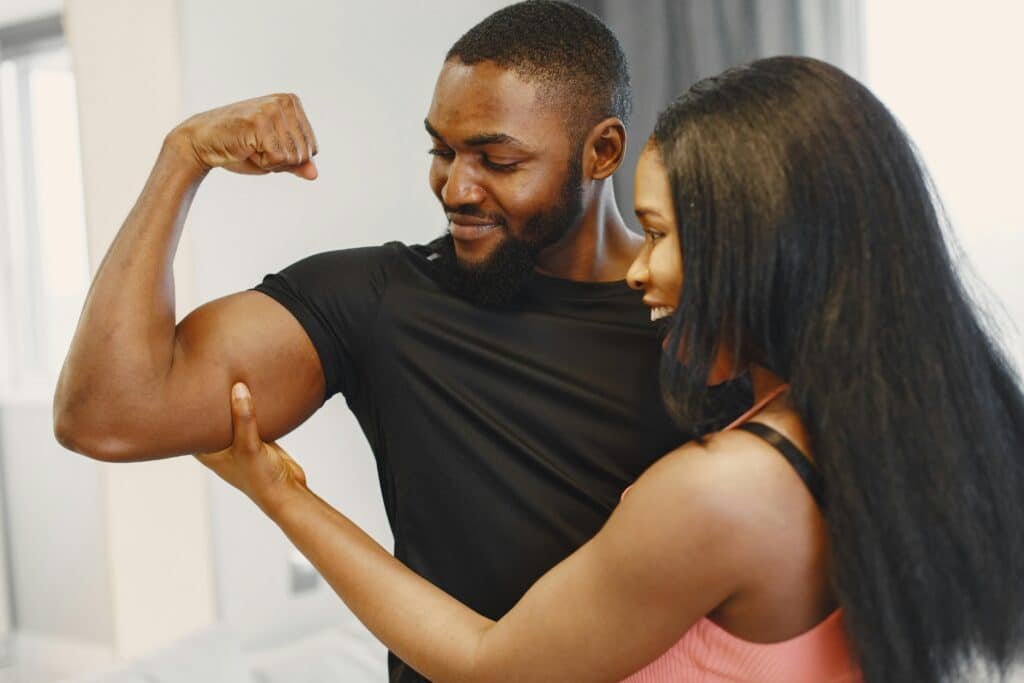
This beginner arm workout at home without equipment uses only bodyweight to train your biceps, triceps, and forearms. Follow these 9 moves — no gym, no weights required:
- Wrist Circles (Warm-Up)
- Shoulder Circles (Warm-Up)
- Narrow Push-Ups
- Overhead Push-Ups
- Chair Tricep Dips
- Towel Bicep Curls
- Towel Hammer Curls
- Triceps Stretch
- Biceps & Forearm Stretch
Tip: Complete 4 sets of 15 reps for each main exercise. Train 2–3 times per week for consistent results.
Most beginners underestimate how effective bodyweight training can be for arm development. If you’ve been putting off arm workouts because you don’t have dumbbells or a gym, you’re probably overthinking it.
This beginner arm workout at home without equipment is designed to help you build arm strength safely and effectively. No complicated gear — just a structured routine you can start today.
Many ask, “Can you build arm muscle without equipment?” — the answer is yes, if you focus on controlled movement, proper contraction, and paying attention to how your arm muscles feel.
Quick Summary
- This routine covers biceps, triceps, and forearms using zero equipment — just a towel and a chair.
- Warm up your wrists and shoulders first to prevent strain during training.
- Focus on controlled movement and proper breathing to maximize muscle activation.
- Suitable for complete beginners with no prior training experience.
Why Home Arm Workouts Actually Work
Bodyweight arm training works because your arm muscles respond to tension, time under tension, and controlled movement. Calisthenics arm exercises teach you to feel your biceps, triceps, and forearms activating.
At the peak of a curl or push movement, your biceps should feel fully contracted — not your shoulders taking over. Many beginners wonder, “How do I know if my biceps are working?” Paying attention to muscle sensation ensures you’re training effectively.
These bodyweight arm exercises are especially effective when performed with full range of motion and deliberate control. A common question is whether arms can be toned without weights — the answer is yes, tension and time under tension matter far more than the load itself.
Experience signal: beginners often find that slowing the rep down and pausing at the peak contraction makes them actually feel the muscle firing, which is a real confidence booster.
9 Arm Workouts No Equipment Exercises for Beginners
1. Wrist Circles (Warm-Ups)
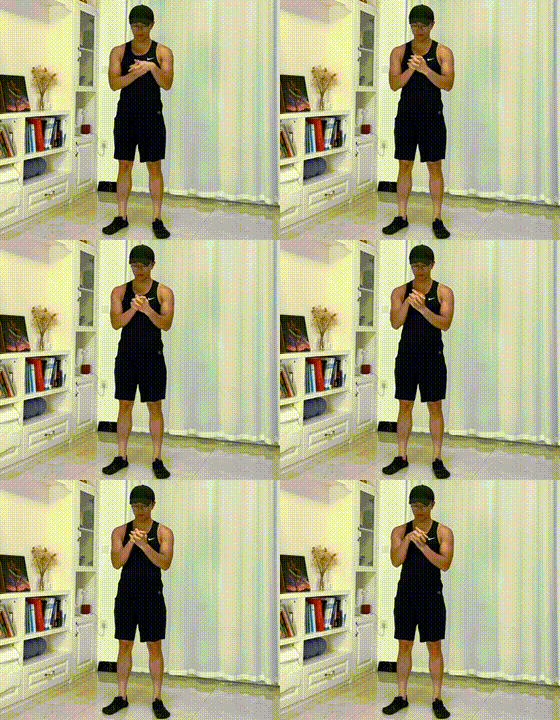
- How to do it: Make circular rotations with your wrists steadily.
- Hold: 30 seconds
- Tip: Fully mobilize joints to avoid strain during training.
2. Shoulder Circles
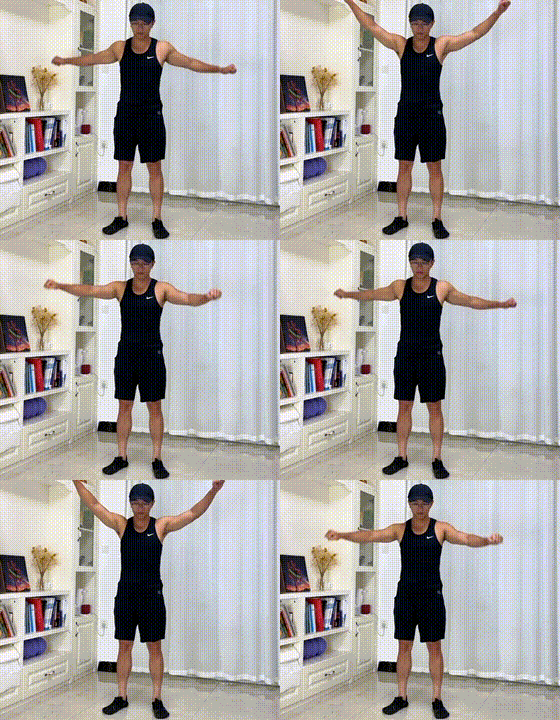
- How to do it: Rotate shoulders forward and backward smoothly.
- Hold: 30 seconds
- Tip: Loosen shoulder joints fully before formal workout.
3. Narrow Push-Ups (Main Exercises)
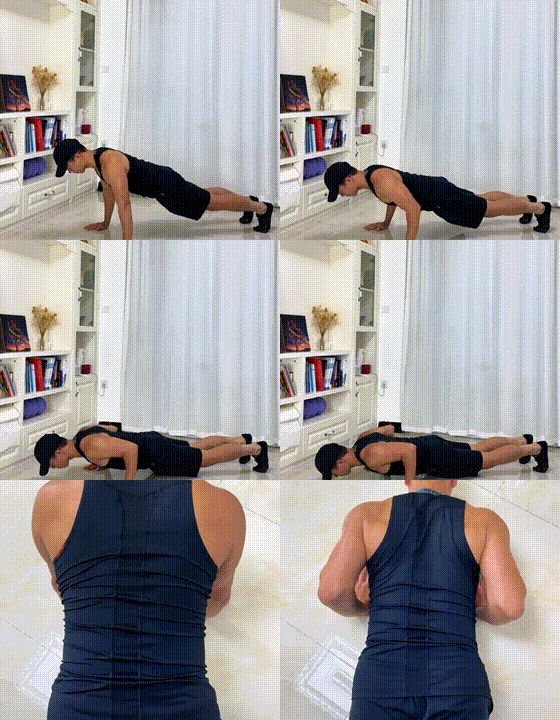
- Target muscles: Triceps, inner chest, arms
- How to do it: Place hands close to chest, keep your whole body in a straight line and arms close to your sides. Inhale while lowering body, exhale while pushing up.
- Reps: 15 reps × 4 sets
- Tip: Keep core tight and avoid hip sagging.
- [Troubleshooting]
- Hips sag → Engage core and maintain straight body
- Elbows flare → Tuck elbows close to sides
- Neck straining → Keep neck neutral
For a full push-day session, combine these push-up variations with our no-equipment home chest workout to target your entire upper body.
4. Overhead Push-Ups
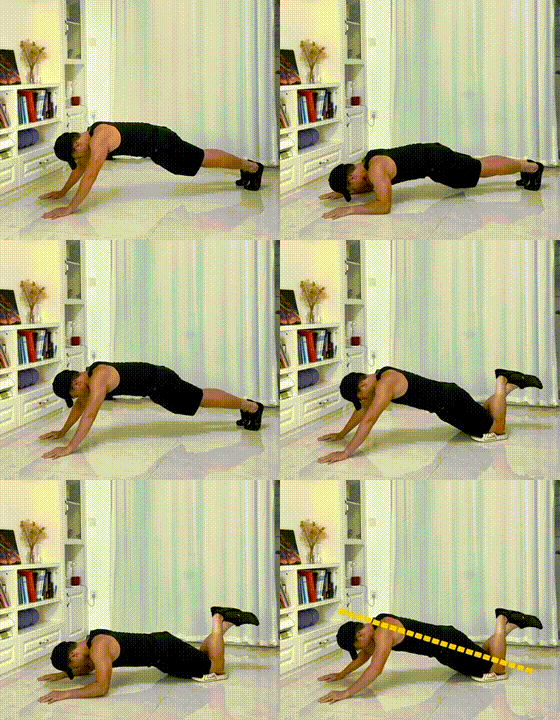
- Target muscles: Front arms, shoulders, triceps
- How to do it: Put hands above head at shoulder-width distance. Kneel down for modification if needed, keep hips tightened and body straight. Inhale while lowering body, exhale while pushing up.
- Reps: 15 reps × 4 sets
- Tip: Place soft items under knees to prevent injury.
- [Troubleshooting]
- Shoulders rounding → Keep chest lifted
- Lower back arching → Engage core
- Wrists uncomfortable → Slight hand adjustment
5. Chair Tricep Dips
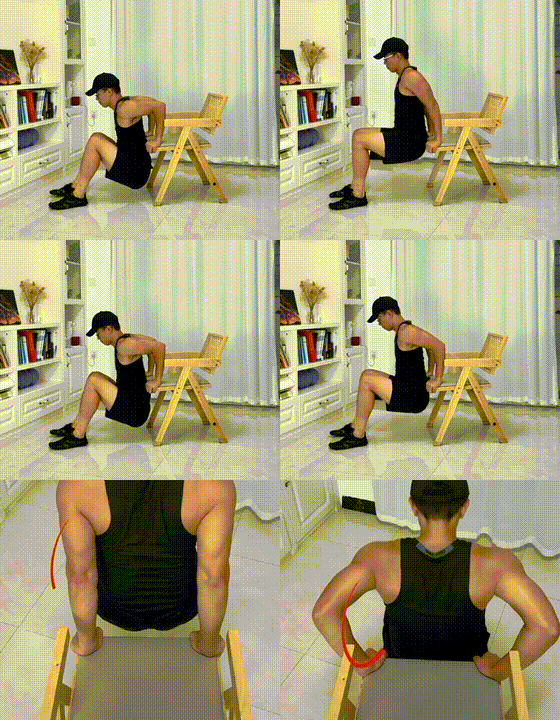
- Target muscles: Triceps, back arms
- How to do it: Place hands on the chair shoulder-width apart, slowly lower your body along the chair. Keep your body close to the chair, draw elbows inward and do not flare them out. Inhale while lowering body, exhale while pushing up.
- Reps: 15 reps × 4 sets
- Tip: Wrong posture will easily cause shoulder strain.
- [Troubleshooting]
- Elbows flaring → Draw them inward
- Shoulders shrugging → Stabilize shoulders
- Body too far from chair → Keep close to chair
6. Towel Bicep Curls
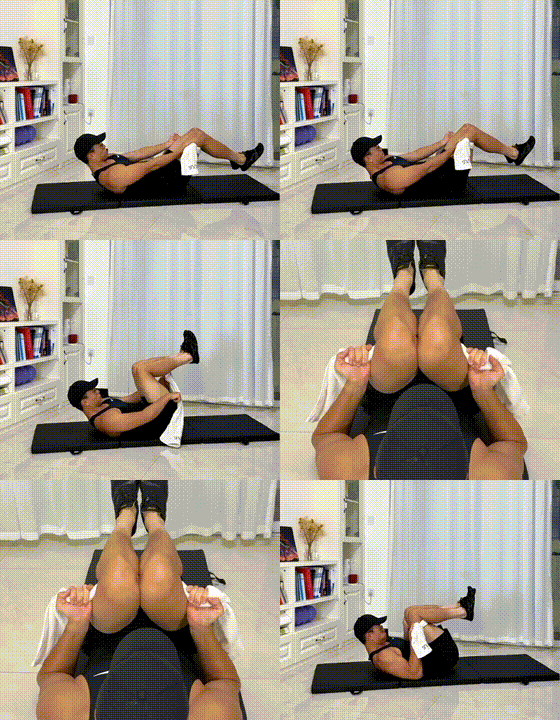
- Target muscles: Biceps
- How to do it: Lie flat on your back, wrap towel behind thighs and grip two ends with palms upward. Lift thighs by curling arms and lower down slowly. Exhale on lowering, inhale on lifting.
- Reps: 15 reps × 4 sets
- Tip: This is one of the most effective no equipment bicep workout moves you can do at home. Keep thighs relaxed and use arm strength only.
- [Troubleshooting]
- Using legs → Relax thighs, focus on arms
- Fast reps → Slow down for full contraction
- Wrists twisting → Keep palms facing up
7. Towel Hammer Curls
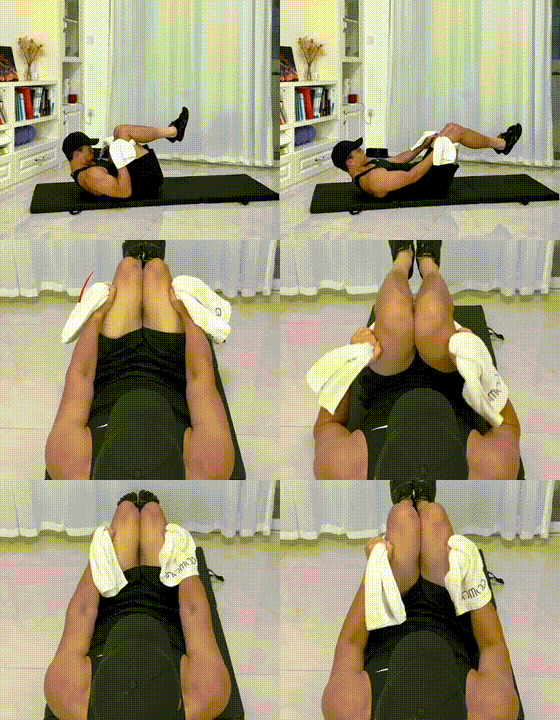
- Target muscles: Brachialis, forearms, biceps
- How to do it: Hold towel with palms facing each other, finish the same lifting movement. Control movement speed steadily. Exhale on lowering, inhale on lifting.
- Reps: 15 reps × 4 sets
- Tip: This move thickens your arm circumference effectively.
- [Troubleshooting]
- Swinging arms → Control the motion
- Shoulders engaging → Isolate biceps
- Uneven curl → Keep symmetry
8. Triceps Stretch
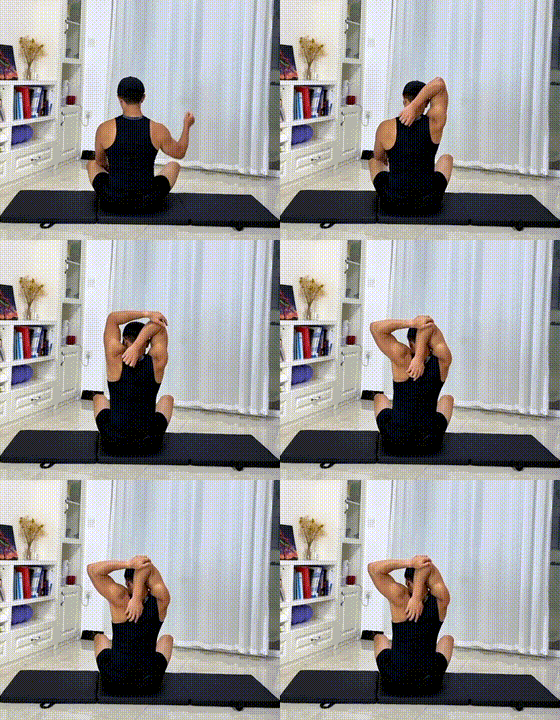
- How to do it: Raise one arm straight up, bend elbow and pull forearm backward gently. Hold steady without excessive force.
- Hold: 45 seconds each side
- Tip: Relax muscles completely after training.
9. Biceps & Forearm Stretch
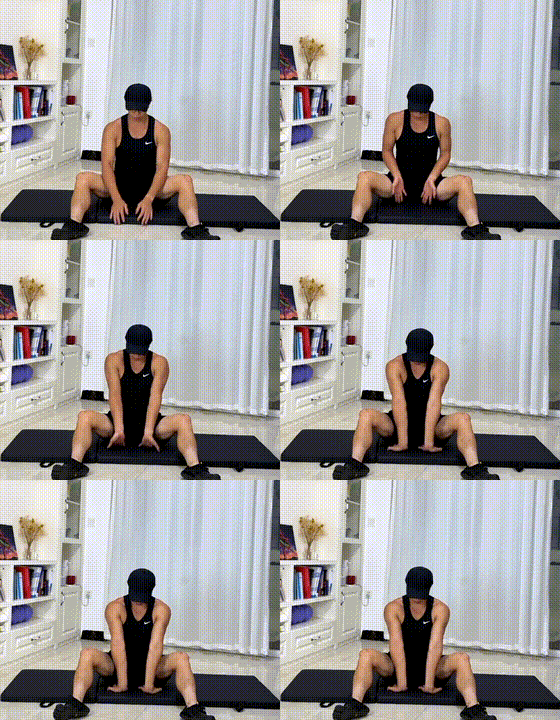
- How to do it: Stretch arms forward with palms down, push your hands backward slowly. Keep stable breathing during stretching.
- Hold: 45 seconds each side
- Tip: Relieve arm soreness effectively.
Weekly Beginner Arm Workout Routine (15–20 Minutes Per Session)
1.Warm-Up (Daily)
- Wrist Circles — 30 seconds
- Shoulder Circles — 30 seconds
2.Main Workout (2–3 Times Per Week)
- Narrow Push-Ups — 15 reps × 4 sets
- Overhead Push-Ups — 15 reps × 4 sets
- Chair Tricep Dips — 15 reps × 4 sets
- Towel Bicep Curls — 15 reps × 4 sets
- Towel Hammer Curls — 15 reps × 4 sets
3.Cooldown (Daily)
- Triceps Stretch — 45 seconds per side
- Biceps & Forearm Stretch — 45 seconds per side
Notes
- Stick with this routine for 2 weeks and you’ll start seeing real bodyweight workout results — even without any equipment.
- Gradually increase reps or add 1 extra set per exercise after 2–3 weeks to continue progression.
- Take rest days between workouts. Beginners can follow the schedule of training one day and resting one day to let muscles recover and grow fully.
Common Mistakes & Tips
Even well-designed arm exercises for beginners won’t deliver results if these habits appear:
Rushing reps — Most beginners speed through sets to “get it done,” wondering “Can I build muscle this way?” Slow down and focus on contraction.
Poor hand placement — Wrong positioning shifts tension to shoulders. Adjust based on where you feel the arm muscles working.
Skipping the squeeze — Not pausing at peak contraction reduces activation. Feel your pecs/biceps/forearms during each rep.
Training too often — Muscles grow in recovery. Three sessions per week with rest days are optimal.
For added challenge, try incorporating simple at-home arm variations or beginner-friendly calisthenics moves into your routine.
To build a balanced, injury-resistant upper body, pair this arm routine with our beginner back calisthenics routine for a complete push-pull training split.
Progression Tips
No gym needed to progress further with your beginner arm workout at home without equipment. Gradually:
- Slow lowering phases to 3–4 seconds per rep
- Add 2-second pauses at the bottom
- Increase reps before adding sets
- Adjust variations to target upper arm, biceps, triceps from new angles
Looking for more no-equipment workouts? Browse our complete No Equipment training section.
Ready for the next level? Check out our Advanced Calisthenics Arm Exercises guide.
Frequently Asked Questions
Can really flabby arms be toned?
Yes, even arms that appear flabby can be toned with consistent bodyweight training.It is absolutely possible to firm saggy, flabby arms, yet simple casual movement cannot achieve lasting toning. Arm looseness stems from two main causes: excess subcutaneous fat and insufficient muscle mass loss, which loses skin supporting tension. Consistent progressive bodyweight resistance training rebuilds biceps, triceps and forearm muscle volume to lift loose skin, while boosting daily calorie burn to reduce local fat. Only standardized, tension-controlled training can create firm arm contours; sporadic light exercise barely improves flabbiness.
How to tone arms without weights for beginners?
Beginner arm toning focuses on building neuromuscular connection rather than pursuing heavy volume. Start with low-difficulty regression moves to avoid joint strain: wall push-ups, chair tricep dips and slow arm rotations work best. Keep every movement slow and steady to lock muscle tension instead of relying on body swing. Maintain 2 to 3 weekly fixed training sessions; stable long-term practice outperforms occasional high-intensity workout. Master basic posture first, then gradually raise movement difficulty.
How do I know if my biceps are working?
- Targeted tension & squeeze: You feel a tight burn only in the bicep belly (front of upper arm), not forearms/shoulders, and can squeeze it rock-hard at the peak of each rep.
- No momentum cheating: Every rep is controlled by elbow flexion, no torso swinging or shoulder shrugging to move the load.
- Consistent fatigue & pump: After 10-15 reps, you feel a distinct “pump” (full, tight, slightly swollen biceps) and targeted fatigue, not general arm tiredness.
Is a 30 minute arm workout effective?
Yes, a focused 30-minute arm workout can be highly effective.A targeted 30-minute arm workout delivers remarkable efficiency under scientific arrangement. Short-time concentrated training avoids physical fatigue decline, matching human muscle optimal stimulation cycle. Mix compound and isolated arm exercises to cover all arm muscle groups, control reasonable rest interval between sets. Regular 30-minute training 2-3 times weekly brings obvious toning, muscle gain and strength improvement effects.
Conclusion
This beginner arm workout at home without equipment gives you everything needed to strengthen your arms, build better control, and improve posture.
Start your first session today — your living room is enough. Pay attention to muscle activation, progression, and consistency for real results.