
Lower Leg Exercises at Home: Calves, Shins and Outer-Leg Strength
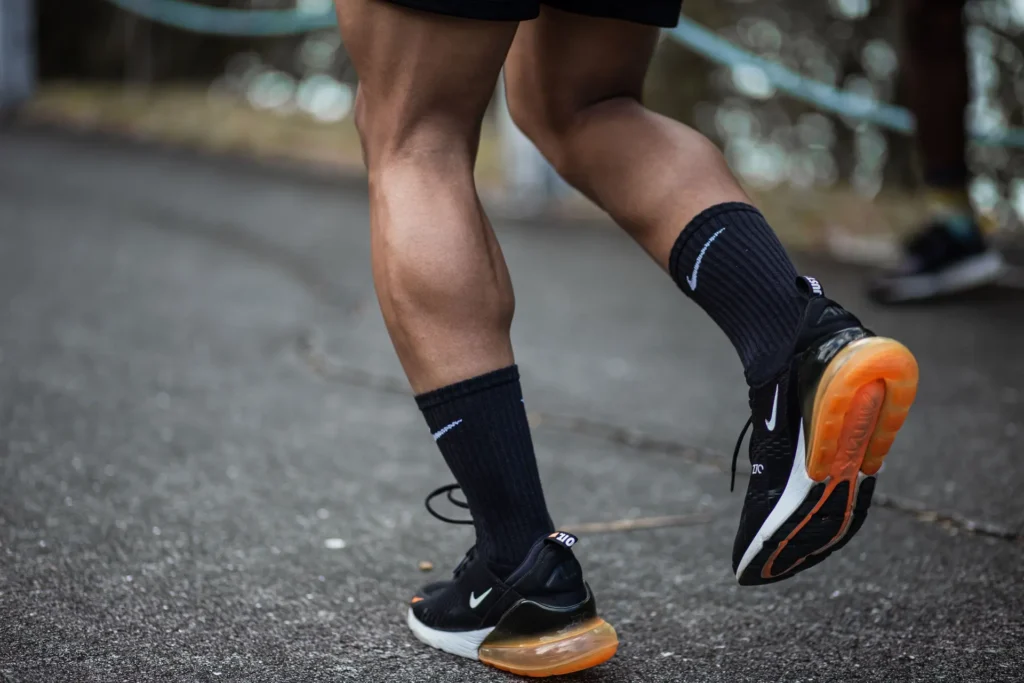
Lower leg exercises at home should train more than the muscles behind your shin. A balanced routine also needs work for the front and outside of the lower leg.
These lower leg strengthening exercises organize four movement directions into one simple system:
- Straight-knee plantar flexion for the gastrocnemius;
- Bent-knee plantar flexion for the soleus;
- Dorsiflexion for the tibialis anterior;
- Ankle eversion for the fibularis group.
You can complete the full routine in approximately 10–15 minutes using floor space, a wall, a chair and optional household resistance.
Quick Answer
The best lower leg exercises for a balanced home workout are:
- Dumbbell Standing Calf Raise on a Step;
- Seated Dumbbell Calf Raise;
- Wall Tibialis Raise;
- Seated Resistance-Band Ankle Eversion.
Perform two or three controlled sets of each movement twice per week. Begin with a version that allows a stable range of motion, then increase difficulty through load, range, unilateral work or resistance—not by adding unlimited repetitions.
This is a general strength routine for healthy beginners. It is not a rehabilitation program or a treatment for lower-leg pain.
What Counts as the Lower Leg?
| Practical Area | Main Muscles Emphasized | Primary Movement | Exercise Used Here |
|---|---|---|---|
| Back of the lower leg, knee straight | Gastrocnemius | Plantar flexion | Standing calf raise |
| Back of the lower leg, knee bent | Soleus | Plantar flexion | Seated calf raise |
| Front of the lower leg | Tibialis anterior | Dorsiflexion | Wall tibialis raise |
| Outside of the lower leg | Fibularis group | Eversion | Band ankle eversion |
This is a practical training map rather than a complete anatomical inventory. Other muscles contribute to ankle, foot and toe movement.
The Cleveland Clinic overview of the leg muscles provides a broader anatomical reference. For this workout, the goal is simpler: train the major movement directions that are commonly omitted when a routine consists only of standing calf raises.
Related guide
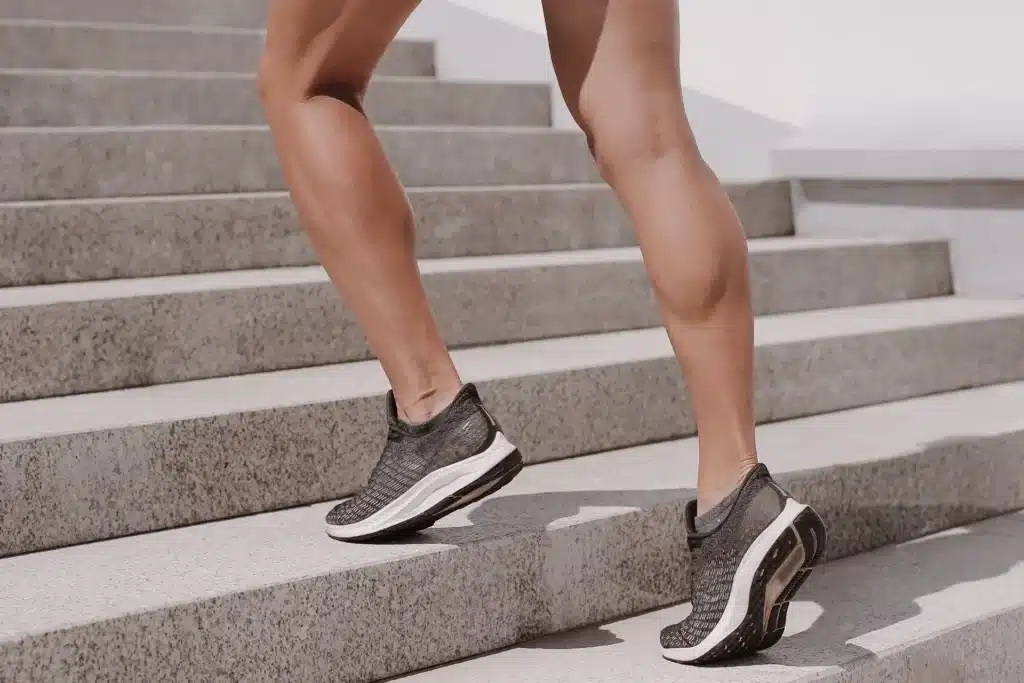
Use these three gastrocnemius exercises at home to train your calves without bouncing. Includes dumbbell, single-leg and resistance-band moves.
This guide stops below the knee. For balanced training above the knee, use a home thigh-training guide that combines front-of-thigh and back-of-thigh work.
Are Calf Raises Enough for the Whole Lower Leg?
No. Calf raises primarily train plantar flexion—the movement that points the foot downward or raises the heel.
They do not directly cover the two other directions emphasized in this routine:
- Pulling the forefoot toward the shin;
- Turning the sole slightly outward against resistance.
A routine made entirely of standing variations may also underrepresent bent-knee plantar flexion. That does not make standing calf raises ineffective. It means they are one part of lower-leg training rather than the entire system.
Straight-Knee and Bent-Knee Calf Work Have Different Roles
Knee position changes the plantar-flexion task rather than completely isolating one muscle.
In a study involving 30 healthy young men, knee-flexed plantar flexion produced lower total torque and lower medial-gastrocnemius activity than the knee-extended condition. A separate 12-week study involving 14 untrained adults found greater gastrocnemius growth from standing calf raises, while soleus growth did not differ significantly between the standing and seated conditions.
Together, these studies support using both knee positions for different training roles—not claiming perfect muscle isolation.
The straight-knee movement gives the gastrocnemius a more prominent role. The bent-knee version provides a practical way to change the task and place greater training emphasis on the soleus.
Related guide

Use these soleus exercises at home to train your lower calves with three bent-knee moves, simple equipment, a focused routine, and clear progression.
10–15-Minute Lower-Leg Workout at Home
Complete the exercises in the order shown. The routine moves from the strongest plantar-flexion pattern to smaller front- and outer-lower-leg movements.
| Exercise | Sets | Reps | Rest | Effort Target |
|---|---|---|---|---|
| Dumbbell Standing Calf Raise on a Step | 2–3 | 8–15 | 60 sec | Stop with 2–3 controlled reps available |
| Seated Dumbbell Calf Raise | 2–3 | 12–20 | 45–60 sec | Controlled full range |
| Wall Tibialis Raise | 2–3 | 12–20 | 45 sec | Stop before range shortens |
| Seated Resistance-Band Ankle Eversion | 2 | 12–15 each side | 30–45 sec | Light-to-moderate resistance |
Use a stable wall, chair or railing whenever balance could limit the working muscles.
1. Dumbbell Standing Calf Raise on a Step
Stand with the ball of one or both feet on a stable step while holding a wall or railing. Lower the heel under control, press through the forefoot and rise as high as you can without bouncing or rolling the ankle outward. Use body weight first, then add a dumbbell or backpack when the top of the rep range becomes consistently easy.
2. Seated Dumbbell Calf Raise
Sit on a stable chair with your knees bent and feet flat. Place a dumbbell, loaded backpack or other secure weight across the working thigh, raise the heel without lifting the forefoot, pause briefly and lower under control. If one leg is clearly stronger, train each side separately and begin with the weaker side.
3. Wall Tibialis Raise
Stand with your back against a wall and place your feet slightly forward. Keep the heels down while lifting the forefeet toward the shins, pause, then lower slowly. Move the feet farther from the wall to increase difficulty, but stop before the motion becomes a fast rocking action.
4. Seated Resistance-Band Ankle Eversion
Sit with the working foot supported and attach a light band so it pulls the forefoot inward. Keep the knee and shin relatively still while moving the sole outward, then return slowly. The fibularis muscles are the practical emphasis, but other ankle evertors can assist; perfect isolation is not required.
What Counts as a Completed Set?
Count only repetitions that meet the same basic standard:
- The intended joint action remains visible;
- The working range does not shorten substantially;
- The lowering phase remains controlled;
- Balance does not take over;
- The foot and ankle do not collapse into an unintended position.
Stopping a set because its quality has deteriorated is more useful than completing an arbitrary number with progressively smaller movements.
Minimum Session for Busy Days
When a complete workout is unrealistic, perform one controlled set of all four exercises:
- Standing calf raise;
- Seated calf raise;
- Wall tibialis raise;
- Band ankle eversion.
This takes approximately five minutes and preserves all four movement directions. It is a reduced session, not a replacement for gradually challenging full workouts.
Related guide
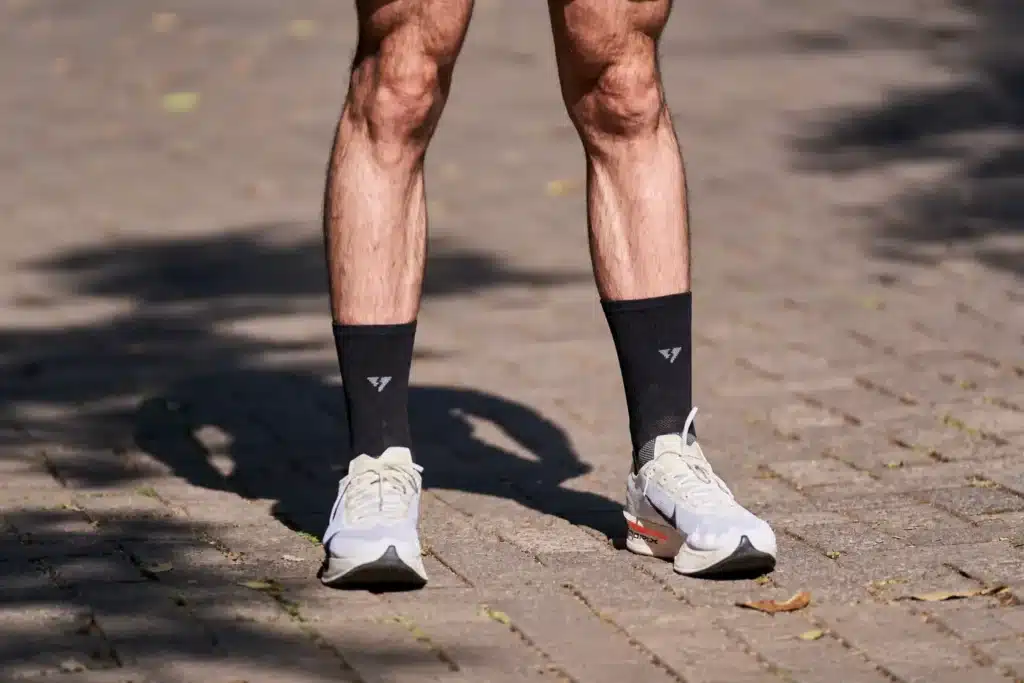
Use these tibialis anterior exercises to strengthen the front of your shins at home with wall raises, band dorsiflexion, and controlled heel walks.
Lower-leg work can finish a broader leg session, while a beginner glute routine built around hip extension, lateral control and single-leg stability can supply the hip-focused work that this routine does not cover.
How to Make Lower-Leg Exercises Harder at Home
Do not respond to every plateau by adding more repetitions. First determine whether the current version is genuinely controlled and challenging.
| Movement | First Progression | Next Progression | Avoid |
|---|---|---|---|
| Standing calf raise | Increase range on a step | Use one leg or add load | Fast bouncing repetitions |
| Seated calf raise | Add secure load | Pause longer or train one side | Pressing down on the weight with your hands |
| Wall tibialis raise | Move feet farther from the wall | Use one leg with assistance | Short, rapid rocking |
| Band ankle eversion | Increase band tension slightly | Increase range or pause | Rotating the entire leg |
A useful progression order is:
- Establish a repeatable range of motion;
- Control the lifting and lowering phases;
- Reach the top of the rep range;
- Add a small amount of difficulty;
- Return to the lower end of the rep range.
Use This Move-On Rule
Progress only when all of the following are true:
- You reach the top of the prescribed range;
- The first and final repetitions look similar;
- You can pause in the shortened position;
- The lowering phase remains controlled;
- You do not rely on momentum or compensating body movement;
- You repeat that performance in two consecutive sessions.
One successful set on one unusually good day does not establish readiness.
If the next version allows only one or two unstable repetitions, the difficulty gap is too large. Use a smaller load increase, partial assistance, a shorter lever or a modest change in range.
Record the Left and Right Sides Separately
Unilateral work can expose differences that bilateral totals hide. Use a short log:
| Date | Exercise Version | Left Side | Right Side | Load or Setup | Notes |
|---|---|---|---|---|---|
Record the same unit each time. For example, do not compare repetitions in one session with hold duration in the next.
The goal is not to force both sides to produce identical numbers immediately. It is to see whether each side is improving under comparable conditions.
For a broader framework covering when to progress, hold or regress an exercise, use this beginner calisthenics progression chart and its move-on rules.
An eight-week study involving 20 healthy participants tested two specific resistance-band protocols three times per week and reported changes in fibularis morphology and ankle strength. It supports resisted eversion as a trainable task, but it did not test this four-exercise routine, its twice-weekly schedule or injury prevention.
The study uses the names peroneus longus and peroneus brevis, which are also commonly called the fibularis longus and fibularis brevis.
Related guide
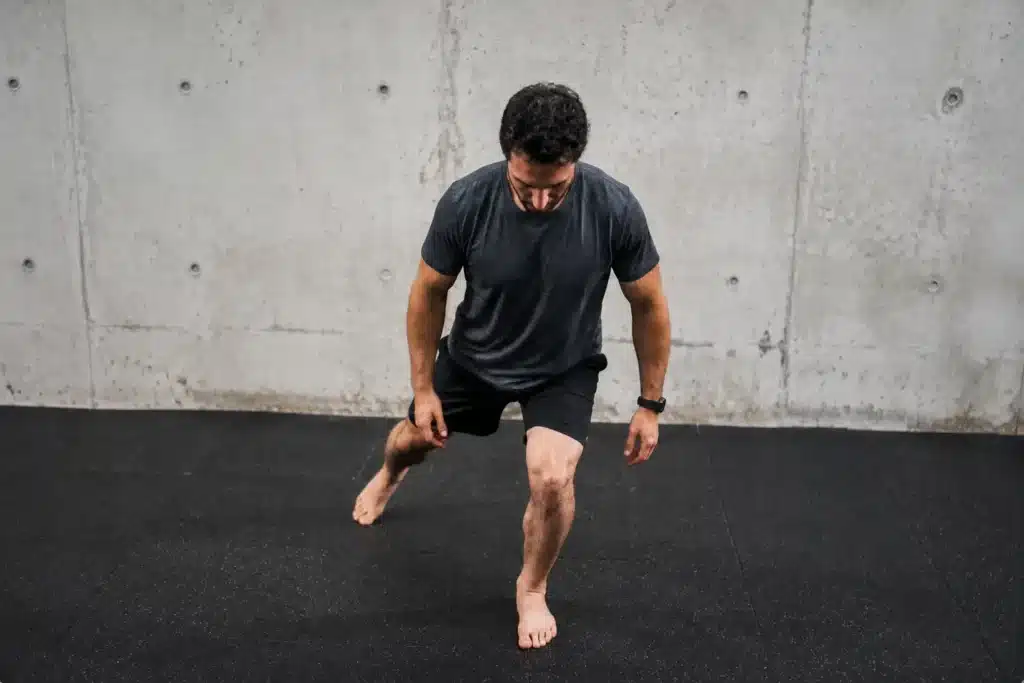
Train the fibularis group at home with band eversion, ankle-weight work and a three-way reach. Build controlled outer lower-leg strength in 15 minutes.
How Often Should You Train the Lower Legs?
A practical starting point is twice per week, with at least one day between hard lower-leg sessions.
Frequency alone does not determine whether the routine is appropriate. The total demand also depends on:
- Exercise difficulty;
- Number of hard sets;
- Proximity to technical failure;
- Running, jumping or sport participation;
- Long periods of standing or walking;
- Recovery between sessions.
Walking provides regular ankle movement, but it does not automatically replace progressive strength training. The external resistance, range and effort may be too low to create the same stimulus as deliberate exercise.
Likewise, being active every day is different from performing a hard lower-leg workout every day. Easy movement may be acceptable between sessions, while repeated high-effort sets still require recovery.
If this routine is part of a larger program, place it near the end of a leg workout or distribute selected movements across different training days. The broader Leg Workout hub can help you position lower-leg work alongside thigh and glute training.
Adjust the Workout to Today’s Readiness
Use the following four-way decision before each session:
| Decision | When It Fits | What To Do |
|---|---|---|
| Train | Normal daily readiness and no new movement-altering discomfort | Perform the planned workout |
| Reduce | Unusual fatigue, poorer control or noticeably lower performance | Do fewer sets, use an easier version or reduce load |
| Recover | General tiredness or residual fatigue makes strength work unproductive | Choose easy walking or comfortable mobility |
| Stop | Sharp pain, swelling, instability, loss of function or worsening symptoms | Stop training and seek qualified medical guidance |
A recovery day should feel easier than a training session. Turning it into high-repetition calf work defeats its purpose.
Do not use this decision table to diagnose pain. If discomfort is new, worsening, sharp or changes the way you move, it is no longer a routine programming decision.
Common Lower-Leg Training Mistakes
1. Treating the Calves as the Entire Lower Leg
Repeated plantar flexion does not train dorsiflexion and eversion in the same way. Keep at least one front-lower-leg movement and one controlled outer-lower-leg movement in the routine.
2. Adding Repetitions Without Increasing Difficulty
Very high repetition counts can increase fatigue without providing a clear progression. Once you exceed the target range comfortably, make the variation slightly harder and rebuild from the lower end.
3. Bouncing Through the Bottom Position
Rapidly reversing direction can make the set easier to count but harder to evaluate. Use a controlled bottom position and avoid forcing a painful stretch.
4. Allowing Balance to Limit the Set
Holding a wall or chair is not cheating. Support allows you to train the intended movement without ending the set because of unrelated balance loss.
5. Chasing an Exact Foot Angle
Foot shape and comfortable stance vary. Use a stable position in which the heel travels smoothly and the ankle does not collapse. Deliberately turning the toes far inward or outward is not required.
Frequently Asked Questions
What Are the Best Lower Leg Exercises?
A balanced selection includes a straight-knee calf raise, a bent-knee calf raise, a tibialis raise and a controlled ankle-eversion exercise. Together, these cover the back, front and outside of the lower leg more completely than calf raises alone.
Are Calf Raises Enough for the Whole Lower Leg?
No. They train plantar flexion but do not directly replace dorsiflexion or eversion work. Use them as part of the routine rather than the entire routine.
How Can I Strengthen My Lower Legs at Home Without a Machine?
Use a step, wall, stable chair, backpack, dumbbell or resistance band. Body-weight and household-supported variations can be progressed through range, unilateral work, pauses and load.
Can I Train My Calves and Tibialis Anterior in the Same Workout?
Yes. They perform different movement roles and can be included in the same short session. Follow the prescribed volume rather than taking every movement to failure.
Are 100 Calf Raises a Day Effective?
They may improve local endurance when the movement is initially challenging, but repetition count alone does not guarantee continued strength or muscle development. Once 100 repetitions are easy, a harder controlled variation is usually more practical than adding still more repetitions.
How Often Should I Train My Lower Legs?
Twice per week is a reasonable starting point. Adjust according to session difficulty, your other activities and whether performance remains stable.
Can Lower-Leg Exercises Change the Shape or “Tone” of My Legs?
Strength training can improve muscular capacity and may contribute to muscle development over time, but visible shape also depends on genetics, body-fat distribution, training history, nutrition and total workload. Exercises cannot selectively remove fat from the lower legs, and no routine can guarantee a specific appearance.
Build a Balanced Lower-Leg Routine
Lower-leg training does not need dozens of nearly identical variations. It needs enough coverage to prepare the back, front and outside of the lower leg, followed by a clear method for increasing difficulty.
Begin with the four-movement routine, record the version you used and progress only when the current level remains controlled across repeated sessions. When lower-leg work is part of a larger training day, return to the complete Leg Workout guide to balance it with thigh and glute exercises.
Medical disclaimer: This article is intended for educational and informational purposes only. It is not intended as a substitute for medical advice. For health advice, contact a licensed healthcare provider.