
Teres Major and Minor Exercises: 4-Move Home Workout
By Zephyr · Published Jun 15, 2026
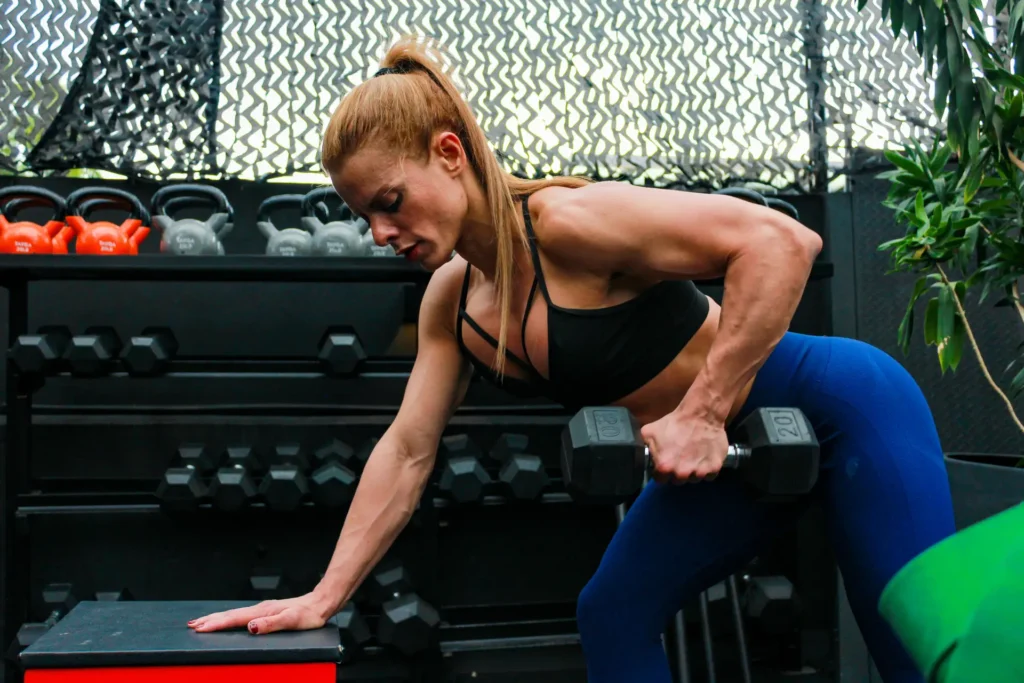
These teres major and minor exercises train two different functions:
- Band-Assisted Neutral-Grip Pull-Up: 3 × 5–8
- Dumbbell Three-Point Row to Hip: 2 × 8–12 per side
- Side-Lying Dumbbell External Rotation: 2 × 10–15 per side
- Elbow-on-Knee Dumbbell External Rotation: 2 × 10–15 per side
Complete the pulling exercises first, then use lighter dumbbells for external rotation. These exercises for teres major and minor take about 20 minutes.
The teres major and teres minor sit close together, but they do not perform the same job.
Pull-ups and rows are useful here. I would keep both. But adding more pulling exercises will not replace the external rotation work needed for the teres minor. Light dumbbell rotations cannot provide the pulling load used to train the teres major either.
That is why these teres major and minor exercises at home are divided into two parts. The first two movements build pulling strength. The final two train controlled external rotation.
You are not trying to isolate either muscle perfectly. You are giving each one a role that matches how it works. This session also fits inside a complete home back-training guide that organizes pulling, rowing, hinging, and shoulder-blade control.
Quick Summary
- Goal:Develop pulling strength and controlled shoulder external rotation.
- Equipment:Neutral-grip pull-up handles, an assistance band, dumbbells and a stable bench.
- Training time:About 20 minutes.
- Frequency:Once or twice per week.
- Structure:Two pulling exercises followed by two external-rotation exercises.
- Important:The teres major works with the lats. The teres minor works with the infraspinatus.
What Exercises Work the Teres Major and Minor?
The teres major contributes to shoulder extension, adduction and internal rotation. The teres minor primarily assists external rotation and helps control the upper arm at the shoulder.
This is why the muscles require different training paths. Pull-ups and rows provide useful resistance for teres major muscle exercises, although the lats share the load. Teres minor muscle exercises use lighter resistance because the goal is controlled external rotation rather than heavy pulling.
An anatomical review describes the teres major and latissimus dorsi as synergists during extension, adduction and internal rotation. It also identifies the teres minor, not the teres major, as part of the rotator cuff.NCBI review of teres major anatomy and its relationship with the latissimus dorsi
A complete teres major and minor workout should therefore combine loaded pulling with precise external rotation.
Teres Major Exercises for Controlled Pulling Strength
These teres major exercises at home provide vertical and horizontal pulling resistance. They are not isolation movements.
If your goal is broader back development, follow this separate guide to training the lats through vertical and horizontal pulling. Here, the focus is on keeping the upper-arm path controlled while building strength through shoulder adduction and extension.
1. Band-Assisted Neutral-Grip Pull-Up
Video: Scandinavian Health & Performance
Main Muscles Worked
- Teres major
- Latissimus dorsi assists
How to Do It
- Secure a resistance band around the center of the pull-up bar.
- Place one foot or knee inside the band.
- Hold the parallel handles with your palms facing each other.
- Begin with your arms extended and gently pull your shoulders down.
- Drive your elbows down beside your body as you pull upward.
- Pause when your chin clears the bar.
- Lower yourself under control until your arms are extended again.
Practical Tips
- The band should reduce only part of your body weight. You must still pull actively.
- Keep your ribs and pelvis controlled instead of swinging your legs.
- Think about pulling your elbows toward your sides and hips. Feel the area behind your armpits tighten rather than relying only on your arms.
- A neutral grip may feel comfortable, but it will not remove the lats from the movement.
Easy Version
Use a stronger assistance band and perform only the range you can control. You can also keep one foot lightly supported on a stable box beneath the bar while learning the pulling path.
Troubleshooting
- Your biceps fatigue first:Pull your shoulders down before bending your elbows.
- Your body swings:Brace your abs and glutes or use more assistance.
- You cannot reach the top:Use a stronger band or perform controlled partial repetitions.
- The band provides too much help:Move to a lighter band once every repetition is clean.
Role in the Routine
This is the main vertical pull in the teres major workout. It combines shoulder adduction and extension while allowing the assistance level to match your current strength.
Add clean repetitions first. Then reduce assistance until you can perform an unassisted neutral-grip pull-up.
2. Dumbbell Three-Point Row to Hip
Video: OPEX Fitness
Main Muscles Worked
- Teres major
- Latissimus dorsi assists
How to Do It
- Place one hand on a stable bench and plant both feet firmly on the floor.
- Hold a dumbbell in the opposite hand with your arm hanging naturally.
- Keep your torso stable and square to the floor.
- Drive your upper arm backward and row the dumbbell toward the same-side hip.
- Pause when your elbow reaches the side of your torso.
- Lower the dumbbell under control until your arm is extended again.
Practical Tips
- Row toward your hip rather than your chest or shoulder.
- Do not rotate your torso to lift the dumbbell higher.
- Imagine moving your elbow toward your back pocket. Feel the area behind your armpit tighten instead of simply lifting with your hand.
- Choose a weight that allows a smooth lowering phase.
Troubleshooting
- Your arm fatigues first:Relax your grip slightly and initiate the repetition with your upper arm.
- Your torso rotates:Reduce the weight and stabilize yourself with the supporting hand.
- The dumbbell travels toward your chest:Redirect your elbow toward your hip.
- You mainly feel your upper traps:Keep your shoulder away from your ear.
- Your shoulder drops at the bottom:Reduce the weight and control the final part of the descent.
Role in the Routine
This movement adds measurable horizontal-pulling resistance to the teres major muscle workout. Pulling toward the hip gives it a different upper-arm path from a high row and complements the vertical pull-up.
Teres Minor Exercises for External Rotation Control
These teres minor exercises at home use two upper-arm positions. The first keeps the elbow beside the torso. The second supports the upper arm in an elevated position.
The infraspinatus assists both movements. Keep the dumbbells light enough that the elbow, upper arm and torso remain still.
An anatomical reference identifies the teres minor and infraspinatus as synergists in shoulder external rotation.NCBI review of teres minor function and shoulder external rotation
3. Side-Lying Dumbbell External Rotation
Video: The Active Life
Main Muscles Worked
- Teres minor
- Infraspinatus assists
How to Do It
- Lie on your side with your head and torso supported.
- Hold a light dumbbell in the upper hand.
- Bend your elbow to approximately 90 degrees and keep your upper arm against your side.
- Slowly rotate your forearm upward without moving the upper arm.
- Pause at the highest position you can control.
- Lower the dumbbell slowly.
- Complete all repetitions before changing sides.
Practical Tips
- Position and control matter more than load.
- Rotate from the shoulder rather than turning your wrist.
- Keep your upper arm against your body and feel the deeper muscles at the back of the shoulder working.
- Place a folded towel between your elbow and torso if it helps maintain position.
- Do not force your forearm into a vertical position.
In an EMG comparison of external-rotation exercises, the side-lying variation produced the greatest measured activity for both the teres minor and infraspinatus.EMG analysis of the teres minor during side-lying external rotation
Troubleshooting
- Your elbow moves away from your body:Reduce the weight and use a folded towel.
- Your torso rolls backward:Shorten the range and keep your hips stacked.
- Your rear deltoid fatigues first:Check whether your upper arm is moving backward.
- You lose control near the bottom:Use a lighter dumbbell.
Role in the Routine
This is the starting external-rotation exercise in the teres minor muscle workout. The side-lying position limits compensation and makes controlled repetitions easier to track.
4. Elbow-on-Knee Dumbbell External Rotation
Video: The Active Life
Main Muscles Worked
- Teres minor
- Infraspinatus assists
How to Do It
- Sit on the floor or a stable seat with one knee bent.
- Support the same-side elbow on your knee.
- Keep the upper arm elevated and bend the elbow to approximately 90 degrees.
- Hold a light dumbbell and rotate the forearm upward and backward.
- Pause at the highest position you can control.
- Lower the dumbbell slowly.
- Complete all repetitions before changing sides.
Practical Tips
- Your knee supports the upper arm; it should not push the arm upward.
- Keep the elbow fixed and rotate only at the shoulder.
- Feel the deeper muscles at the back of the shoulder working without leaning backward.
- Use substantially less weight than you would for a row or shoulder press.
Troubleshooting
- Your elbow slides off your knee:Adjust your position until the support is stable.
- Your body leans backward:Reduce the weight and keep your ribs controlled.
- You cannot lower the dumbbell smoothly:The weight is too heavy.
- The movement becomes a curl:Keep the elbow angle fixed.
Role in the Routine
This variation trains external rotation with the upper arm elevated. It complements the arm-at-the-side position used in the side-lying exercise.
Treat it as a different training position, not a reason to chase more weight. Establish control first.
20-Minute Teres Major and Minor Workout at Home
Two-Minute Preparation
- Controlled Shoulder Circles: 6 in each direction
- Easy Scapular Pulls or Supported Shoulder Depressions: 6 reps
- Unweighted External Rotations: 8 per side
Main Workout
| Exercise | Sets | Reps | Rest | Approximate Time |
|---|---|---|---|---|
| Band-Assisted Neutral-Grip Pull-Up | 3 | 5–8 | 60–75 sec | 5 min |
| Dumbbell Three-Point Row to Hip | 2 | 8–12 per side | 45–60 sec | 5 min |
| Side-Lying Dumbbell External Rotation | 2 | 10–15 per side | 30 sec | 4 min |
| Elbow-on-Knee Dumbbell External Rotation | 2 | 10–15 per side | 30 sec | 4 min |
The estimated time includes changing sides and adjusting equipment.
How to Use This Routine
- Perform it once or twice per week.
- Add it to an Upper Body or Back session.
- Beginners can start with two sets of each movement.
- If you have already completed substantial pull-up and rowing volume, remove one set from each pulling exercise.
- Keep two or three clean repetitions in reserve during external rotation.
- Allow recovery time before repeating the workout.
Why This Order Works
The pull-up comes first because it requires the most strength and whole-body control. The supported row follows with a more stable way to add horizontal resistance.
The external rotations come last because they use lighter dumbbells and depend on precise upper-arm positioning. Fatiguing them before the heavier pulling work would not improve the session.
Safety Tips
Warm up your shoulders, elbows and wrists before beginning. Confirm that the pull-up handles and resistance band are secure.
Use much lighter dumbbells for external rotation than for the row. End the set when the elbow, upper arm or torso starts to move instead of forcing more range.
Stop if you experience sharp pain. This is a general strength workout, not a shoulder rehabilitation program.
Common Mistakes That Blur the Difference Between the Two Muscles
Treating Every Back Exercise as a Teres Exercise
The teres major participates in many pulling movements, but that does not make every row a specialized teres exercise.
Focus on whether the movement provides controlled shoulder extension or adduction and whether you can progress it without changing the intended path.
Using Soreness as an Anatomy Test
Soreness near the rear of the armpit does not prove that the teres major worked alone. Several muscles occupy or cross that region.
Soreness can confirm that an area was trained, but repetition quality and measurable progress provide better long-term feedback.
Chasing a Special Pull-Up Grip
The neutral grip suits this routine, but it is not an isolation technique.
Use the grip that allows comfortable shoulder movement and enough clean repetitions to progress. Making the grip more extreme does not remove the lats.
Loading External Rotation Like a Row
External rotation does not need the same weight as pulling. When the dumbbell becomes too heavy, the elbow moves, the torso rotates and the intended shoulder motion disappears.
Increase the load only after you can control both directions of the repetition.
Ignoring Shoulder-Blade Control
These exercises focus on movement at the shoulder joint, but the shoulder blade still needs a stable base.
If your scapula lifts, tips or moves unpredictably, practice these serratus anterior exercises for better shoulder-blade control before adding more resistance.
Progression Tips for Pulling Strength and External Rotation Control
Progressing the Pulling Exercises
For the assisted pull-up:
- Reach the top of the repetition range.
- Keep the ascent and descent controlled.
- Move to a lighter assistance band.
- Build the repetitions again.
- Progress toward unassisted neutral-grip pull-ups.
For the dumbbell row:
- Keep the torso still.
- Row consistently toward the hip.
- Reach 12 clean repetitions per side.
- Increase the weight slightly.
- Return to the lower end of the repetition range.
Progressing the External-Rotation Exercises
For both external-rotation movements:
- Keep the elbow and upper arm fixed.
- Control the full lowering phase.
- Add repetitions within the listed range.
- Pause briefly at the top.
- Increase the dumbbell only when your position remains stable.
Teres minor workouts should not progress by trading position for a larger dumbbell. Pulling strength and external-rotation control need different progression standards.
Frequently Asked Questions
Can You Isolate the Teres Major?
Not completely. The teres major works closely with the latissimus dorsi during shoulder extension, adduction and internal rotation.
Exercise selection can emphasize a useful upper-arm path, but pull-ups and rows remain compound movements.
What Exercise Targets the Teres Major?
The neutral-grip pull-up and row-to-hip are both useful choices.
The pull-up combines shoulder adduction and extension. The row loads shoulder extension through a horizontal pulling path. Neither completely separates the teres major from the lats.
What Exercise Targets the Teres Minor?
Start with side-lying dumbbell external rotation. The elbow-on-knee variation then trains external rotation with the upper arm elevated.
Both movements also involve the infraspinatus. Their value comes from controlled external rotation, not perfect isolation.
Can You Train the Teres Major and Minor at Home?
Yes. You need a neutral-grip pull-up setup, an assistance band, dumbbells and a stable support surface.
The key is to include both loaded pulling and controlled external rotation because the two muscles perform different tasks.
Conclusion
Pulling harder and rotating heavier are not the same kind of progress.
For the pull-up and row, I would track assistance, repetitions and dumbbell load. For external rotation, I would first check whether the elbow stays fixed and the torso remains still. More weight only counts when those positions remain controlled.
Do not expect all four exercises to feel the same. The teres major shares demanding pulling work with the lats. The teres minor works through smaller, more precise external rotation.
Use these teres minor and major exercises consistently, record where you begin, and improve one variable at a time.