
Tibialis Anterior Exercises at Home: 3 Moves for Stronger Shins
By Zephyr · Published Jul 17, 2026
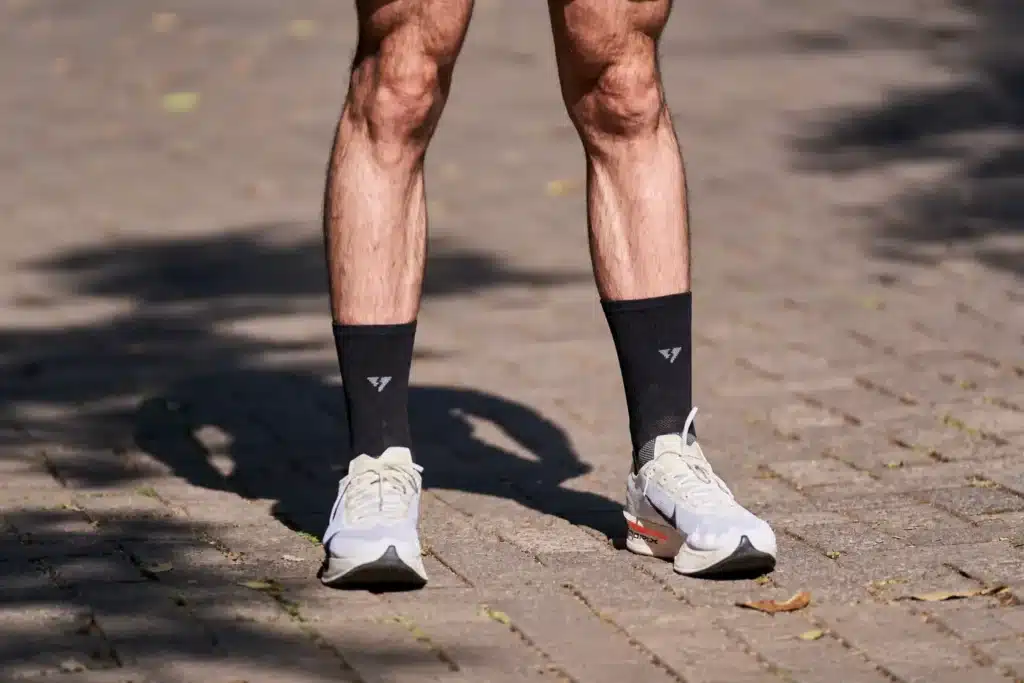
These tibialis anterior exercises at home train the muscle along the front of your shin with three practical movements: wall raises, single-leg band dorsiflexion, and heel walks. You do not need a tib bar or specialized machine.
The challenge is rarely finding another toe-lifting exercise. It is creating enough resistance while keeping your heels fixed, lifting the whole forefoot, and preventing your toes, quads, or body momentum from taking over.
This routine solves that problem with one stable bilateral movement, one externally resisted single-leg exercise, and one controlled endurance finisher. Use it as focused front-shin work rather than turning it into a complete lower-leg workout.
If you also want to train the back of the lower leg, combine it with a balanced routine covering the calves, shins and outer lower leg.
Quick Summary
- The tibialis anterior is the prominent front shin muscle responsible for pulling the foot upward at the ankle.
- Effective training requires dorsiflexion: lift the forefoot while keeping the heel fixed.
- Toe movement alone does not prove that the tibialis anterior is doing all the work.
- This routine uses wall raises for stable volume, band dorsiflexion for unilateral resistance, and heel walks for controlled endurance.
- Progress through wall distance, band tension, unilateral work, range, or tempo—not endless repetitions.
- These are strengthening exercises, not treatment for shin splints, foot drop, tendinopathy, or persistent lower-leg pain.
How Do You Strengthen the Tibialis Anterior?
Strengthen the tibialis anterior by repeatedly pulling the forefoot toward the shin against resistance while keeping the heel and lower leg stable. This movement is ankle dorsiflexion.
Wall tibialis raises provide a simple bodyweight starting point. Resistance-band dorsiflexion adds measurable external resistance and exposes differences between sides. Heel walks train you to maintain dorsiflexion while moving.
The tibialis anterior works with other dorsiflexors, so the goal is not perfect isolation. The practical target is clear, repeatable motion at the ankle without bouncing, curling only the toes, or letting the knees and hips create the movement.
The exercise should be challenging enough to slow the final repetitions without shortening your usable range. If you can perform dozens of easy repetitions, change the leverage or resistance instead of simply continuing the set.
3 Tibialis Anterior Exercises for Stronger Shins
The tibialis anterior contributes directly to dorsiflexion torque, but its behavior changes with contraction intensity. A cross-sectional study testing isometric dorsiflexion at 25%, 50%, 75%, and 100% of maximal effort found that tibialis anterior functional and architectural measurements were significantly associated with torque. The study helps explain the muscle’s role in dorsiflexion; it did not compare these three home exercises or measure long-term training results. See the study of tibialis anterior behavior during graded isometric dorsiflexion.
1. Wall Tibialis Raise
Video: Wade Bass
Main Muscles Worked:
Tibialis anterior, with the other ankle dorsiflexors assisting.
Role in the Workout:
I would place this exercise first because the wall makes the setup easy to repeat. It lets you establish a clear heel-down, forefoot-up pattern before adding unilateral resistance.
How to Do It:
- Stand with your back against a wall and place both feet slightly in front of you.
- Keep your heels planted and your knees softly extended.
- Lift the entire forefoot toward your shins without rocking your hips away from the wall.
- Pause briefly at the top, then lower the forefoot under control.
How It Should Feel:
You should feel tension along the front and slightly outside the shin. The final repetitions should become slower without turning into toe curls or body rocking.
Practical Tip:
Lift only as high as you can raise the entire forefoot while keeping your heels planted and your body still. Move your feet farther from the wall only if that same range remains controlled.
If a stiff-soled shoe limits the movement, use a more flexible shoe or train barefoot on a clean, non-slip surface.
Troubleshooting:
- If your quads fatigue first, move your feet slightly closer to the wall and avoid dropping into a squat.
- If only your toes lift, think about drawing the top of the whole foot toward the shin.
- If your body rocks, reduce the wall distance and slow the lowering phase.
2. Seated Single-Leg Resistance-Band Dorsiflexion
Video: Egor Mishutin
Main Muscles Worked:
Tibialis anterior, with assistance from the other dorsiflexors.
Role in the Workout:
I would use this second because the band adds external resistance without requiring a tib bar. Training one side at a time also makes it easier to notice whether one ankle has less range or control.
How to Do It:
- Sit on the floor with one leg extended and the other leg bent for support.
- Secure a resistance band to a low, stable point in front of the working foot.
- Loop the band over the forefoot so it pulls the foot gently away from the shin.
- Keep the heel down and pull the forefoot toward you.
- Pause briefly, then return slowly without letting the band snap the foot forward.
How It Should Feel:
You should feel the front of the working shin contract as the foot comes toward you. The ankle should move while the knee and hip remain quiet.
Practical Tip:
Place the band across the forefoot rather than the toes. Begin with light tension so you can reach the same top position on every repetition.
Troubleshooting:
- If the band slips, adjust the anchor height and place it securely across the shoe.
- If the knee rotates, reduce the tension and keep the kneecap facing upward.
- If the ankle or tendon feels sharply compressed, stop and reassess the setup rather than forcing more range.
Five weeks of high-intensity unilateral dorsiflexion training increased maximal force in the trained limb. This supports unilateral dorsiflexion as a trainable task; it does not prove that this particular band setup is uniquely effective. See the controlled study of unilateral dorsiflexion strength training.
3. Controlled Heel Walk
Video: Travis Goyeneche
Main Muscles Worked:
Tibialis anterior and the other muscles that maintain ankle dorsiflexion.
Role in the Workout:
I would finish with heel walks because they turn the dorsiflexed position into a moving endurance task. They work best after the first two exercises have provided the more controlled strength stimulus.
How to Do It:
- Stand tall and lift both forefeet away from the floor.
- Keep your heels in contact with the ground as you take short steps forward.
- Maintain the lifted forefoot position instead of letting the toes fall between steps.
- Stop when the feet begin slapping down or the walking pattern becomes unstable.
How It Should Feel:
You should feel increasing fatigue along the front of both shins while remaining able to take quiet, deliberate steps.
Practical Tip:
Use a short path near a wall or sturdy surface if balance is uncertain. The goal is to maintain dorsiflexion, not cover distance quickly.
Troubleshooting:
- If your feet slap down, shorten the set before the position fails.
- If you lean backward, reduce the step length and keep your ribs stacked over your pelvis.
- If balance limits the exercise, use fingertip support or replace it temporarily with another wall-raise set.
15-Minute Tibialis Anterior Workout at Home
This tibialis anterior workout uses three movements with different roles. Wall raises establish the pattern, unilateral band work supplies external resistance, and heel walks finish with controlled endurance.
Main Workout
| Exercise | Sets | Reps/Time | Rest |
|---|---|---|---|
| Wall Tibialis Raise | 2–3 | 12–20 reps | 45–60 sec |
| Seated Single-Leg Band Dorsiflexion | 2–3 | 10–15 each side | 45–60 sec |
| Controlled Heel Walk | 2–3 | 20–40 sec | 30–45 sec |
How to Use This Routine
Perform it after your main compound leg exercises so fatigue in the smaller lower-leg muscles does not interfere with squats, lunges, or step-ups.
You can train the tibialis anterior and calves in the same session. They perform opposing ankle actions, so keep both blocks focused and reduce the total sets if your lower legs are already fatigued.
For a simpler starting point, add this routine after a full-leg session that already includes basic calf and ankle training. If you need a larger weekly framework, place it within a broader lower-body training structure organized around practical home exercises.
Start with two sets per exercise. Add a third only when your range and control remain consistent from the first repetition to the last.
Safety Tips: Use a stable wall, inspect resistance bands before training, and keep the walking area clear. Stop if you experience sharp pain, increasing swelling, numbness, unusual weakness, or difficulty lifting the front of the foot during normal walking. This routine is not a treatment plan for shin splints, foot drop, tendon injuries, or persistent lower-leg pain.
Common Mistakes
1. Lifting Only the Toes
The movement should come from the ankle, with the forefoot rising as a unit. Curling or extending the toes may create motion without providing the same controlled dorsiflexion task.
One experimental study found that the tibialis anterior supplied less than half of maximal voluntary dorsiflexion torque in the tested mid-range ankle position, with the researchers suggesting that the long toe extensors provided much of the remaining torque. This supports treating toe movement as assistance, not proof of complete tibialis anterior isolation. See the study examining muscular contributions to ankle dorsiflexion.
2. Moving Too Far From the Wall
More distance increases the leverage demand, but only if the heels stay down and the full forefoot still rises. If the range becomes tiny, the progression is too large.
3. Bouncing Through the Repetitions
Dropping the feet quickly and rebounding into the next repetition removes control from the lowering phase. Pause briefly at the top and lower until the forefoot nearly touches the floor.
4. Letting the Quads or Hips Create the Motion
A deep knee bend can turn wall raises into a partial squat. Keep the body position quiet enough that the ankle remains the obvious moving joint.
5. Chasing Burn Instead of Progress
A strong burn can occur during high-repetition shin exercises, but it does not show whether the exercise is getting harder over time. Track wall distance, band tension, range, unilateral control, or tempo.
6. Progressing to One Leg Too Soon
The jump from two-leg wall raises to a strict single-leg version can be substantial. Use partial single-leg loading, lighter leverage, or band work before forcing a full version.
Regressions and Progression Tips
Wall Tibialis Raise
Begin with your feet close to the wall. Progress by moving them forward a small amount while keeping the same heel contact and forefoot height. Before attempting a strict single-leg version, shift slightly more bodyweight toward one foot while the other still assists.Seated Single-Leg Resistance-Band Dorsiflexion
Begin with a light band and a shorter stretched position. Add range first, then increase band tension. Record the band and anchor distance so the setup can be repeated.Controlled Heel Walk
Start with 10–20 seconds near a wall. Increase the duration only while the forefeet remain lifted and the steps stay quiet. Later, add another set instead of extending one set until the feet slap down.
Change one variable at a time. A useful progression might be greater wall distance, stronger band tension, slower lowering, a longer pause, more unilateral loading, or one additional set. Do not increase several variables simultaneously.
Frequently Asked Questions
Can Calf Raises Replace Tibialis Anterior Exercises?
No. Calf raises primarily train plantar flexion, while tibialis anterior work trains dorsiflexion. The actions oppose each other, so calf raises may include the tibialis anterior as a stabilizer without replacing direct dorsiflexion training.
For the deeper work performed while the knee remains flexed, use the related calf-training approach built around bent-knee positions.
Can You Grow Your Tibialis Anterior?
The tibialis anterior is trainable muscle tissue, so progressive resistance can produce muscular adaptations. However, visible growth varies with training history, anatomy, recovery, nutrition, and the amount of progressive work performed.
An eight-week isometric training study reported changes in tibialis anterior muscle architecture under specific training conditions. It supports the muscle’s capacity to adapt, but it does not prove a particular hypertrophy result from this home routine. See the study of tibialis anterior adaptations at different muscle lengths.
How Often Should You Train the Tibialis Anterior?
Start with two sessions per week, leaving recovery time between them. A third short session may be appropriate if soreness is mild, ankle control remains normal, and performance is not declining.
Daily walking does not automatically mean that hard direct training should be performed every day.
Should Tibialis Raises Be High Reps?
They can use moderate or moderately high repetitions, but the set still needs enough resistance to become challenging. If you can exceed the target range without slowing down, increase leverage or resistance instead of continuing indefinitely.
Can You Isolate the Tibialis Anterior?
Not completely. Other dorsiflexors and toe extensors can assist. You can emphasize the tibialis anterior through controlled ankle dorsiflexion, but feeling only one muscle is not a reliable requirement for effective training.
Conclusion
Effective tibialis anterior training depends on more than lifting your toes for high repetitions. Keep the heel fixed, move the full forefoot, and progress only while the usable range remains consistent.
Wall raises, unilateral band dorsiflexion, and heel walks give you a simple home sequence for strength, side-to-side control, and endurance. Track one progression variable at a time and use the routine as a focused block within your lower-body training.
Medical disclaimer: This article is intended for educational and informational purposes only. It is not intended as a substitute for medical advice. For health advice, contact a licensed healthcare provider.