
Rectus Femoris Exercises at Home: 3 Moves for Upper Quad Control
By Zephyr · Published Jul 12, 2026
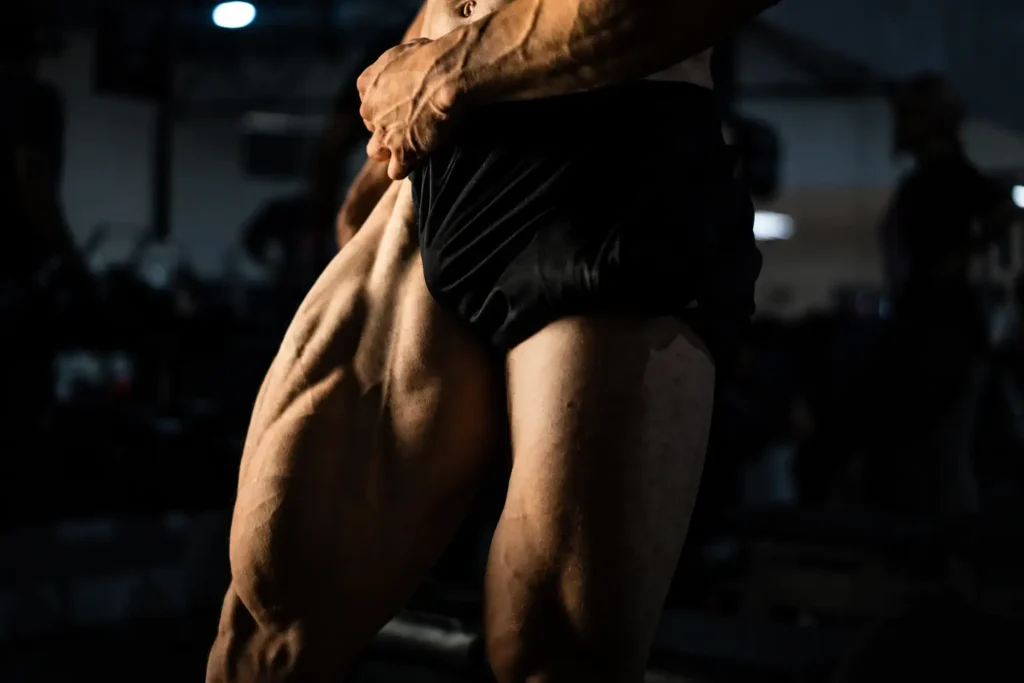
Squats, lunges, and Bulgarian split squats can build strong quads, but adding more versions of the same pattern does not necessarily give the rectus femoris a different training role. Because this muscle crosses both your hip and knee, its contribution changes with the position of each joint.
These rectus femoris exercises at home complement squat-based leg training without requiring a leg extension machine. I would not fill this workout with more squat variations. Instead, the three exercises use a stable knee extension, a lengthened kneeling movement, and straight-leg hip flexion to train the upper-front thigh from different positions.
Use this as focused accessory work within a complete front-and-back thigh workout for beginners, not as a replacement for your complete lower-body routine.
Quick Summary
- Squats train your quads, but direct knee-extension work challenges the rectus femoris differently.
- This routine combines a band knee extension, an assisted Reverse Nordic, and a weighted straight leg raise.
- Start with two controlled sets of each exercise and perform the routine once or twice per week.
What Exercise Works the Rectus Femoris?
The best rectus femoris exercises challenge one or both of the muscle’s main functions: straightening the knee and flexing the hip. Good home options include seated band knee extensions, assisted Reverse Nordics, and weighted straight leg raises. These movements emphasize the rectus femoris, but they do not completely isolate it from the other quadriceps or hip flexors.
Think of the rectus femoris as a strap that crosses both your hip and knee. During a squat, bending your knee lengthens that strap at one end while bending your hip shortens it at the other. How much the muscle contributes depends partly on the position and demands at both joints, a relationship described in research on two-joint muscle function.
That is why a squat can train your quads without challenging the rectus femoris in exactly the same way as an exercise that keeps one joint more stable while the other moves. In an eight-week study of untrained young women, leg extensions produced greater increases in rectus femoris thickness than Smith machine back squats, while the squat group improved squat strength more.The practical lesson from this training comparison is that the two exercises produce different adaptations—not that squats are useless.
The same distinction appears when single- and multi-joint quadriceps exercises are compared. Rectus femoris activity was higher during knee extensions than leg presses, while the differences in the vastus muscles were smaller. The researchers also found that adding a hip-extension demand reduced rectus femoris activity during knee extension. This exercise study helps explain why changing the movement pattern matters more than simply adding another squat variation.
Squats remain valuable for building your quads and training your lower body as a whole. The distinction matters only when you want to add more direct work for the muscle running down the center and upper-front portion of your thigh. If you want to shift the focus toward the outside of the thigh, use this related quad guide instead.
A seated knee extension stabilizes the hip while the knee moves. A Reverse Nordic keeps the hips more open while the knees bend. A straight leg raise keeps the knee extended while the hip moves. People often use upper quad exercises as a general label for this type of training, but the rectus femoris is only one part of the quadriceps. Together, these three rectus femoris muscle exercises provide more variety than another squat, lunge, or step-up.
3 Rectus Femoris Exercises for Home Training
The three exercises below have different roles. The first establishes a stable knee-extension pattern, the second adds lengthened loading and greater body control, and the third trains straight-leg hip flexion.
1. Seated Resistance Band Single-Leg Knee Extension
Video: Adam Wasylyshyn, MKin, CSCS
Main Muscles Worked:
Quadriceps, with an emphasis on the rectus femoris.
Role in the Workout:
This is a practical home alternative to the leg extension. Sitting keeps your hips stable, allowing you to focus on actively straightening your knee instead of repeating another squat or lunge pattern.
I would place it first because the setup is stable and the movement path is easy to understand. It helps you establish a clear, repeatable knee-extension pattern before moving to the more demanding Reverse Nordic.
The full seated movement differs from a standing terminal knee extension, which concentrates mainly on the final part of the rep. If that top range is your main priority, use this companion quad routine.
How to Do It:
- Secure the resistance band to a low, stable anchor behind you. Loop the other end around one ankle or over the top of your shoe, whichever feels more comfortable.
- Sit upright on a stable chair and keep your thigh in place.
- Straighten your knee, pausing briefly as your leg approaches full extension.
- Slowly bend your knee and control the band back to the starting position.
- Complete the prescribed repetitions before switching sides.
How It Should Feel:
You should feel steady tension through the front of your thigh as you straighten your knee and control the return. Your torso should not rock back and forth with each repetition.
Practical Tip:
Adjust the distance between the chair and the anchor so the band retains light tension while your knee is bent.
Troubleshooting:
- If your torso leans backward, use less resistance and hold the sides of the chair for stability.
- If your thigh lifts with your lower leg, keep it against the chair so the movement comes mainly from your knee.
- If you can only kick your leg straight or cannot control the return, the band is too heavy.
2. Band-Assisted Reverse Nordic Curl
Video: Kaizen Strength Method
Main Muscles Worked:
Quadriceps, with an emphasis on loading the rectus femoris in a lengthened position.
Role in the Workout:
The Reverse Nordic trains knee extension while your hips remain extended, creating a different challenge from a standard squat pattern. Band assistance helps you control the backward lean and actively return to the starting position.
An eight-week Reverse Nordic training study reported changes in rectus femoris muscle thickness, fascicle length, pennation angle, and cross-sectional area. These findings support the movement as a useful training option, but they do not prove that it is better than every other quad exercise. That is the appropriate boundary for this eight-week training study.
I would place this exercise second. After the seated knee extension has prepared your quadriceps, the Reverse Nordic adds lengthened loading and a greater overall control demand.
How to Do It:
- Kneel on a padded surface and secure the resistance band to a high, stable anchor in front of you.
- Brace your abs and glutes, keeping your torso, pelvis, and thighs as close to one straight line as possible.
- Slowly lean backward from your knees without sitting your hips back first.
- Lower only as far as you can maintain your position and control the speed.
- Use the front of your thighs to return to a tall kneeling position with assistance from the band.
How It Should Feel:
You should feel increasing stretch and tension through the front of your thighs as you lean backward. Your quadriceps should work strongly as you return upright.
Practical Tip:
Use only the range you can lower through and return from under control. A clean partial repetition is more useful than uncontrolled depth.
Troubleshooting:
- If your hips move backward first, reduce the range and tighten your glutes again.
- If your lower back arches, keep your ribs and pelvis controlled instead of creating extra depth through your spine.
- If you can lower but cannot return actively, use more band assistance or reduce your range.
- If the movement causes sharp, increasing, or persistent knee discomfort, stop the set rather than forcing a deeper range.
3. Weighted Supine Straight Leg Raise
Video: E3 Rehab Exercise Library
Main Muscles Worked:
Hip flexors, with an emphasis on the rectus femoris assisting hip flexion while keeping the knee straight.
Role in the Workout:
The first two exercises focus mainly on knee extension. This movement adds the rectus femoris’s hip-flexion function. Lying on the floor reduces the balance demand, making it a good final control exercise.
I would place it last. The stable position makes it a practical way to finish the rectus femoris workout with a light load after completing the first two exercises.
How to Do It:
- Lie on your back and secure a light weight around the ankle of the working leg.
- Keep the working leg straight. Bend the other knee slightly and place that foot on the floor for support.
- Brace your abs and keep your pelvis and lower back stable.
- Slowly raise the working leg while keeping the knee straight.
- Stop where your lower back remains stable, pause briefly, and lower the leg under control.
- Complete the prescribed repetitions before switching sides.
How It Should Feel:
You should feel the front of your thigh and hip working as you raise and lower the leg. Your lower back should not become the main area of effort.
Practical Tip:
You do not need to lift the leg as high as possible. Stop where you can keep your pelvis and lower back stable.
Troubleshooting:
- If your lower back begins to arch, reduce the lifting height or use less weight.
- If the working knee starts to bend, the load may be too heavy.
- If you swing the leg upward, reduce the load and pause briefly between repetitions.
15-Minute Rectus Femoris Workout at Home
This rectus femoris workout starts with the most stable movement, progresses to the most demanding movement, and finishes with controlled hip flexion. Choose resistance that allows every repetition to follow the same path.
Two-Minute Preparation
Complete one round before starting the main workout:
- Light seated knee extensions: 30 seconds per side
- Tall-kneeling position hold: 30 seconds
- Unweighted straight leg raise test: 30 seconds per side
Use this preparation to check your band setup, choose the right amount of Reverse Nordic assistance, and confirm that you can raise a straight leg without arching your lower back.
Main Workout
| Exercise | Sets | Reps | Rest |
|---|---|---|---|
| Seated Resistance Band Single-Leg Knee Extension | 2–3 | 10–15 each side | 45–60 sec |
| Band-Assisted Reverse Nordic Curl | 2–3 | 6–10 | 60–75 sec |
| Weighted Supine Straight Leg Raise | 2–3 | 8–12 each side | 45–60 sec |
How to Use This Routine
Perform the routine once or twice per week. It can follow your primary squat, lunge, or full-leg training rather than replacing those movements.
Start with two sets of each exercise. Add a third only when your movement quality stays consistent from the first repetition to the last. If the Reverse Nordic causes your hips to fold or the weighted leg raise turns into a swinging movement, adding more volume will not make the exercise better.
If you have not yet built a complete lower-body foundation, begin with a simpler starting routine before adding this focused work.
Leave enough recovery time between sessions for the front of your thighs to feel ready for controlled knee extension again. If your full leg workout already contains plenty of knee-dominant work, begin with one weekly session before adding another.
Safety Tip: Use a stable chair, secure band anchors, and enough Reverse Nordic assistance to control every repetition. Muscular effort through the front of the thigh is expected; sharp, increasing, or persistent discomfort is a reason to stop rather than push deeper.
Common Mistakes
1. Treating Every Squat Variation as Direct Rectus Femoris Work
Squats, lunges, and split squats train your quads, but adding several versions of the same pattern does not necessarily give the rectus femoris a different role. Direct work should complement those exercises, not duplicate them.
This is also why rectus femoris isolation exercises can be a misleading label. You can emphasize the muscle, but the other quadriceps and hip flexors still contribute.
2. Letting the Band Go Slack
If the band loses all tension while your knee is bent, the first part of the seated knee extension provides little resistance. Move the chair slightly farther from the anchor or shorten the band until light tension remains at the start.
A heavier band is not automatically the answer. First make the resistance continuous and the movement repeatable.
3. Folding at the Hips During Reverse Nordics
Sitting your hips backward changes the Reverse Nordic into a kneeling hip hinge. This usually happens when you lean farther than your quadriceps can control.
Reduce the range, increase the band assistance, and keep your glutes active. You do not need to match someone else’s depth.
3. Arching the Lower Back to Lean Farther
A larger backward lean is not useful if the extra range comes from your lower back. Keep your ribs controlled over your pelvis and stop before your spine begins creating the movement.
Your controlled range may be small at first. That is still a valid starting point.
4. Swinging the Weighted Leg
A straight leg raise should begin smoothly and finish under control. Swinging uses momentum and often causes the pelvis or lower back to move.
Use a lighter ankle weight and pause briefly before each repetition. Raise the leg actively rather than throwing it upward.
Progression Tips
Seated Resistance Band Single-Leg Knee Extension
Begin with a band that lets you straighten your knee without leaning backward. Once you can complete 15 controlled repetitions with a short pause near full extension, increase the resistance slightly or move farther from the anchor. Do not progress if the band starts pulling your thigh off the chair.Band-Assisted Reverse Nordic Curl
Increase only the range you can lower through and return from without folding at the hips. Once that range is consistent, gradually reduce the band assistance. Change one variable at a time instead of reducing assistance and increasing depth in the same session.Weighted Supine Straight Leg Raise
Begin without weight if you cannot keep the working knee straight and your lower back stable. Add a light ankle weight only after the unweighted movement is controlled. Once you reach 12 clean repetitions, increase the load in small steps.
Direct rectus femoris work should remain a focused addition to your regular leg training. The goal is to improve control and resistance in these three patterns, not turn every lower-body session into a separate isolation workout.
Frequently Asked Questions
Can You Isolate the Rectus Femoris?
You cannot completely isolate the rectus femoris from the other quadriceps or hip flexors. You can, however, emphasize different parts of its function through controlled knee extension, lengthened quad loading, and straight-leg hip flexion.
The goal is to provide more direct work, not switch every other muscle off.
Do Lunges and Bulgarian Split Squats Work the Rectus Femoris?
Lunges and Bulgarian split squats involve the rectus femoris as part of the quadriceps, but they are still multi-joint squat patterns. They also train the glutes, other quad muscles, and stabilizers.
If these movements already make up most of your leg workout, adding a controlled knee-extension exercise provides a more distinct training function than adding another lunge variation.
Can You Train the Rectus Femoris at Home Without a Leg Extension Machine?
Yes. A seated resistance band knee extension recreates the basic knee-extension pattern, while a band-assisted Reverse Nordic and weighted straight leg raise add different positions and functions.
Home alternatives should not be described as identical to a machine, but they can provide progressive resistance without requiring dedicated gym equipment.
How Often Should You Train the Rectus Femoris?
One or two direct sessions per week is a practical starting point if you already follow a complete leg workout. Begin with two sets per exercise and monitor whether you can maintain the same control across sessions.
More frequent training is not automatically better, especially when you are also doing squats, lunges, or other knee-dominant exercises.
Are Reverse Nordics and Sissy Squats the Same Exercise?
No. A Reverse Nordic begins in a kneeling position and involves leaning backward from the knees. A Sissy Squat is performed standing, usually with the heels raised and a stable support for balance.
Both can create a knee-extension challenge while the hips stay relatively open, but their setup, balance demands, and progression are different.
Conclusion
Direct work for the rectus femoris does not need to replace squats or turn your leg workout into a long list of isolation movements. A better approach is to add training functions that your current squat-based routine may not provide as directly.
The three movements in this routine cover stable knee extension, lengthened quad loading, and straight-leg hip flexion. I would begin with the lightest practical resistance and enough Reverse Nordic assistance to keep every repetition controlled.
During your next leg session, complete two sets of each exercise. Keep the ranges clean, note which movement loses control first, and progress that specific limitation before adding more load.
Medical disclaimer: This article is intended for educational and informational purposes only. It is not intended as a substitute for medical advice. For health advice, contact a licensed healthcare provider.