
Vastus Medialis Exercises at Home: 4 Inner Quad Moves
By Zephyr · Published Jul 11, 2026
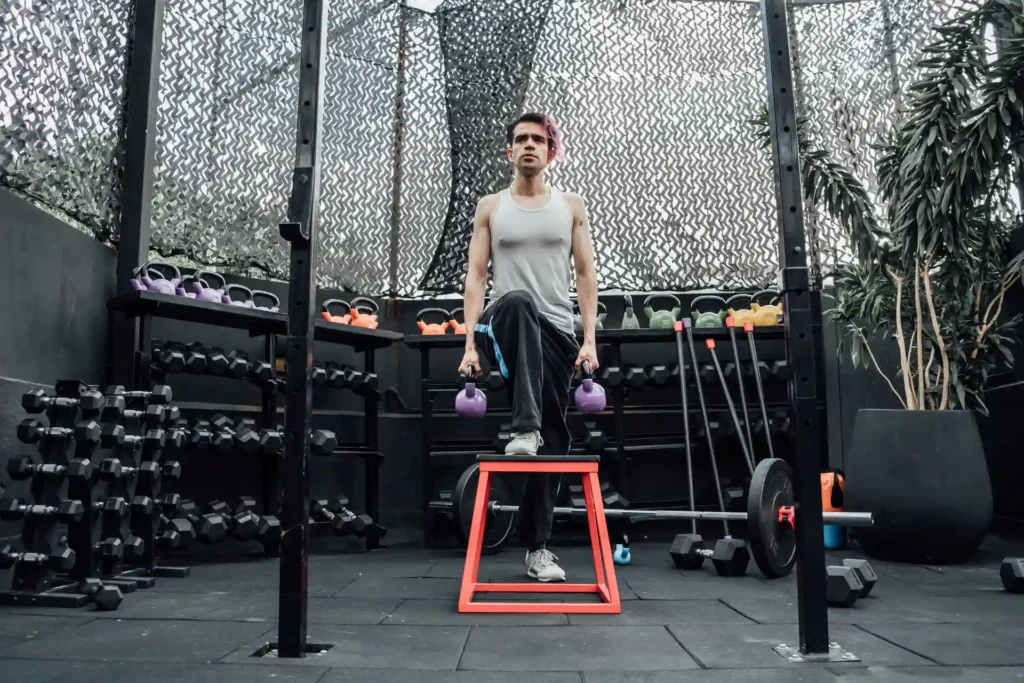
These vastus medialis exercises train the inner-quad / VMO area with four home-friendly movements: a dumbbell goblet cyclist squat, a dumbbell step-up with a top lockout, a wall sit with ball squeeze, and a banded terminal knee extension.
If squats, split squats, or leg-extension-style drills never give you a clear feeling above the inside of the knee, the issue is usually not that you need a longer list of VMO exercises. More often, the last part of the rep gets rushed, the knee never reaches a controlled lockout, or the hips finish the movement before the inner quad has to work.
This is not a knee rehab plan, and it is not a promise that you can fully isolate one small part of the quadriceps. The goal is simpler: make the vastus medialis easier to feel, train, and progress as part of the broader thigh-strengthening system for home training.
Quick Summary
- The vastus medialis is part of your quadriceps, not a separate muscle you can perfectly isolate.
- Most people miss the VMO because they skip the top range of knee extension.
- Good inner quad exercises should make the area above the inside of the knee feel active, not painful.
- This routine uses one loaded squat pattern, one single-leg pattern, one isometric hold, and one banded terminal knee-extension drill.
- Toe angle can change the feel of a movement, but it should not replace clean knee tracking and controlled reps.
- This is general strength training, not treatment for knee pain, patellar tracking problems, or injury.
What Exercise Works the Vastus Medialis?
The best exercise for the vastus medialis is not one magic move. It is usually the exercise that lets you control knee extension clearly, especially near the top of the rep, without letting your hips, lower back, or momentum take over.
That is why this article uses four different angles:
- a heel-elevated squat pattern for loaded knee bend;
- a step-up for single-leg control;
- a wall sit for steady inner-quad tension;
- a banded terminal knee extension for the final part of knee straightening.
The VMO is often discussed as if it can be isolated completely, but it still works as part of the quadriceps. A study on squat foot position and quadriceps activity found that stance and foot angle can influence lower-body muscle activity, but that does not turn toe position into a reliable isolation switch. You can read the squat foot-position and quadriceps activity study.
For this article, “inner quad” means the practical area most people are trying to feel near the inside of the lower thigh. If your goal is more about the outside of the thigh, that belongs better with the outer-quad side of this work. This routine stays focused on VMO control, top-range knee extension, and inner-quad tension.
4 Vastus Medialis Exercises for Inner Quad Control
All four exercises below depend on the same rule: keep the knee path clean. If your knee collapses inward, your foot rolls, or your hips shift away from the working leg, the exercise stops being a clear inner-quad drill. Keep the knee moving in line with the toes, control the top range, and make the last few degrees of knee extension deliberate.
1. Dumbbell Goblet Cyclist Squat
Video: Functional Bodybuilding
Main Muscles Worked:
Quadriceps, with inner-quad / VMO emphasis
Assisting Muscles:
Glutes, calves, trunk stabilizers
Role in the Workout:
This is the main loaded squat pattern in the routine. The heel elevation lets your knees travel forward more comfortably, which gives the quadriceps more work without needing a machine.
I would use this first because it gives you the clearest “training” stimulus: load, range, and control. The goal is not to force a narrow stance or chase a strange toe angle. It is to make the knee bend and straighten smoothly while the inner quad stays involved.
How to Do It:
- Place your heels on a small wedge, weight plate, or sturdy book.
- Hold one dumbbell at chest height in a goblet position.
- Stand with your feet about hip-width apart and your toes slightly turned out.
- Bend your knees forward as you lower, keeping your heels down and torso tall.
- Pause near the bottom, then drive up until your knees are fully straight without snapping them back.
- At the top, squeeze the quads for a brief moment before starting the next rep.
How It Should Feel:
You should feel strong tension through the front of your thighs, with a clearer squeeze near the inside of the knee as you stand tall.
Practical Tip:
Use a smaller range if your knees cave inward or your heels lose contact. A clean shallow rep is more useful than a deep rep you cannot control.
Troubleshooting:
If you only feel your hips or lower back, slow down and keep your ribs stacked over your pelvis. If your knees cave in, reduce the load and make the knee path the main goal.
2. Dumbbell Step-Up with Top Lockout
Video: Bobby Maximus
Main Muscles Worked:
Quadriceps, glutes
Assisting Muscles:
Calves, trunk stabilizers
Role in the Workout:
The step-up teaches the inner quad to finish knee extension on one leg. This matters because many people can feel their quads during squats but lose the VMO feeling when the work becomes unilateral.
A study comparing a lateral step-up with a stepping-machine exercise found higher rectus femoris and vastus medialis activity during the lateral step-up. That does not mean every step-up automatically targets the VMO, but it supports using step-up patterns when the goal is controlled knee extension. You can read the step-up and vastus medialis activity study.
How to Do It:
- Stand in front of a sturdy step, box, or bench.
- Hold a dumbbell in each hand.
- Place one foot fully on the step.
- Drive through the working foot and step up without bouncing off the back leg.
- At the top, fully straighten the working knee and pause for one second.
- Step down slowly and repeat all reps on one side before switching.
How It Should Feel:
You should feel the working thigh doing most of the lift, with a clear finish near the inside of the knee at the top.
Practical Tip:
Pick a lower step if your hips twist or your back foot pushes you up. The top lockout should feel controlled, not snapped.
Troubleshooting:
If your glute or lower back takes over, the step may be too high. If your knee wobbles inward, reduce the height and pause longer at the top.
3. Wall Sit with Ball Squeeze
Video: OrthoRI Rehab
Main Muscles Worked:
Quadriceps
Assisting Muscles:
Adductors
Role in the Workout:
This is the isometric hold in the routine. It gives you time under tension without having to coordinate a moving rep, which can make it easier to notice whether the inner quad is actually working.
The ball squeeze is not a magic VMO switch. Research on hip adduction during squat work found that adding adduction did not meaningfully increase VMO amplitude or improve the VMO-to-vastus-lateralis ratio in healthy subjects. That is why I use the squeeze as a positioning cue, not as proof of isolated VMO activation. You can read the hip-adduction and VMO activity study.
How to Do It:
- Stand with your back against a wall.
- Place a small ball, pillow, or folded towel between your knees.
- Slide down until your knees are bent to a comfortable angle.
- Gently press into the ball without crushing it.
- Keep both feet flat and hold the position.
- Stand up before your knees or lower back feel irritated.
How It Should Feel:
You should feel steady quad tension, with extra awareness near the inside of the lower thigh.
Practical Tip:
Do not squeeze so hard that your hips tuck aggressively or your feet shift. The squeeze should help alignment, not turn the exercise into an adductor drill.
Troubleshooting:
If your knees hurt, shorten the range and sit higher. If your thighs shake immediately, start with shorter holds.
4. Banded Terminal Knee Extension
Video: The Active Life
Main Muscles Worked:
Quadriceps, with VMO emphasis near terminal knee extension
Assisting Muscles:
Calves and hip stabilizers
Role in the Workout:
This drill isolates the final part of knee straightening better than the other movements. It is especially useful if you lose the inner-quad feeling right before lockout.
A study on the final degrees of knee extension compared medial and lateral quadriceps behavior near end range, which supports paying attention to the top part of knee extension instead of treating it as an afterthought. You can read the final-degrees knee-extension study.
How to Do It:
- Anchor a light resistance band behind your knee.
- Step into the band so it sits behind the working knee.
- Start with that knee slightly bent.
- Press the back of your knee into the band until the leg becomes straight.
- Pause briefly at full extension.
- Bend the knee again under control and repeat.
How It Should Feel:
You should feel a clean tightening above the inside of the knee as the leg straightens.
Practical Tip:
Keep your heel down and your foot quiet. If your ankle rolls or your hip shifts, the band may be too strong.
Troubleshooting:
If you feel the movement mostly in your hip or calf, slow down and reduce band tension. The motion should be small and precise.
20-Minute Vastus Medialis Workout at Home Routine
Two-Minute Preparation
- Bodyweight squats: 8 slow reps
- Heel-elevated squat hold: 20 seconds
- Step-up practice without weight: 5 reps each side
- Easy banded knee extensions: 10 reps each side
Main Workout
| Exercise | Sets | Reps / Time | Rest |
|---|---|---|---|
| Dumbbell Goblet Cyclist Squat | 2–3 | 8–12 reps | 60 sec |
| Dumbbell Step-Up with Top Lockout | 2–3 | 6–10 each side | 60–75 sec |
| Wall Sit with Ball Squeeze | 2–3 | 20–40 sec | 45–60 sec |
| Banded Terminal Knee Extension | 2–3 | 12–15 each side | 30–45 sec |
How to Use This Routine
Use this as a focused inner quad workout 1–2 times per week. It fits best after your main lower-body strength work or on a lighter day when you want cleaner knee-extension control without turning the session into a full leg day.
If you are newer to leg training, keep the loads light and treat this as a skill session first. A more basic home leg day can sit separately inside a simpler starting point for lower-body training.
For the first two weeks, use the lower end of the set range and stop each set before your knee path gets messy. Once the reps feel clean, progress one variable at a time: load, range, pause length, band tension, or reps.
Safety Tips: Keep all reps controlled and pain-free. If you have sharp knee pain, swelling, recent injury, patellar tracking concerns, or symptoms that worsen during the session, stop the exercise and get qualified medical guidance. This article is for general strength training, not diagnosis or rehab.
Common Mistakes
1. Turning VMO Training Into Knee Rehab
VMO exercises are often discussed in knee-pain content, but this article is not a treatment plan. If your knee hurts, the right question is not “Which VMO exercise fixes this?” It is whether the movement is appropriate for your current knee.
2. Skipping the Top of the Rep
The inner quad often becomes easier to feel near the top of knee extension. If you stop every rep short or rush the lockout, you may miss the part of the movement that matters most for this routine.
3. Making Toe Angle the Whole Strategy
Toe angle can change how a movement feels, but it should not become the whole plan. If your knees collapse, your feet roll, or your hips shift, toe position will not save the rep.
4. Letting the Hip or Lower Back Finish the Movement
If your hips shoot back or your lower back arches hard, the exercise turns into a different task. Keep your ribs down, pelvis controlled, and knee path steady. If lower-back control is the bigger issue, handle that with a separate strength block for your back.
5. Chasing Burn Instead of Control
A burning quad does not automatically mean better VMO work. Use the burn as feedback, but judge the set by knee tracking, top-range control, and whether the inside of the lower thigh is actually involved.
Progression Tips
Dumbbell Goblet Cyclist Squat
Add a longer pause near the bottom before increasing weight. Once the knee path stays clean, add load slowly while keeping the same heel elevation.Dumbbell Step-Up with Top Lockout
Start with a lower step and a clear top pause. Progress by adding dumbbells, then by using a slightly higher step only if the working knee stays steady.Wall Sit with Ball Squeeze
Increase hold time before making the angle harder. Keep the squeeze light enough that the quads stay in charge.Banded Terminal Knee Extension
Add a longer top pause before using a stronger band. The movement should stay small, controlled, and repeatable.
The goal is not to make every set harder at once. Pick one change, repeat it cleanly, and keep the inner-quad feeling clear enough that you can measure it from week to week.
Frequently Asked Questions
Can you isolate the VMO?
Not completely. The vastus medialis works as part of the quadriceps. You can bias attention toward the inner-quad area with exercise selection, range, tempo, and terminal knee-extension control, but you should not expect perfect isolation.
Do squats work the vastus medialis?
Yes, squats can train the vastus medialis because they train the quadriceps. But if your squat is rushed, shallow, or dominated by hip movement, you may not feel the inner quad clearly.
What is the best exercise for VMO?
There is no single best exercise for everyone. In this routine, the best starting point is the movement you can control best: cyclist squats for loaded reps, step-ups for single-leg control, wall sits for steady tension, or banded terminal knee extensions for top-range awareness.
Is leg extension necessary for VMO training?
No. Leg extensions can be useful, but they are not required. If you train at home, cyclist squats, step-ups, wall sits, and banded terminal knee extensions can cover the same basic training goal without a machine.
Why can’t I feel my inner quad?
You may be skipping the top of the rep, using too much load, letting your knee cave inward, or shifting the work into your hips. Reduce the range, slow down, and pause near the top of knee extension.
How often should I train VMO?
For general strength work, 1–2 focused sessions per week is enough for most people. If you already train legs hard, use this routine as accessory work rather than another full leg day.
Will VMO exercises fix knee pain?
Not by themselves. VMO exercises may be part of some training or rehab plans, but knee pain can come from many causes. If pain is sharp, persistent, swollen, or worsening, get assessed by a qualified professional.
Conclusion
Vastus medialis training does not need to become a rehab checklist or a search for the perfect isolation drill. The useful target is much more practical: clean knee extension, a steady top position, and a clear inner-quad feeling you can repeat.
In your next session, choose one thing to improve: a slower lockout, a cleaner step-up, a longer wall-sit hold, or a lighter band with better control. That small change will tell you more than adding five more random VMO exercises.
Medical disclaimer: This article is intended for educational and informational purposes only. It is not intended as a substitute for medical advice. For health advice, contact a licensed healthcare provider.