
Vastus Lateralis Exercises at Home: 4 Moves for Outer Quad Control
By Zephyr · Published Jul 10, 2026
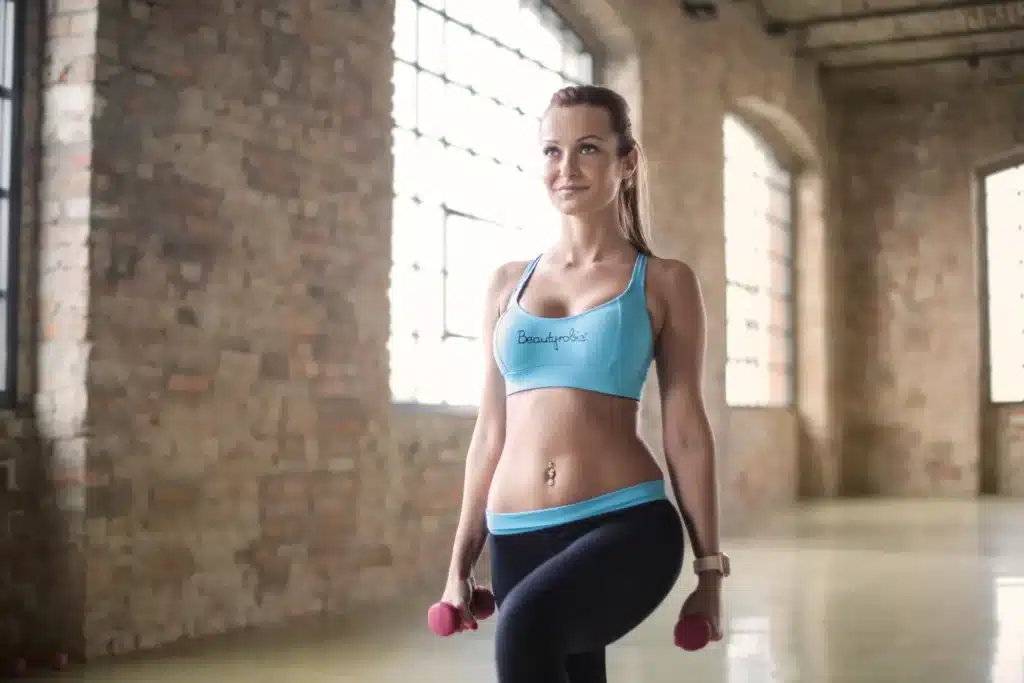
Vastus lateralis exercises are for the outer quad area, but the goal is not to find a magic angle that isolates one strip of muscle. The vastus lateralis is the large outer portion of your quadriceps, and it works with the rest of the quad whenever you bend and straighten the knee.
If you search for outer quad exercises, this is usually the area you are trying to train. The useful question is more practical: which home-friendly movements make the outside of your thigh easier to feel, control, and progress?
This routine uses four movements: heel-elevated dumbbell goblet squats, dumbbell split squats, lateral step-downs, and Spanish squats. If you are building this into a full leg week, it fits best inside a balanced home thigh routine covering both the quads and hamstrings.
The best vastus lateralis exercises at home are controlled knee-dominant outer quad exercises: heel-elevated goblet squats, dumbbell split squats, lateral step-downs, and Spanish squats. They help you load the outside of the thigh without relying on a leg extension machine.
Quick Summary
- The vastus lateralis is the outer quad area, but outer quad training still works through the whole quadriceps.
- This routine uses home-friendly knee-dominant exercises instead of machine-only movements.
- Heel elevation, slow lowering, and clean knee tracking matter more than chasing a special toe angle.
- You should feel controlled quad tension through the front and outside of the thigh, not sharp knee pain or lower-back strain.
- Training the vastus lateralis can help build the outer quad area over time, but it cannot guarantee a specific quad sweep shape.
- Use this as a focused outer quad routine, not a full leg day.
What Are the Best Vastus Lateralis Exercises at Home?
The best vastus lateralis exercises are not always the most complicated outer quad exercises. For home training, I would rather use a few movements you can control than a long list of machine-based exercises you cannot repeat consistently.
Leg extensions, leg presses, and hack squats can all train the quads, but they are not required for this article. The goal here is to use simple equipment and body position to make the outside of the thigh easier to load.
A study on squat foot position found that changing foot position during a partial squat had little to no effect on quadriceps EMG amplitudes, which is a useful reminder not to build the whole plan around toe angle. You can read the foot-position EMG paper.
That usually means three things:
- more knee bend;
- a more upright torso;
- slower lowering and cleaner knee tracking.
An EMG study comparing monopodal squats, forward lunges, and lateral step-ups found high vastus lateralis and vastus medialis activity across those unilateral lower-body exercises. That supports using single-leg and step-style patterns in this routine without pretending they isolate only one quadriceps head. You can read the unilateral exercise comparison.
Training can build the outer quad area over time, but it cannot guarantee a specific quad sweep shape. Muscle insertions, body fat, and overall leg development still affect how the thigh looks.
This article stays focused on vastus lateralis and outer quad training. If you want more hip-dominant work, that belongs better in a glute session built around hip extension. VMO work, full quadriceps training, and knee pain rehab belong in separate articles.
4 Vastus Lateralis Exercises for Outer Quad Control
For all four exercises, keep one detail consistent: your knee should track in line with the outside of your toes instead of collapsing inward. If the knee caves in during the lowering phase, the rep usually becomes less useful for clean outer-quad control because your foot pressure, hip position, and knee path all start changing. Think controlled knee travel, stable foot pressure, and steady quad tension.
1. Heel-Elevated Dumbbell Goblet Squat
Video: Live Lean TV Daily Exercises
Main Muscles Worked:
Vastus lateralis emphasis, quadriceps
Role in the Workout:
This is the main knee-dominant squat pattern in the routine. The heel elevation helps you stay more upright, let the knees travel forward, and keep the work in the quads instead of turning the set into a hip-dominant squat.
How to Do It:
- Place your heels on a small plate, wedge, or stable raised surface.
- Hold one dumbbell close to your chest in a goblet position.
- Stand with your feet about hip-width to shoulder-width apart.
- Bend your knees and lower under control while keeping your torso tall.
- Let your knees travel forward naturally, then drive back up through the midfoot.
How It Should Feel:
You should feel strong tension across the front of your thighs, with a clear pull toward the outer quad area as the knees bend deeply. It should not feel like a lower-back hinge or a glute-dominant squat.
Practical Tip:
Use a controlled 2–3 second lowering phase. If you rush the descent, the movement becomes harder to feel in the quads.
Troubleshooting:
If you feel mostly hips or lower back, reduce the weight, keep your chest taller, and let the knees bend more instead of pushing the hips far back.
2. Dumbbell Split Squat
Video: Live Lean TV Daily Exercises
Main Muscles Worked:
Vastus lateralis emphasis, quadriceps
Role in the Workout:
This gives each leg its own work. It helps you notice whether one side is doing less, and it keeps the front-leg quad under tension without needing a leg press or leg extension machine.
How to Do It:
- Hold a dumbbell in each hand.
- Step one foot forward and one foot back into a split stance.
- Keep most of your weight on the front leg.
- Lower straight down until the front knee bends deeply.
- Push through the front foot to stand back up without bouncing.
How It Should Feel:
You should feel the front-leg quad doing most of the work, especially near the lower and outer part of the thigh as you rise. The back leg should help with balance, not take over the set.
Practical Tip:
Keep the front foot planted and avoid pushing hard off the back foot. If the back leg is doing too much, shorten the stance slightly and slow the rep down. If one side feels weaker, train that side first and match the same reps on the stronger side instead of adding extra load.
Troubleshooting:
If you feel mostly glutes or hamstrings, your torso may be leaning too far forward. Stay a little more upright and allow the front knee to move forward under control.
3. Lateral Step-Down
Video: E3 Rehab Exercise Library
Main Muscles Worked:
Vastus lateralis emphasis, quadriceps
Role in the Workout:
This trains control on the way down. Many people can squat up, but lose quad tension when they have to lower slowly and keep the knee tracking cleanly.
How to Do It:
- Stand sideways on a low step, box, or sturdy platform.
- Keep the working foot fully planted on the step.
- Slowly bend the working knee and lower the free foot toward the floor.
- Lightly tap the floor with the free heel or foot.
- Drive through the working leg to return to the top.
How It Should Feel:
You should feel the working leg’s quad controlling the descent, especially around the front and outer thigh. It should not feel like your hip drops, your knee collapses inward, or your lower back twists.
Practical Tip:
Start with a low step. Height is not the goal at first; control is.
Troubleshooting:
If the knee caves inward, reduce the step height and slow the lowering phase. Keep the kneecap tracking roughly in line with the middle toes.
4. Spanish Squat
Video: E3 Rehab
Main Muscles Worked:
Quadriceps, vastus lateralis emphasis
Role in the Workout:
This is the high-tension quad finisher. The band support lets you sit back while keeping the knees bent and the quads loaded, so it works well after the more movement-based exercises.
A study comparing general squats, wall squats, and Spanish squats reported greater rectus femoris and vastus lateralis activation in the Spanish squat condition. That makes it a good fit as the sustained-tension quad drill in this routine. You can read the Spanish squat comparison.
How to Do It:
- Anchor a strong resistance band behind you at about knee height. A sturdy table leg, bed post, or bottom stair railing works well.
- Step into the band so it sits behind both knees.
- Walk forward until the band has firm tension.
- Keep your torso upright and lower into a squat.
- Drive back up while keeping steady pressure into the band.
How It Should Feel:
You should feel constant tension through the front of your thighs. The set should feel quad-heavy, not like a hip hinge or lower-back effort.
Practical Tip:
Keep the band behind the knees, not high on the thighs. If the band slides or feels loose, reset before continuing.
Troubleshooting:
If your knees feel irritated, reduce the depth, reduce band tension, or stop the exercise. This article is for general strength training, not knee pain rehab.
20-Minute Vastus Lateralis Workout at Home Routine
Two-Minute Preparation
- Bodyweight squats: 10 slow reps
- Reverse lunges: 6 reps each side
- Step-down rehearsal: 5 slow reps each side
- Light Spanish squat hold: 20 seconds
Main Workout
| Exercise | Sets | Reps / Time | Rest |
|---|---|---|---|
| Heel-Elevated Dumbbell Goblet Squat | 2–3 | 8–12 reps | 60 sec |
| Dumbbell Split Squat | 2–3 | 8–10 each side | 60 sec |
| Lateral Step-Down | 2–3 | 6–10 each side | 45–60 sec |
| Spanish Squat | 2–3 | 20–40 sec | 60 sec |
How to Use This Routine
Use this vastus lateralis workout 1–2 times per week. If your quads fatigue quickly, start with 2 sets per exercise and keep the reps clean before adding more work.
Do not turn this into a race for depth or load. The goal is to make the front and outside of your thigh work through a controlled path. Once that is clear, you can add a little more weight, a slower lowering phase, a longer pause, or a slightly deeper range.
If this feels too targeted for your current level, use a more general leg session first before narrowing the focus this much.
Safety Tips: This is general strength training, not knee pain treatment. Stop if you feel sharp pain, swelling, or joint discomfort that changes how you move. If you have a recent knee injury, surgery, or persistent pain, get professional guidance before loading these exercises.
Common Mistakes That Make Outer Quad Training Less Clear
1. Turning Every Rep Into a Hip-Dominant Squat
If your hips shoot back and your torso folds forward, the exercise becomes less quad-focused. You do not need to stay perfectly vertical, but the knee should bend enough for the quadriceps to stay involved.
If your lower back keeps taking over even when the load is light, that is usually a different problem than outer-quad targeting. You can use separate work that teaches your back and trunk to hold position instead of forcing these sets heavier.
2. Chasing Toe Angle Instead of Quad Tension
Toe angle can change how a movement feels, but it is not the main driver. A clean knee path, controlled lowering, and stable foot pressure matter more than forcing your toes inward or outward.
A narrower stance may make the quads easier to feel for some people, but it should not come at the cost of knee tracking, depth, or balance.
3. Using Too Much Step Height Too Soon
A high step-down looks harder, but it often creates hip drop, knee collapse, or twisting. Start low enough that you can control the full descent.
4. Letting the Stronger Side Do Better Reps
If one leg feels stronger, do the weaker side first. Match the same reps and range on the stronger side instead of letting it take over with heavier or faster reps.
5. Treating Knee Pain as a Normal Burn
Quad burn and joint pain are different. Muscle fatigue across the front of the thigh is expected. Sharp pain inside the knee, swelling, or pain that changes your form is not something to push through.
Progression Tips
Heel-Elevated Dumbbell Goblet Squat
Make every rep slow and balanced before adding load. Then progress with a longer pause near the bottom, a slightly deeper range, or a heavier dumbbell.Dumbbell Split Squat
Keep the front leg doing the work before increasing weight. If the back leg pushes too much, reduce the load, shorten the stance slightly, and slow the lowering phase.Lateral Step-Down
Improve control first. Once the knee tracks cleanly, increase the step height slightly or use a slower lowering phase before adding external load.Spanish Squat
Start with shorter holds. Then increase hold time, band tension, or total sets without letting the knees feel irritated.
The goal is not to make every exercise harder at once. Pick one variable each session: more control, more range, more pause, more load, or a longer hold.
Frequently Asked Questions
What exercise targets the vastus lateralis best?
There is no single perfect vastus lateralis exercise. For home training, heel-elevated squats, split squats, lateral step-downs, and Spanish squats are useful because they keep the movement knee-dominant and load the quads through a controlled range.
Can you isolate the vastus lateralis?
Not completely. The vastus lateralis works as part of the quadriceps. You can bias the outer quad area with exercise selection and technique, but you cannot fully separate it from the rest of the thigh.
Do squats work the vastus lateralis?
Yes, squats train the vastus lateralis as part of the quadriceps. If you want more quad emphasis, use a more upright torso, controlled knee bend, and enough depth instead of turning the squat into a hip hinge.
Are leg extensions necessary for the vastus lateralis?
No. Leg extensions can train the quads, but they are not required. If you train at home, split squats, heel-elevated squats, step-downs, and Spanish squats can all create useful quad tension.
How often should I train the vastus lateralis?
Most people can use this routine 1–2 times per week, depending on the rest of their leg training. If your knees or quads stay sore for several days, reduce sets before adding more work.
Why do I feel my knees more than my outer quads?
The range may be too deep, the load may be too heavy, or your knee path may be unstable. Reduce the range, slow the rep down, and make sure the knee tracks in line with the toes.
What is the difference between vastus lateralis and VMO training?
The vastus lateralis is the outer quad area. The VMO is the inner lower quad area near the knee. Both are part of the quadriceps, but this article focuses on outer quad control, not inner quad or knee-rehab work.
Conclusion
You do not need a machine-only plan to train the vastus lateralis at home. You need knee-dominant reps you can control, enough range to load the quads, and a routine that does not turn every set into a hip or lower-back exercise.
In your next session, improve one thing: a slower descent, cleaner knee tracking, a deeper controlled split squat, or a longer Spanish squat hold. That is a better test of outer quad training than adding more random exercises.
Medical disclaimer: This article is intended for educational and informational purposes only. It is not intended as a substitute for medical advice. For health advice, contact a licensed healthcare provider.