
Lower Back Exercises at Home: 15-Minute Workout for Strength
By Zephyr · Published Jun 16, 2026
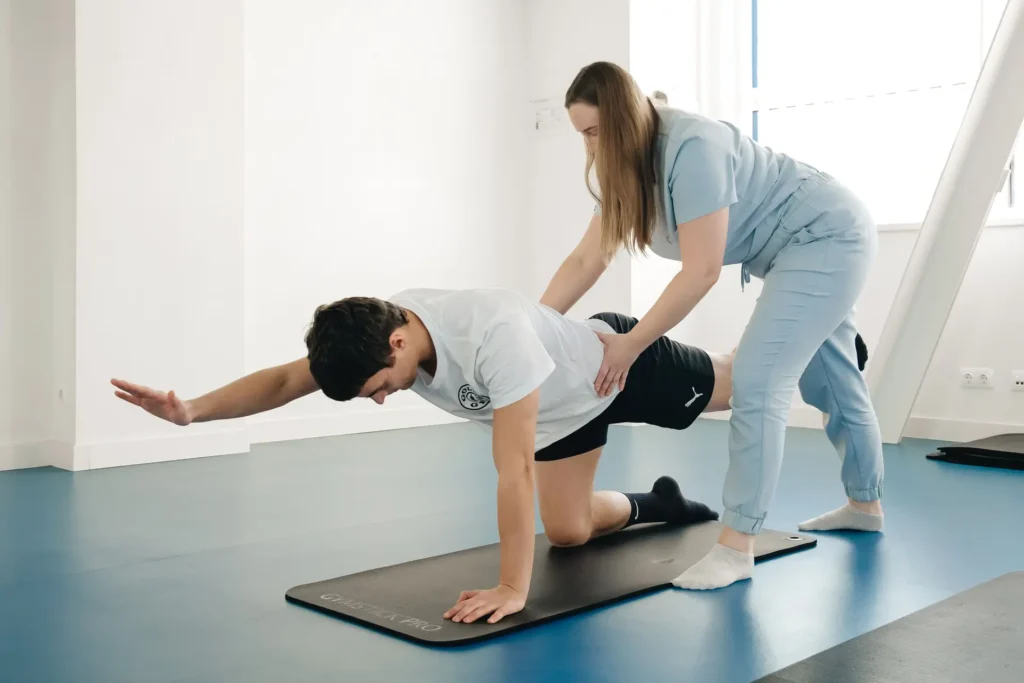
These lower back exercises train your lower back, glutes, hamstrings, and core without needing a gym machine. This 15-minute workout includes five movements:
- Bird Dog
- Glute Bridge Hold
- Prone Back Extension
- Dumbbell Romanian Deadlift
- Dumbbell Suitcase Romanian Deadlift
How to do it: perform 2–3 sets per exercise, use controlled reps or holds, and rest 30–60 seconds between sets.
Most people do not start lower-back training because they want an anatomy lecture. They start because their back feels weak, their hinges feel awkward, or every “lower back exercise” turns into the same tight arch.
And that is where the mistake starts. A tired lower back can feel like a successful set. It is not always. If your ribs flare, your hips stop helping, and your spine does all the moving, the exercise may be loud without being useful.
So the standard here is simple: your lower back should work, but it should not be left alone. You will start with control, bring the glutes into the movement, use a small back-extension range, and then load the hinge with dumbbells.
This is strength training for home workouts, not a pain-relief routine or rehab plan. If you have a current back injury, recent surgery, or diagnosed spinal condition, speak with a healthcare provider first. For general training, this session fits into a broader home back-training structure that combines pulling strength, rowing, hinging, and controlled shoulder-blade work.
Quick Summary
- This is a strength-focused lower back workout, not a pain-relief routine. The goal is to train your lower back to support movement while your glutes, hamstrings, and core share the work.
- Unlike many lower back workouts that only list floor moves, this one progresses from control to loading. The exercises move from stability to hip extension, controlled back extension, loaded hinging, and single-side control.
- If an exercise turns into sharp pain, pinching, numbness, or a hard lower-back arch, reduce the range or stop the set. Progression should come from cleaner control first, then more reps, longer holds, and finally heavier dumbbells.
How Do I Build Muscle in My Lower Back?
You build muscle and strength in your lower back by training two things together: controlled spinal support and hip-driven movement. The lower back helps stabilize and extend the spine, but it should not be forced to do every job alone.
That is why this plan combines bodyweight lower back exercises with glute work, back extensions, and dumbbell hip hinges. The erector spinae matter, but they work best when the hips, core, and posterior chain are doing their share.
An NCBI anatomy reference describes the erector spinae as a back muscle group involved in controlling spinal position and trunk movement. That supports using lower back training that develops both extension and controlled support, not just hard arching.
NCBI Bookshelf: Anatomy, Back, Muscles
5 Lower Back Exercises at Home
These lower back exercises at home are not random. Each one has a job: stabilize the spine, teach hip extension, train controlled back extension, load the hinge, then challenge single-side control.
The best lower back exercises are not always the hardest ones; they are the ones you can control and progress.
If you already have a beginner-friendly back workout without equipment in your routine, use this session as the lower-back strength supplement rather than another general back day.
1. Bird Dog
Video: Canadian Chiropractic Guideline Initiative (CCGI)
Main Muscles Worked
- Lower back / erector spinae
- Core stabilizers
How to Do It
- Start on all fours with your hands under your shoulders and your knees under your hips.
- Brace your abs lightly and keep your back in a natural position.
- Extend one arm and the opposite leg at the same time.
- Reach only as far as you can without arching your lower back or rotating your hips.
- Pause briefly, then return with control.
- Repeat on the other side.
How It Should Feel
You should feel quiet tension through your trunk, not a hard pinch in the low back.
Practical Tips
- Imagine balancing a cup of water on your lower back. Your pelvis should stay quiet.
- If your back drops as soon as you extend your leg, start with legs only or arms only.
- Move slowly enough that the arm and leg extension does not pull your body out of position.
Troubleshooting
- Lower back sinks: Shorten the reach and brace before moving.
- Hips rotate: Slow down and keep the leg lower.
- Neck gets tight: Look at the floor and avoid lifting your head.
Role in the Routine
A control-based starter that teaches your core and lower back to stay stable before the workout becomes more demanding.
A study comparing static bird-dog variations found that changing the position changed trunk muscle demand, including the erector spinae. This supports treating Bird Dog as a stability drill, not just a warm-up filler.
PMC: Electromyographic and stabilometric analysis of Bird Dog variations
2. Glute Bridge Hold
Video: Rehab My Patient
Main Muscles Worked
- Glutes
- Lower-back stabilizers
How to Do It
- Lie on your back with your knees bent and feet flat on the floor.
- Brace your abs lightly and keep your pelvis controlled.
- Drive through your heels and lift your hips until your shoulders, hips, and knees form a straight line.
- Hold the top position without pushing your lower back into a hard arch.
- Lower slowly and repeat.
How It Should Feel
The top should feel glute-led, with the lower back only supporting the position.
Practical Tips
- Keep your ribs from flaring upward.
- If your lower back works more than your glutes, lower the height and reset.
- Drive through the heels, but do not turn the hold into a hamstring cramp.
Troubleshooting
- Lower back feels overloaded: You may be lifting too high or missing glute tension.
- Knees cave in or flare out: Keep your knees tracking roughly in line with your toes.
- Hamstrings cramp: Move your feet slightly closer to your hips.
Role in the Routine
A glute activation and hip-extension drill that helps the lower back work with the posterior chain instead of taking over alone.
3. Prone Back Extension
Video: LIVESTRONG
Main Muscles Worked
- Lower back / erector spinae
- Glutes assist
How to Do It
- Lie face down on the floor or a mat with your legs extended.
- Place your hands by your sides, across your chest, or near your head.
- Lightly brace your abs and glutes, and keep your neck long.
- Lift your chest slightly off the floor.
- Pause at a height you can control.
- Lower slowly without relaxing suddenly.
How It Should Feel
A small lower-back contraction is enough; stop before it feels compressed.
Practical Tips
- Think about reaching your chest forward, not whipping your neck and lower back upward.
- You should feel your lower back working, but not jammed.
- Keep the range smaller than you think if your neck or low back tries to take over.
Troubleshooting
- Neck gets tight: Look down and keep the head in line with the spine.
- Lower back feels pinched: Lower the lift and brace your glutes and abs first.
- Movement feels bouncy: Slow down and pause for 1 second at the top.
Role in the Routine
The main direct lower-back extension exercise in the plan, using a controlled range instead of a high, sloppy Superman-style lift.
A prone back-extension study measured erector spinae activity during different setup angles, showing that this exercise can meaningfully load the back extensors while setup changes the demand. That supports using a controlled version rather than simply lifting as high as possible.
PubMed: Prone back extension exercise prescription
4. Dumbbell Romanian Deadlift
Video: Denvyr | Tall Girl Nutritionist
Main Muscles Worked
- Glutes / hamstrings
- Lower-back stabilizers
How to Do It
- Hold a dumbbell in each hand and stand with your feet about hip-width apart.
- Keep a soft bend in your knees and maintain a neutral spine.
- Push your hips back as the dumbbells travel down along the front of your legs.
- Lower until you feel a hamstring stretch while your back stays controlled.
- Drive your hips forward to stand tall.
- Stop at neutral standing; do not lean back at the top.
How It Should Feel
The stretch should show up in the hamstrings while the lower back stays firm.
Practical Tips
- Think “hips back,” not “bend down.”
- These lower back exercises with dumbbells should feel like controlled hip hinges, not heavy toe touches.
- If you only feel your lower back, reduce the weight and shorten the range.
Troubleshooting
- Back rounds: The weight is too heavy or you are lowering too far.
- Knees bend too much: Reset the movement as a hip hinge, not a squat.
- You lean back at the top: Stand tall and stop there.
Role in the Routine
A loaded hip-hinge exercise that turns lower-back control into a strength movement with measurable progression.
A review of deadlift variations reported that the Romanian deadlift emphasizes the posterior chain, with hamstring activation especially prominent and erector spinae involvement still present. This supports coaching the RDL as a hip-hinge movement where the lower back stabilizes instead of doing all the lifting.
PMC: Electromyographic activity in deadlift exercise and its variants
5. Dumbbell Suitcase Romanian Deadlift
Video: Bony to Bombshell
Main Muscles Worked
- Glutes / hamstrings
- Lower back and core anti-side-bending muscles
How to Do It
- Hold one dumbbell at your side with one hand.
- Stand with your feet about hip-width apart.
- Keep your shoulders and hips facing forward.
- Push your hips back and lower the dumbbell along one side of your body.
- Stop when you can no longer keep your torso square.
- Drive through your hips to return to standing.
- Complete one side, then switch hands.
How It Should Feel
The working feeling should be “stay square,” not side-bending into the dumbbell.
Practical Tips
- Your lower back and core should feel like they are keeping you aligned.
- Use a smaller range before forcing a lower reach.
- If one side feels messy, use the two-dumbbell RDL until the hinge feels even.
Troubleshooting
- Torso leans toward the dumbbell: Use a lighter weight and brace harder.
- Hips rotate: Slow down and keep both hip bones facing forward.
- One side of the lower back feels uncomfortable: Return to the two-dumbbell RDL first.
Role in the Routine
A single-side loading progression that trains lower-back stability and anti-side-bending control under a more realistic carrying pattern.
15-Minute Lower Back Workout at Home
Two-Minute Preparation
- Easy Bird Dog: 4 reps per side
- Easy Glute Bridge: 6 reps
- Bodyweight Hip Hinge Drill: 6 reps
- Short-Range Back Extension: 5 reps
Main Workout
| Exercise | Sets | Reps or Time | Rest |
|---|---|---|---|
| Bird Dog | 2 | 6–8 per side | 30 sec |
| Glute Bridge Hold | 2 | 20–30 sec | 30 sec |
| Prone Back Extension | 2 | 8–12 reps | 30–45 sec |
| Dumbbell Romanian Deadlift | 2–3 | 8–10 reps | 45–60 sec |
| Dumbbell Suitcase Romanian Deadlift | 2 | 6–8 per side | 45–60 sec |
The order matters: start with control, add hip support, train a small back-extension range, then load the hinge only after the position is stable.
How to Use This Routine
Use this lower back workout at home 1–2 times per week. It can fit after a back session, after a leg day, or as a short strength block when the work usually feels unclear.
If your lower back gets tired too fast, reduce the range before reducing the whole workout. If the dumbbell movements feel unstable, use lighter weights and slow the lowering phase.
Safety Tips: Warm up before training. Stop if you feel sharp pain, numbness, radiating symptoms, or unusual joint discomfort. This article is for general strength training, not injury diagnosis or rehabilitation.
Common Mistakes & Tips
If your usual problem is “I only feel my low back” or “RDLs bother my lower back,” the fix is usually not a harder exercise. It is a cleaner hinge, better glute support, and less range until the position is stable.
Turning Every Rep Into a Lower-Back Arch
A strong lower back does not mean a bigger arch. If your ribs flare, your pelvis tips forward, and your spine bends hard at the top of every rep, you are not building clean control.
Keep the ribs down, brace lightly, and stop each rep before the lower back feels jammed.
Chasing Height on Back Extensions
Prone Back Extensions are not better just because you lift higher. A smaller lift with clear lower-back tension is more useful than a high lift that turns into neck tension or spinal compression.
Letting the Hips Disappear
The glutes and hamstrings should help with hip extension. If every movement feels like the lower back is doing everything alone, return to Glute Bridge Holds and lighter RDLs.
Turning RDLs Into a Rounded-Back Reach
Dumbbell RDLs are not toe touches. Push the hips back, keep the weights close, and stop when your spine can no longer stay controlled.
Treating Soreness as Proof
Some lower-back fatigue is normal, but soreness alone does not prove the workout was effective. Better signs are cleaner hinge mechanics, longer holds, steadier single-side control, and less compensation.
If you want more pulling strength without turning this into a full back day, pair it with lat workouts that focus more on pulling strength on a separate session.
Progression Tips for Lower Back Strength
Progression for lower back strengthening exercises should come from control first, then load.
Hold positions longer
Add time to Bird Dog and Glute Bridge Hold before adding harder variations.Add reps without losing position
If your form changes after 6 reps, stay there until it becomes clean.Increase range gradually
A larger range is useful only if your spine and hips stay controlled.Add dumbbell load slowly
Increase weight on the RDL only when the lower back remains stable.Progress the single-side hinge
Use the Suitcase RDL to train anti-side-bending control, not to prove how heavy you can go.Track movement quality
Record reps, hold time, dumbbell weight, and whether the lower back felt supportive or compressed.
For upper-back control that complements this session, use rhomboid exercises that train shoulder-blade retraction on a different day or earlier in your back training week.
Frequently Asked Questions
What Exercise Works on the Lower Back?
Bird Dog, Prone Back Extension, Dumbbell Romanian Deadlift, and Suitcase Romanian Deadlift can all work the lower back in different ways.
Bird Dog trains stability. Prone Back Extension trains controlled spinal extension. RDL variations train the lower back as part of a hip-hinge pattern with the glutes and hamstrings.
What Are the Big 3 Exercises for Lower Back?
For this strength-focused routine, the three most important patterns are Bird Dog, Prone Back Extension, and Dumbbell Romanian Deadlift.
That does not mean they are the only useful exercises for lower back training. It means they cover stability, direct extension, and loaded hip-hinge control.
What Are Signs of a Weak Lower Back?
This article cannot diagnose weakness. From a training standpoint, signs that your lower back may need more attention include losing position during hip hinges, feeling unstable during single-side loads, or fatiguing quickly during back extensions.
If you have pain, numbness, radiating symptoms, or an injury history, get assessed by a qualified professional instead of treating it as a normal training issue.
What Weakens the Lower Back?
A lower back can become undertrained when you avoid hinging, never load the posterior chain, sit for long periods, or let the glutes and core stop contributing during movement.
The fix is not always heavier weight. It is better coordination first: core control, glute involvement, hip movement, and then progressive loading.
Are Lower Back Exercises Safe?
Lower back exercises can be safe for healthy trainees when the range, load, and tempo match your current control. The problem usually comes from forcing range, adding weight too early, or pushing through warning signs.
Keep the first few sessions conservative. If the exercise feels like sharp pain, pinching, numbness, or radiating discomfort, stop and seek professional guidance.
Conclusion
Do not judge this session by how sore your lower back feels afterward. That is the easy signal to chase, and it is not always the most useful one.
Look for cleaner signs. Your Bird Dog stays still. Your bridge feels like your glutes are finally doing their share. Your back extension stops before the pinch. Your RDL feels like your hips moved back, not like your spine folded forward.
That is the version worth progressing. Write down the range, reps, hold time, and dumbbell weight you can control. Then make one thing harder next time, not five.
Repeat that long enough, and your lower back stops being the part you worry about and starts becoming part of the support system you can trust.
Medical disclaimer: This article is intended for educational and informational purposes only. It is not intended as a substitute for medical advice. For health advice, contact a licensed healthcare provider.