
Rear Delt Exercises at Home: 3 Moves to Feel Your Rear Shoulders
By Zephyr · Published Jun 22, 2026
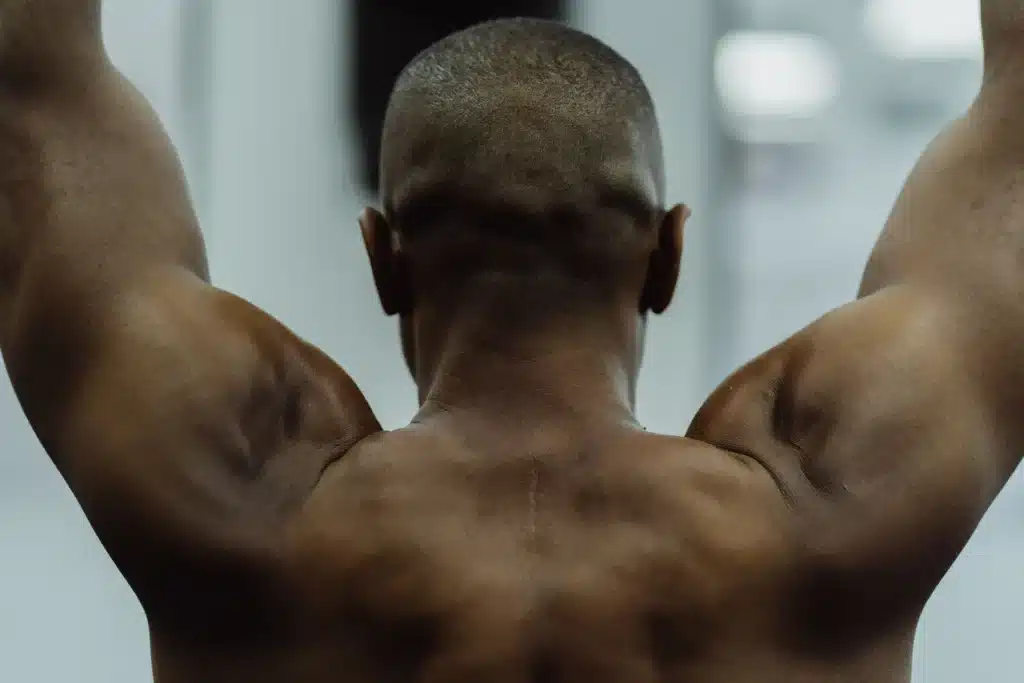
These rear delt exercises use three home-friendly moves to train the back of your shoulders without turning every rep into a shrug or back row:
- Dumbbell Rear Delt Fly
- Dumbbell Seated Rear Delt Fly
- Resistance Band Face Pull
Do 3 sets of 10–15 reps per exercise, rest 45–60 seconds, and use a weight light enough to feel the back of the shoulder working instead of your traps, lats, or lower back. The point is not to collect more variations; it is to make each rep easier to judge.
Most rear delt exercises look simple: raise the arms back, squeeze, repeat. The problem is that the movement can quickly turn into traps, rhomboids, lats, or just momentum if you do not know what the rear delts are supposed to do.
A rear delt fly is still useful. A face pull is useful too. I would keep both patterns, but I would not treat them as the same job. The fly teaches the back of the shoulder to move the upper arm outward and slightly back. The face pull adds band tension and external-rotation control without turning the set into a heavy row.
These rear delt exercises focus on three home-friendly moves: a standing dumbbell fly, a seated dumbbell fly, and a resistance band face pull. The goal is not to squeeze your shoulder blades as hard as possible. It is to make the rear delts the limiting muscle before your neck, upper traps, or upper back take over.
Quick Summary
- Rear delts are part of your shoulders, but many rear-delt movements can turn into upper-back work if the elbows drop too low or the shoulder blades do all the movement.
- This workout keeps the focus narrow: raise the upper arms out and back, keep the neck quiet, use light-to-moderate resistance, and stop each set before the traps or rhomboids take over.
- Pure bodyweight posterior shoulder work can help with control, but dumbbells and bands make the target easier to load and feel. If you are building a full shoulder plan, use this as the posterior-shoulder component of a complete home shoulder routine that balances pressing, lateral raises, fly patterns, and rotation control.
How Do I Target My Rear Delts?
To target your rear delts, think less about pulling heavy and more about moving the upper arm. The rear delt helps bring the arm behind the body and out to the side, especially when the elbow travels away from the torso instead of down toward the hip.
That is why a rear delt fly feels different from a regular row. A row usually asks the lats, rhomboids, and traps to help more. A rear-delt-focused movement should feel like the back of the shoulder is opening the arm outward, not like your shoulder blades are being squeezed together as hard as possible.
One study comparing posterior-deltoid activation during several exercises found greater posterior-deltoid activity during reverse pec deck work than during seated rows and inclined lat pulldowns. That supports using fly-style posterior shoulder work instead of assuming rows or pulldowns train the rear delts just as directly.Study comparing anterior, middle, and posterior deltoid activation
A little upper-back tension is normal. A shrug is not. If your neck tightens first, your shoulders rise toward your ears, or the movement turns into a row, lower the load and clean up the path.
3 Best Rear Delt Exercises at Home
Before you start, keep one rule in mind: rear delt work is shoulder work, not a back-row substitute. Your shoulder blades can move naturally, but the main action should come from the upper arm moving out and back.
The three exercises below were chosen because they give you clear ways to practise that action at home: one standing fly, one stricter seated fly, and one band movement with smoother tension. A biomechanical study comparing bent-over dumbbell lateral raises, standing face pulls, and bent-over dumbbell rows found that these posterior-shoulder exercises use different movement paths. That supports treating each setup as a different tool, not as proof that one variation is automatically best for everyone.Biomechanical evaluation of posterior deltoid exercises
1. Dumbbell Rear Delt Fly
Video: Seriously Strong Training
Main Muscles Worked
- Posterior deltoid
- Upper back stabilizers
How to Do It
- Stand with your feet about hip-width apart.
- Hold a dumbbell in each hand with a pronated grip, so your palms face back or slightly toward the floor as your torso hinges forward.
- Keep a soft bend in your knees and brace your trunk.
- Let the dumbbells hang below your shoulders.
- Raise your arms out and slightly back until your upper arms are near shoulder height.
- Pause briefly, then lower the dumbbells with control.
Practical Tips
- Use light dumbbells first. This is not a strength display.
- For rear delt exercises with dumbbells, control matters more than load.
- Keep your elbows slightly bent, but do not turn the movement into a row.
- Lead with the elbows, not the hands.
- Stop the lift before your shoulders shrug upward.
How It Should Feel
You should feel the back of the shoulder working, not your neck pulling the weight up.
Troubleshooting
- If your traps take over: lower the weight and stop raising your shoulders.
- If it feels like a row: keep the elbows wider and avoid pulling toward your hips.
- If your lower back gets tired: hinge less deeply or use the seated version.
- If momentum takes over: pause at the bottom before each rep.
Role in the Workout
This rear delt fly exercise teaches the basic arm path and lets you load the movement without needing a cable machine.
2. Dumbbell Seated Rear Delt Fly
Video: RCA Fitness
Main Muscles Worked
- Posterior deltoid
- Upper back stabilizers
How to Do It
- Sit on a chair or bench with your feet flat.
- Hinge forward from the hips and keep your chest close to your thighs.
- Hold the dumbbells with a pronated grip.
- Let the dumbbells hang below your legs.
- Raise your arms out to the sides with a slight backward angle.
- Pause briefly when the back of the shoulder contracts, then lower slowly.
Practical Tips
- Use a lighter weight than the standing version.
- Keep the torso still so the target muscle does the work.
- Do not bounce off your thighs at the bottom.
- Keep your neck relaxed.
How It Should Feel
You should feel a cleaner rear-shoulder contraction because the seated position removes body swing.
Troubleshooting
- If your back rounds too much: sit taller and hinge less.
- If the dumbbells swing: slow down the lowering phase.
- If you only feel traps: lower the weight and keep the shoulders away from your ears.
- If you cannot reach the top smoothly: reduce the range slightly.
Role in the Workout
This removes momentum after the standing version. It is useful when you need better control and a clearer rear-delt feel.
Research on shoulder external-rotation and horizontal-abduction exercises found high posterior-deltoid activity during prone horizontal abduction at 100 degrees with full external rotation. This does not test this exact seated dumbbell setup, but it supports horizontal-abduction work as a relevant posterior-shoulder training pattern.Study on rotator cuff and deltoid activity during shoulder exercises
3. Resistance Band Face Pull
Video: ClenchFitness
Main Muscles Worked
- Posterior deltoid
- External rotators
How to Do It
- Anchor a resistance band at head height or slightly above head height.
- Hold one end of the band in each hand.
- Step back until the band has light tension.
- Keep your ribs down and your body still.
- Pull the band toward your face.
- Let your elbows travel out and slightly back.
- Pause briefly, then return with control.
Practical Tips
- Use a light band before chasing more resistance.
- Keep the pull smooth; do not yank the band.
- Let the hands separate as they come toward your face.
- Keep the shoulders controlled instead of shrugging.
How It Should Feel
You should feel the rear shoulders and upper-back control working together without the neck tightening first.
Troubleshooting
- If your neck gets tight: lower the band tension.
- If the band snaps you forward: step closer to the anchor.
- If it turns into a row: keep the elbows higher and pull toward your face.
- If your lower back arches: brace your ribs down and reduce the resistance.
Role in the Workout
This finishes the session with a smoother resistance curve and reinforces control around the back of the shoulder.
20-Minute Rear Delt Workout Routine
Three-Minute Preparation
- Arm circles: 30 seconds each direction
- Band pull-aparts: 12 slow reps
- Light band face pulls: 12 slow reps
- Scapular circles or shoulder rolls: 30 seconds
Main Workout
| Exercise | Sets | Reps | Rest | Role |
|---|---|---|---|---|
| Dumbbell Rear Delt Fly | 3 | 10–15 | 60 sec | Build the fly pattern |
| Dumbbell Seated Rear Delt Fly | 3 | 10–15 | 60 sec | Remove body swing |
| Resistance Band Face Pull | 3 | 12–15 | 45 sec | Finish with band tension |
How to Use This Routine
Use this workout 1–2 times per week after your main shoulder work or after a pull-focused upper-body session. If your rear delts are a priority, place this work before heavy back exercises so your lats and traps are not already tired.
Start with a load you can control for every rep. If the last few reps turn into shrugging, swinging, or rowing, the set is already past the useful point.
If you also train shoulder width, pair this with side delt exercises that focus on lateral shoulder development, but keep the goals separate: side delts lift the arm out to the side, while rear delts pull the upper arm back and outward.
Safety Tips:Warm up your shoulders before adding resistance. Keep the neck relaxed, avoid forcing the arms behind the body, and stop if you feel sharp pain, pinching, numbness, or symptoms that do not feel like normal training fatigue.
Common Mistakes That Stop You Feeling Your Rear Delts
1. Turning Every Rep Into a Shrug
Trap involvement is normal, but the traps should not drive the entire rep. If your shoulders rise toward your ears before the arms move, the path has changed.
Use less weight and think about moving the upper arms out and back while keeping the neck quiet.
2. Treating Rear Delt Work Like Rhomboid Work
Rear-delt work is not the same as rhomboid work. Rhomboids focus more on shoulder-blade retraction. Rear delts need the upper arm to move behind and away from the body.
If your only cue is “squeeze your shoulder blades,” you may shift the work toward the upper back. For more direct upper-back retraction work, use rhomboid exercises that focus on shoulder-blade control.
3. Turning Every Rep Into a Row
A rear delt row can work, but it becomes a lat or upper-back exercise if the elbows drop too low.
If the elbow path drops toward your hips, you are no longer doing rear-delt-focused work; you are moving closer to a lat row. Keep the elbows wider and think about moving the upper arm back and out, not dragging the weight down and in.
This is also why this article does not replace back-focused pulling work. The goals are different.
4. Going Too Heavy Too Soon
Rear delts often respond better to control than ego weight. Heavy dumbbells can make the lower back, traps, and arms do most of the work.
Choose a load that lets you pause briefly at the top without swinging.
5. Thinking Bodyweight Alone Is Always Enough
Bodyweight shoulder work can build control, but rear delts are hard to load precisely with pure bodyweight movements. Dumbbells and bands make it easier to create a clear target and progress gradually.
If you are still building basic shoulder strength, start with beginner-friendly bodyweight shoulder work and add these posterior shoulder movements when you can control your shoulder position.
Progression Tips
Progress this work by making the rear delts easier to feel first, then making the exercise harder.
- Add a pause at the top of each rep.
- Slow the lowering phase to 2–3 seconds.
- Add reps within the target range.
- Add a small amount of weight only after the movement stays clean.
- Use a slightly stronger band for face pulls only if your neck stays relaxed.
Do not progress if the movement becomes a shrug, row, or hard shoulder-blade squeeze. In practice, I would rather see one more clean rep with the rear delts clearly working than a heavier dumbbell that turns the set into traps and upper back.
Frequently Asked Questions
Is Rear Delt Back or Shoulders?
The rear delt is part of the shoulder. It sits on the back side of the deltoid and helps move the upper arm backward and outward.
Many rear-delt exercises look like back exercises because the traps, rhomboids, and lats are nearby and often assist. That does not mean rear-delt work should turn into a lat row or shoulder-blade squeeze.
How Do I Target My Rear Delts?
Use lighter resistance, keep the elbows wide enough, and move the upper arms out and back. The goal is to feel the back of the shoulder, not the neck or lower back.
If you cannot feel your rear delts, reduce the weight and use the seated fly first. It removes body swing and makes the target easier to judge.
Are Rear Delts Hard to Grow?
They can be hard to grow because many people train them after heavy back work, use too much weight, or let the traps and rhomboids take over.
They are not impossible to grow. They usually need cleaner reps, enough weekly volume, and a clear difference between rear-delt work and general back pulling.
Can I Train Rear Delts Without Cables?
Yes. Dumbbell fly variations and band face pulls can train the rear delts at home. Cables are useful because they provide steady tension, but they are not required.
Use dumbbells for load and bands for smoother tension and control.
Do Rows Hit Rear Delts?
Some rows can involve the rear delts, especially when the elbows travel out and back. But most rows also involve the lats, rhomboids, and traps heavily.
If your goal is rear-delt focus, use rows as a supplement, not as your only rear-delt exercise.
How Many Rear Delt Exercises Should I Do?
Two to three rear-delt exercises are enough for most home workouts. More exercises are not automatically better if they all turn into the same shrugging or rowing pattern.
Start with 6–10 total working sets per week and progress only when the rear delts remain the limiting muscle.
Conclusion
Rear delts do not need a long list of random exercises. They need cleaner reps, lighter control than most people expect, and enough tension to make the back of the shoulder do the work.
I would progress this workout only when the target feeling stays clear: the rear shoulder works first, the neck stays quiet, and the movement does not become a row or a shrug. Add reps first, then add a little resistance, and only then make the setup harder.
Use this workout in your next shoulder session, record the weight or band you can control, and make one small improvement without losing the rear-delt feeling.
Medical disclaimer: This article is intended for educational and informational purposes only. It is not intended as a substitute for medical advice. For health advice, contact a licensed healthcare provider.