
Front Delt Exercises at Home: When to Train Them Without Overdoing It
By Zephyr · Published Jun 23, 2026
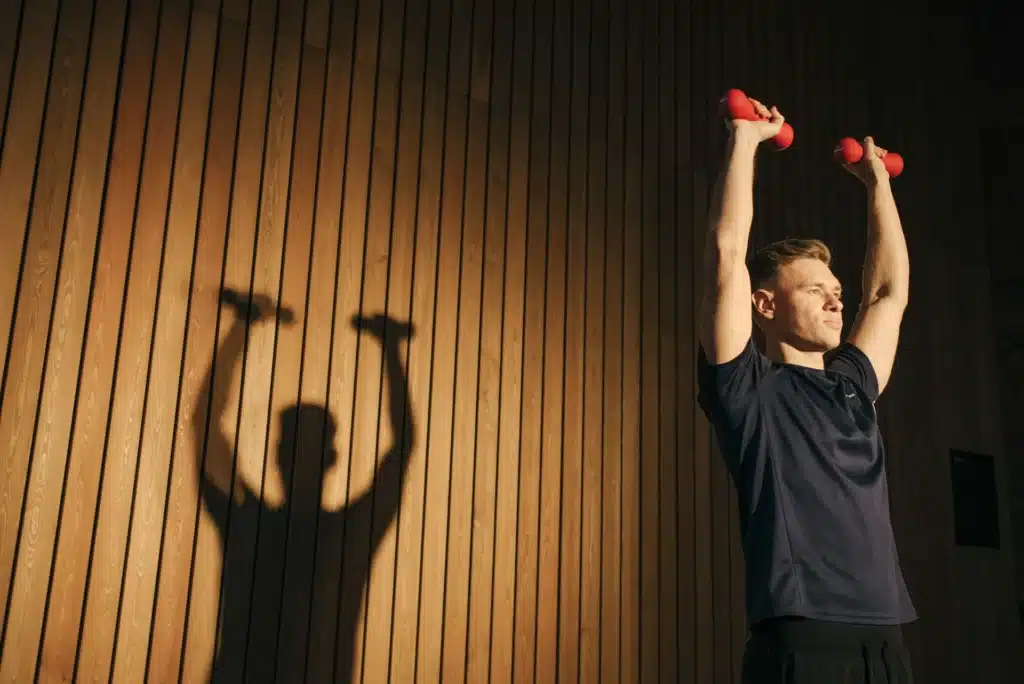
These front delt exercises use two simple home-friendly moves to support the front of your shoulders without turning them into a full shoulder day:
- Standing Dumbbell Overhead Press or Strict Overhead Press
- Dumbbell Front Raise
How to do it: choose one overhead press option, then add front raises. Use 2–3 sets for the press, 2 sets for front raises, and keep the whole routine around 10 minutes.
Front delt training is easy to overdo because the front of your shoulders already works during push-ups, bench press, incline press, dips, and overhead pressing. If your chest and shoulder pressing are solid, your front delts are probably not being ignored.
That does not make direct front-delt work useless. It just means it needs a clear job. I would not give the front delts their own big training day unless there is a real gap: weak overhead pressing, poor shoulder-flexion control, or front shoulders that clearly lag behind the rest of your upper body.
These two movements are a small support block, not a full shoulder session. Place them within a complete home shoulder routine that shows when pressing is enough and when direct work adds value.
Quick Summary
- Most lifters do not need a large front-delt routine if they already press hard.
- Front delts usually get plenty of work from chest and shoulder pressing.
- If your front delts fatigue before your chest or side delts, more front-delt volume is probably not the fix.
- Direct front-delt work makes sense when the front shoulder is visibly behind, pressing control is weak, or your routine has very little overhead work.
- Use this as a small support block, not as a replacement for side-delt, rear-delt, or full shoulder training.
- Choose one press option, then add dumbbell front raises.
- Keep the routine short: about 10 minutes, once per week for most people.
Do You Need Front Delt Exercises?
You only need direct front delt work if your front delts are actually undertrained. If you already do push-ups, incline pressing, dips, bench press, or overhead press, your anterior delts are already getting plenty of indirect work.
A bench-angle EMG study found that steeper pressing angles increased anterior deltoid activation, especially when the incline moved above moderate angles. That supports the practical point here: pressing is already a front-delt stimulus, especially when the movement becomes more upright. Study on bench angle and upper-body muscle activation
Direct front-delt training is more useful when:
- you rarely do overhead pressing;
- your front shoulders look behind your side and rear delts;
- your press feels unstable at the start of the lift;
- you need light shoulder-flexion control, not more heavy pressing volume.
If your main goal is wider-looking shoulders, front delts are usually not the first place to spend extra effort. You will usually get more visual change from side-delt work that builds shoulder width and rear-delt exercises that keep the back of the shoulder balanced.
Best Front Delt Exercises for a Small Support Routine
The goal is not to collect every front raise variation. The goal is to choose one pressing pattern and one controlled shoulder-flexion pattern.
A study comparing shoulder press variations found that both standing and seated pressing produced high anterior deltoid activity, with dumbbells generally requiring more stabilization than barbells. That supports using either a dumbbell press or strict barbell press as the main loading option here. Study on body position, loading modality, and shoulder press muscle activity
1A. Standing Dumbbell Overhead Press
Video: Physique Development
Main Muscles Worked:
- Front delts
- Triceps
How to do it:
- Stand with your feet about hip-width apart.
- Hold the dumbbells at shoulder height.
- Keep your elbows slightly in front of your body instead of flaring straight out.
- Brace your abs and glutes so your ribs do not flare upward.
- Press the dumbbells overhead in a controlled path.
- Stop near the top without forcing a hard lockout.
- Lower the dumbbells back to shoulder height with control.
Practical Tips:
- Start with a weight you can control without leaning back.
- Keep your ribs down as the dumbbells pass your face.
- Do not turn the press into a standing incline bench press.
- If one dumbbell drifts forward or outward, reduce the load.
How it should feel:
You should feel the front shoulders and triceps pressing upward while your torso stays quiet.
Troubleshooting:
- Low back tightness: reduce the weight and brace before each rep.
- Shoulder pinch: stop slightly lower and keep the elbows a little forward.
- Dumbbells wobble: slow the lowering phase and use lighter weights.
- Neck takes over: relax the traps and avoid shrugging at the top.
Role in the Workout:
This is the main home pressing option. It trains the front delts through a compound overhead pattern without needing a barbell.
1B. Strict Overhead Press
Video: Max Euceda
Main Muscles Worked:
- Front delts
- Triceps
How to do it:
- Stand with the bar at the upper chest or collarbone area.
- Place your hands slightly wider than shoulder-width.
- Keep your wrists stacked over your elbows.
- Brace your abs, glutes, and legs before pressing.
- Move your head slightly back as the bar passes your face.
- Press the bar overhead in a straight path.
- Finish with the bar over the midfoot, then lower under control.
Practical Tips:
- Keep it strict: no knee drive.
- Do not lean back to finish the rep.
- Use a lighter bar or dumbbells if your torso position breaks.
- Think of pressing yourself under the bar, not pushing the bar forward.
How it should feel:
You should feel a strong vertical press through the front shoulders and triceps without your lower back doing the work.
Troubleshooting:
- Bar drifts forward: keep the elbows slightly forward and move your head through after the bar passes.
- Low back arches: reduce the weight and brace harder before the first rep.
- Wrists hurt: keep the bar closer to the heel of the palm.
- Press feels uneven: slow down and avoid rushing the first rep.
Role in the Workout:
This is the barbell option. Use it instead of the dumbbell overhead press if you have a barbell and can keep the lift strict.
2. Dumbbell Front Raise
Video: Colossus Fitness
Main Muscles Worked:
- Front delts
- Upper chest assists
How to do it:
- Stand tall with a dumbbell in each hand.
- Let the dumbbells start in front of your thighs.
- Keep a slight bend in the elbows.
- Brace your torso so you do not lean back.
- Raise the dumbbells forward until your arms reach about shoulder height.
- Pause briefly.
- Lower slowly until the dumbbells return to the start.
Practical Tips:
- Use light or moderate weight.
- Shoulder height is enough; do not chase extra height.
- Keep the lift smooth instead of swinging from the hips.
- Stop the set when your lower back or traps start helping.
How it should feel:
You should feel the front of the shoulder lifting the arm, not your neck or lower back throwing the weight.
Troubleshooting:
- You lean back: the dumbbells are too heavy.
- Traps take over: stop at shoulder height and keep the neck relaxed.
- Front shoulder pinches: reduce the range and use a lighter load.
- Reps turn into swings: pause briefly at the bottom before each rep.
Role in the Workout:
The front raise gives direct front-delt tension after the press. It is not the main lift; it is the small isolation piece that finishes the support block.
An EMG study on raise variations found that the frontal raise strongly involved the anterior deltoid. That makes it useful when you need a small amount of direct front-shoulder work, but it still should not replace pressing or balanced shoulder training. Study on lateral raise variations and frontal raise in competitive bodybuilders
10-Minute Front Delt Support Routine
Use this once per week as a small add-on, not a full shoulder day.
Choose Option A or Option B.
| Phase | Exercise | Sets | Reps | Rest | Time |
|---|---|---|---|---|---|
| A1 | Standing Dumbbell Overhead Press | 2–3 | 6–10 | 60–90 sec | 5–6 min |
| A2 | Dumbbell Front Raise | 2 | 10–15 | 45–60 sec | 3–4 min |
| B1 | Strict Overhead Press | 2–3 | 5–8 | 60–90 sec | 5–6 min |
| B2 | Dumbbell Front Raise | 2 | 10–15 | 45–60 sec | 3–4 min |
How to Use This Routine
If you train chest, shoulders, or push-ups hard during the week, keep this routine short. Do not add both overhead press options in the same session.
Use Option A if you train at home with dumbbells. Use Option B if you have a barbell and can press without leaning back.
If you already follow a full shoulder routine, place this after your main work only when the front delts are truly lagging. If you need a more general beginner shoulder plan, use a bodyweight shoulder routine for broader shoulder development instead of adding more front-delt volume.
Safety Tips: Warm up your shoulders before pressing. Keep all reps controlled and pain-free. Stop if you feel sharp pain, pinching, numbness, or symptoms that do not feel like normal training fatigue. This routine is for general strength training, not injury treatment.
Common Mistakes That Make Front Delt Work Less Useful
1. Adding Front Raises When Your Front Delts Already Take Over
If your front delts already fatigue before your chest during pressing, adding more front raises may make the problem worse.
The fix is not always more front-delt work. It may be better pressing technique, better chest tension, or more attention to side and rear delts.
2. Turning the Dumbbell Press Into a Backbend
A standing dumbbell press should move the weights overhead, not turn your body into a slanted bench.
If your ribs flare and your lower back arches, the front delts are no longer receiving clean work. Lower the load and press with a stacked torso.
3. Using Front Raises as a Strength Test
Front raises work best when they are controlled. Heavy swinging usually turns the lift into momentum, trap involvement, and low-back compensation.
Use a weight that lets you pause at shoulder height without throwing your hips forward.
4. Ignoring Side and Rear Delt Work
Front delts are only one part of shoulder development. If you only add front-delt work, your shoulders may still look narrow from the front or flat from the side.
For better balance, pair this support routine with side-delt exercises that focus more on lateral shoulder development and rear-delt work that trains the back of the shoulder.
Progression Tips for Front Delt Exercises
Progress this routine slowly. The front delts already receive a lot of weekly work from pressing, so the goal is not to keep adding volume forever.
Use this order:
- Make every rep controlled.
- Reach the top of the rep range.
- Add a small amount of weight.
- Keep the same range and torso position.
- Stop adding load if the press turns into a backbend or the front raise turns into a swing.
If you are already pressing hard twice per week, keep this routine at the low end: 2 sets of pressing and 2 sets of front raises.
If you are not doing much pressing at all, you can use the higher end: 3 press sets and 2 front-raise sets.
Frequently Asked Questions
What Hits Your Front Delts?
Your front delts work during overhead press, incline press, bench press, push-ups, dips, and front raises. The more upright the pressing angle becomes, the more the front shoulder usually contributes.
That is why many lifters do not need much extra isolation work for the front delts.
What Is the Best Exercise for Front Delts?
The overhead press is usually the best main exercise for front delts because it trains them through a compound pressing pattern.
The dumbbell front raise is useful as a small isolation exercise, but it should not replace good pressing mechanics.
Are Front Raises Necessary?
Front raises are not necessary for everyone. If your chest pressing, incline pressing, push-ups, and overhead pressing are already strong and consistent, your front delts may already get enough work.
They are useful when your front delts are clearly behind or when you need controlled shoulder-flexion practice.
Can I Skip Front Delt Isolation?
Yes, you can skip front delt isolation if your front delts are already well developed or if they fatigue too early during chest and shoulder pressing.
In that case, your extra shoulder work is usually better spent on side delts, rear delts, or pressing technique.
How Many Front Delt Exercises Should I Do?
For most people, one direct front-delt isolation exercise is enough. In this routine, the overhead press provides the main stimulus, and the front raise adds a small amount of focused work.
You do not need five different front-delt variations in one workout.
How Do I Target My Front Deltoids?
Use controlled shoulder flexion and overhead pressing. Raise or press with the upper arm moving forward or overhead while your ribs stay down and your neck stays relaxed.
If the movement turns into a backbend, shrug, or hip swing, the target has shifted away from clean front-delt work.
Conclusion
Front delt work is useful when it fills a real gap. It becomes a problem when it is added on top of every push-up, incline press, bench press, dip, and overhead press without asking whether the front delts are already doing plenty.
I would treat these front delt exercises as a small support tool. Use them when your pressing control needs help, when your front shoulders genuinely lag, or when your routine has almost no overhead work. Do not use them as an excuse to ignore side delts, rear delts, or balanced shoulder training.
Use the 10-minute routine once this week, choose one press option, keep the front raises controlled, and record whether your front delts feel better trained without making your pressing feel more crowded.
Medical disclaimer: This article is intended for educational and informational purposes only. It is not intended as a substitute for medical advice. For health advice, contact a licensed healthcare provider.