
Forearm Exercises at Home: 4 Dumbbell Moves for Grip and Control
By Zephyr · Published Jun 26, 2026
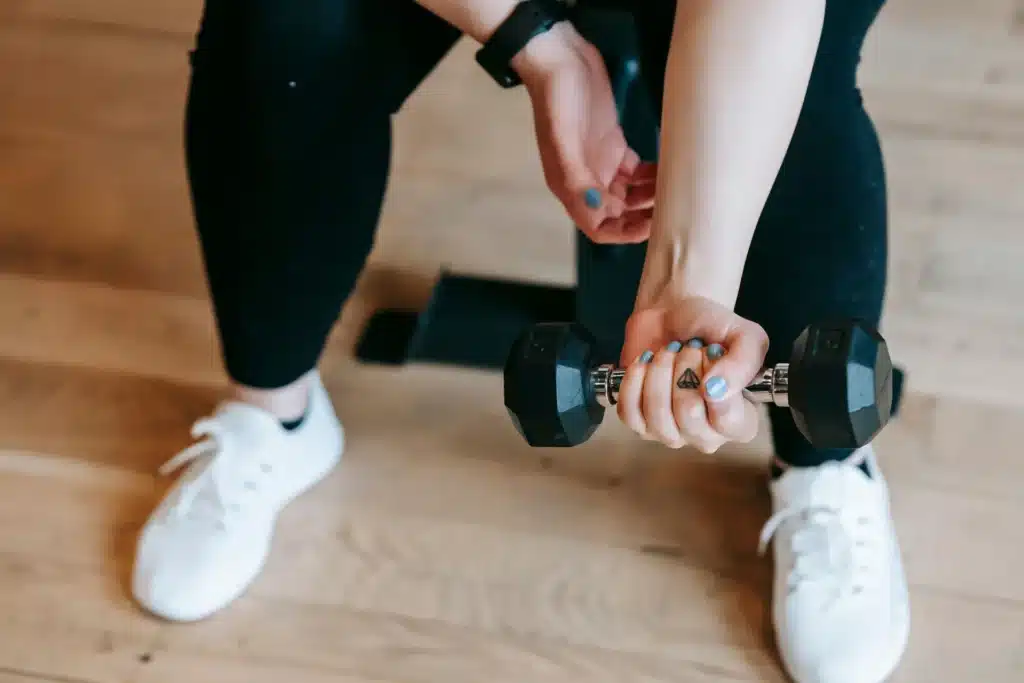
The best forearm exercises at home are not just wrist curls or grip holds. A useful routine should train four separate jobs: wrist flexion, wrist extension, loaded grip, and forearm rotation. For a simple dumbbell-based plan, use seated dumbbell wrist curls, seated reverse wrist curls, dumbbell static holds, and dumbbell pronation and supination.
Forearms can get tired fast, but that does not mean they are being trained well. Wrist curls, dead hangs, farmer’s carries, reverse curls, and rotation drills all show up in forearm advice, but they do not all train the same thing.
I would rather build this around four clear tasks: curl the wrist, lift the wrist, hold weight, and rotate the forearm with control. That gives you a way to train forearms at home without turning every set into a random grip test.
This routine uses dumbbells and a small amount of space. It is not a wrist pain rehab plan, and it is not a forearm trainer buying guide. If you want to place it inside a broader week of training, use it as a small accessory piece after upper-body training built around simple equipment.
Quick Summary
- Wrist curls train wrist flexion, but they do not cover the whole forearm.
- Static holds build grip strength, but grip work alone does not explain forearm size.
- A better home routine separates four jobs: flexion, extension, loaded grip, and rotation control.
- Use the same four exercises for 1–2 sessions per week before adding more variations.
- Stop if wrist or elbow pain becomes sharp, numb, or worse during the set.
What Are the Best Forearm Exercises at Home?
The best forearm exercises are the ones that cover different jobs instead of repeating the same wrist motion. Use one wrist-flexion move, one wrist-extension move, one loaded grip hold, and one rotation-control drill. In this routine, that means seated dumbbell wrist curls, seated reverse wrist curls, dumbbell static holds, and dumbbell pronation and supination.
That structure matters because the forearms are not trained by one simple movement. Some exercises train the underside of the forearm as the wrist curls up. Some train the top side as the wrist lifts. Some build grip strength by forcing you to hold weight. Others train the forearm to rotate under control.
Hand and wrist position also matter. A study on wrist flexor and extensor activity found that forearm rotation can change how these muscles work during wrist motion, which supports using more than one wrist position instead of treating every forearm exercise as the same pattern. You can read the wrist flexor and extensor muscle activity study.
If your current forearm workouts are mostly wrist curls with a few hangs added in, you are probably missing at least one job. The fix is not to chase every grip variation online. It is to make each exercise earn its place.
This article stays focused on wrist movement, loaded holding, and forearm rotation. Grip work that comes from pull-ups, rows, heavy carries, or full arm workouts belongs with those sessions, not here.
4 Forearm Exercises for a Simple At-Home Routine
These dumbbell forearm exercises are simple, but each one has a different job. Use them in order so the lighter wrist-control work comes before the heavier grip hold.
1. Seated Dumbbell Wrist Curl
Video: LIVESTRONG
Main Muscle Worked:
Forearm flexors
Role in the Workout:
This comes first because it is the easiest place to feel forearm flexion. Treat it as one of your main forearm flexor exercises, not a full routine by itself. You will practice curling the wrist up, squeezing briefly at the top, and lowering with control instead of turning the movement into an arm curl.
How to Do It:
- Sit down and rest your forearm on your thigh or a bench.
- Let your wrist sit slightly past the edge, palm facing up.
- Hold a dumbbell and slowly lower it until you feel a mild stretch through the underside of your forearm.
- Curl the wrist up without lifting your forearm off the support.
- Pause briefly at the top, then lower slowly.
How It Should Feel:
You should feel the underside of your forearm doing most of the work, not your fingers gripping harder or your upper arm lifting the weight.
Practical Tip:
Use less weight than you think. This is about wrist control and forearm contraction, not swinging the dumbbell with your arm.
Troubleshooting:
If your forearm keeps lifting off your thigh or bench, the weight is probably too heavy or your support position is too loose.
2. Seated Dumbbell Reverse Wrist Curl
Video: Live Lean TV Daily Exercises
Main Muscle Worked:
Forearm extensors
Role in the Workout:
This trains the top side of the forearm and is one of the simplest forearm extensor exercises you can do with a dumbbell. Many people only do palm-up wrist curls, but a more complete routine should also train the wrist to lift against resistance.
How to Do It:
- Sit down and rest your forearm on your thigh or a bench.
- Hold the dumbbell with your palm facing down and your wrist slightly past the edge.
- Keep your forearm still and lift the back of your hand upward.
- Stop at a range you can control without the elbow or shoulder helping.
- Lower slowly and keep the movement small but clean.
How It Should Feel:
You should feel the top side of your forearm working, not your elbow or shoulder trying to raise the dumbbell for you.
Practical Tip:
This exercise usually needs much less weight than a regular wrist curl. A smaller clean range is better than a heavier messy one.
Troubleshooting:
If you mostly feel your elbow or shoulder instead of the top of your forearm, reduce the weight and shorten the range.
3. Dumbbell Static Hold
Video: All Strength Training
Main Muscles Worked:
Forearm flexors / grip muscles
Role in the Workout:
This trains your ability to hold weight and keep your grip. Unlike wrist curls, the wrist does not move much here. The forearms have to keep working while you hold the dumbbells still.
How to Do It:
- Hold one dumbbell in each hand.
- Stand tall with your arms resting by your sides.
- Keep your shoulders relaxed instead of shrugging.
- Keep your wrists neutral, not bent backward.
- Hold for the planned time, then set the dumbbells down before your posture breaks.
How It Should Feel:
You should feel your hands and forearms working to keep the dumbbells still while your shoulders, neck, and lower back stay quiet.
Practical Tip:
For forearm workouts at home, static holds are often easier to control than farmer’s carries because you do not need walking space.
Troubleshooting:
If your shoulders start shrugging, your wrists bend back, or your body starts rocking, the set has gone past useful grip work.
Grip work belongs in this routine, but it should not take over the whole article. In a grip-force study, forearm muscle activity increased as grip strength demand increased, which supports loaded holds as a real forearm task without claiming they replace direct wrist work. You can read the load distribution and forearm muscle activity study.
4. Dumbbell Pronation and Supination
Video: SPECTRUM Performance
Main Muscles Worked:
Forearm pronators / supinators
Role in the Workout:
This trains forearm rotation instead of only curling or holding weight. You will slowly turn the palm down, then slowly turn it back up, while keeping the forearm controlled.
How to Do It:
- Sit down with your elbow bent and your forearm supported on your thigh or another stable surface.
- Hold one end of a light dumbbell so the weight is slightly offset.
- Slowly rotate your forearm until your palm turns down.
- Rotate back the other way until your palm turns up.
- Keep your elbow quiet and move only through a range you can control.
How It Should Feel:
You should feel a controlled turning effort through the forearm, not a sharp twist in the wrist or a movement coming from the shoulder.
Practical Tip:
This does not need to be heavy. Because the weight is offset, even a light dumbbell can make the forearm work hard.
Troubleshooting:
If your wrist twists sharply or your elbow moves around, use a lighter dumbbell or hold the dumbbell closer to the center.
A rotation drill deserves a place because pronation and supination are not the same as simple wrist curling. An EMG study measuring forearm rotation reported different activation patterns across pronating and supinating efforts, which supports treating rotation as its own training task. You can read the forearm rotation muscle activity study.
20-Minute Forearm Workout at Home Routine
Two-Minute Preparation
- Wrist circles: 30 seconds each direction
- Light wrist curls: 10 slow reps
- Light reverse wrist curls: 10 slow reps
- Empty-hand pronation and supination: 30 seconds
Main Workout
| Exercise | Sets | Reps / Time | Rest |
|---|---|---|---|
| Seated Dumbbell Wrist Curl | 2–3 | 12–15 reps | 45–60 sec |
| Seated Dumbbell Reverse Wrist Curl | 2–3 | 10–15 reps | 45–60 sec |
| Dumbbell Static Hold | 2–3 | 20–40 sec | 60 sec |
| Dumbbell Pronation and Supination | 2 | 8–12 each side | 45–60 sec |
How to Use This Routine
Do this routine 1–2 times per week, preferably after your main upper-body work or on a short accessory day. Start with the wrist curl and reverse wrist curl while your control is fresh, then use the static hold for grip strength, and finish with the lighter rotation drill.
The goal is not to crush your grip every session. It is to train each forearm task clearly enough that you can repeat the plan and know what improved.
If you also want a broader arm session with less equipment, keep this routine separate from a simpler arm session for beginners. This page stays focused on forearms, grip, and wrist control.
Safety Tips: Warm up your wrists and elbows with light movement before heavier sets. Keep every rep controlled and pain-free. If you feel sharp wrist pain, elbow pain, numbness, or symptoms that worsen as the set continues, stop the exercise. This article is for general strength training, not tendonitis rehab or injury treatment.
Common Mistakes With Forearm Exercises
Treating Wrist Curls as the Whole Workout
Wrist curls are useful, but they mostly train wrist flexion. If every set is just palm-up curling, your routine misses wrist extension, loaded grip, and rotation control.
Confusing Grip Strength With Forearm Size
Static holds, dead hangs, and farmer’s carries can build serious grip strength. But if all your forearm training is holding weight, you may never directly train the wrist movement patterns that also matter for forearm development.
Grip strength and forearm size are related, but they are not identical training goals. A study on handgrip strength and forearm muscle thickness found a relationship between side-to-side grip strength dominance and forearm muscle thickness. That supports discussing grip and forearm size together, but it does not mean holds replace direct wrist and rotation work. You can read the handgrip strength and forearm muscle thickness study.
Skipping Wrist Extension
Reverse wrist curls usually feel weaker and less exciting than regular wrist curls. That is exactly why they belong here. They train the top side of the forearm and help balance a routine that would otherwise lean too heavily on flexion.
Training Forearms Hard Every Day
Forearms recover from a lot, but that does not mean they need hard daily work. If your grip is tired before pull-ups, rows, or dumbbell work, your forearm training is starting to interfere with the rest of your week.
Turning Rotation Work Into a Wrist Twist
Pronation and supination should feel smooth and controlled. Do not force the wrist into a range it does not want. I care more about a clean rotation path than a heavier dumbbell here.
How to Progress Your Forearm Workouts
Seated Dumbbell Wrist Curl
First make every rep slower and cleaner. Then add reps. Add weight only when the forearm stays planted and the top squeeze is still clear.Seated Dumbbell Reverse Wrist Curl
Progress this more patiently than regular wrist curls. I would rather see a smaller controlled range than a heavy lift that turns into elbow and shoulder movement.Dumbbell Static Hold
Add time before adding load. Once you can hold the dumbbells for the top end of the range without shrugging or bending the wrists back, use slightly heavier dumbbells.Dumbbell Pronation and Supination
Progress by making the rotation smoother first. Then you can grip slightly farther from the center of the dumbbell or use a slightly heavier weight.
If curls are also part of your week, separate this forearm work from a curl routine where the forearms do not take over. That keeps biceps work and forearm work from competing for the same tired grip.
Frequently Asked Questions
Are wrist curls enough for forearms?
Wrist curls are enough to train wrist flexion, but they are not enough for a complete forearm routine. Add wrist extension, loaded grip work, and rotation control if you want a more balanced plan.
Do dead hangs build forearms?
Dead hangs can build grip endurance and make the forearms work hard, but they are still mainly a loaded grip exercise. They do not replace direct wrist flexion, wrist extension, or rotation work.
How do I make my forearms bigger at home?
Use forearm exercises with dumbbells that cover different jobs: wrist curls, reverse wrist curls, static holds, and controlled rotation drills. Train them 1–2 times per week and progress reps, hold time, control, or load gradually.
Can you train forearms every day?
You can use your forearms every day, but hard forearm training every day is usually unnecessary. If your grip feels tired during rows, pull-ups, curls, or daily tasks, reduce the frequency or volume.
How many forearm exercises should I do?
For most home forearm workouts, 3–4 exercises are enough if each one has a different role. More exercises are not useful if they all repeat the same wrist or grip pattern.
Are farmer’s walks enough for forearms?
Farmer’s walks are excellent for grip strength and loaded carries, but they are not a full forearm routine by themselves. Static holds or carries pair best with wrist curls, reverse wrist curls, and rotation work.
Conclusion
Keep the routine clear enough to repeat and specific enough to progress. Wrist curls, reverse wrist curls, static holds, and pronation-supination drills each earn their place because they solve a different forearm problem.
In your next session, change only one thing: add a rep, add a few seconds to the hold, use a slightly heavier dumbbell, or make the rotation smoother.
For the other side of your arm training, use a separate routine for the back of the upper arm instead of turning this forearm session into a crowded full-arm day.
Medical disclaimer: This article is intended for educational and informational purposes only. It is not intended as a substitute for medical advice. For health advice, contact a licensed healthcare provider.