
Triceps Exercises at Home: 4 Dumbbell and Bodyweight Moves for Stronger Arms
By Zephyr · Published Jun 25, 2026
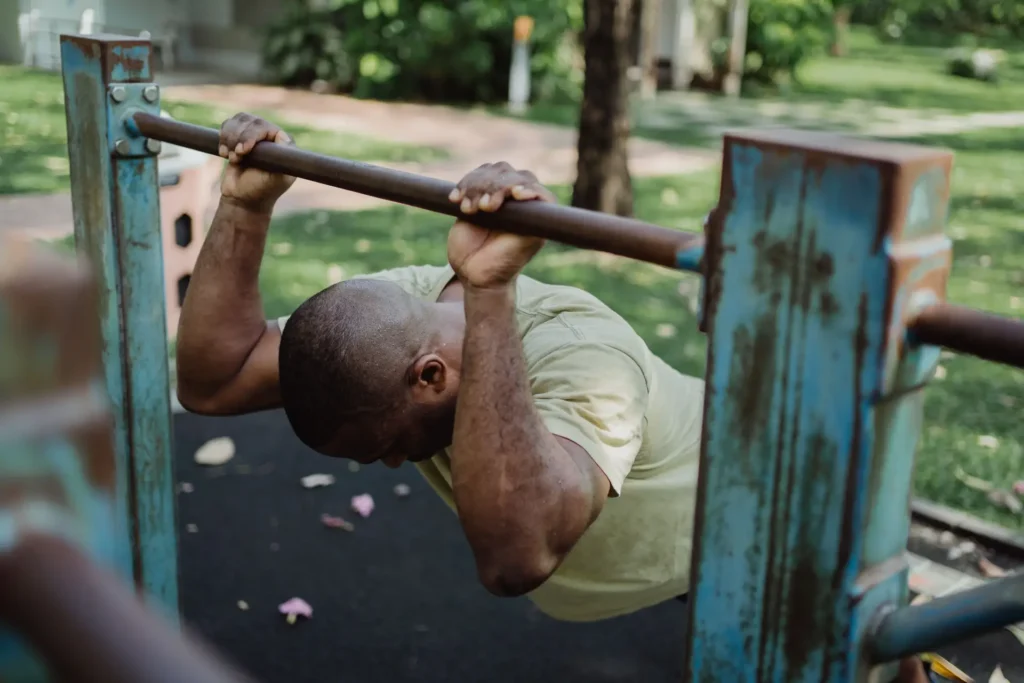
The best tricep exercises at home are the ones with a clear job. Use Bodyweight Tricep Extensions for direct elbow extension, Dumbbell Overhead Triceps Extension for the stretched position, Bent-Over Dumbbell Triceps Kickback for the top squeeze, and Parallel Bar Tricep Dips for harder bodyweight strength.
Together, these triceps exercises at home give you a simple routine with dumbbells, bodyweight, and parallel bars, without relying on a cable machine.
Most triceps lists make the problem bigger. They give you dips, pushdowns, skull crushers, kickbacks, diamond push-ups, machines, bands, and cables, but they do not always tell you what each move is supposed to do.
That is where home training gets messy. If every move has the same job, your chest, shoulders, or elbows may take over before your triceps do. Four clear jobs beat a longer list here: direct elbow extension, an overhead stretch, a top squeeze, and a harder bodyweight press.
Use this guide as a focused piece of upper-body training built around simple equipment: four exercises, one routine, and clear roles for each movement.
Quick Summary
- Best use of this article:Build a tricep workout at home with four movements that each do a different job.
- Main training focus:Keep the work on elbow extension instead of letting your chest, shoulders, or elbows take over.
- Exercise roles:Bodyweight Tricep Extensions for direct bodyweight elbow extension, Dumbbell Overhead Triceps Extension for the stretched position, Bent-Over Dumbbell Triceps Kickback for the top squeeze, and Parallel Bar Tricep Dips for harder bodyweight strength.
- Routine target:2-3 sets per exercise, mostly in the 8-15 rep range, with 45-90 seconds of rest.
- Best progression:Improve control first, then add reps, pauses, lower support height, assisted-to-unassisted dips, or gradual dumbbell weight.
- Main warning:If you mostly feel chest, shoulders, or elbow pressure, adjust angle, range, load, or exercise order before adding more tricep exercises.
What Are the Best Tricep Exercises at Home?
The best tricep exercises at home are not the ones with the most complicated names. They are the ones that make the main job of the triceps clear: extending the elbow.
The triceps brachii sits on the back of the upper arm and has three heads: long, lateral, and medial. Its main role is elbow extension, according to this triceps anatomy overview. That does not mean every home workout needs a separate exercise for every head. It means your routine should use different positions without turning into a long-head or lateral-head specialty article.
The four exercises below were chosen for four different jobs:
- Bodyweight Tricep Extensions:direct bodyweight elbow extension
- Dumbbell Overhead Triceps Extension:stretched overhead position
- Bent-Over Dumbbell Triceps Kickback:top-position squeeze
- Parallel Bar Tricep Dips:harder bodyweight strength
The overhead position earns its place because arm position can change how the triceps are trained. A study comparing overhead and neutral-arm elbow-extension training found different triceps hypertrophy outcomes between positions, which supports including an overhead pattern without treating it as the only best option. View the overhead extension study.
4 Tricep Exercises for Home Workouts
1. Bodyweight Tricep Extensions
Video: Ashton Fitness
Primary Muscles Worked: Triceps
How to do it:
- Place your hands on a stable bar, table edge, rail, or similar support, then walk your feet back so your body forms a straight diagonal line.
- Brace your core and keep your shoulders, hips, and heels aligned.
- Bend your elbows and let your head or forehead move toward the support, keeping your elbows naturally forward.
- Pause with control at the bottom, then extend your elbows to push your body back to the start.
- Use a higher support to make the exercise easier and a lower support to make it harder.
How it should feel:
You should feel the back of your arms working most during the push back up. Your core helps you stay stable, but your lower back should not sag and your shoulders should not take over.
Practical Tips:
- Start with a higher support if you are new to the exercise.
- Lower slowly instead of dropping into the bottom position.
- If your elbows feel uncomfortable, shorten the range of motion or raise the support.
- Keep your body like a solid plank instead of sagging at the hips.
Troubleshooting:
- If your head never moves toward the support, the move may turn into a tiny shoulder push.
- If your shoulders do most of the work at the top, refocus on extending your elbows.
- If you lose control right away, the support is probably too low. Raise it first.
Role in the Workout:
Use this as one of your main bodyweight tricep exercises when you want direct elbow extension without turning the set into a regular push-up.
2. Dumbbell Overhead Triceps Extension
Video: Women’s Strength Nation by Holly Perkins
Primary Muscles Worked: Triceps
How to do it:
- Hold one dumbbell with both hands and bring it overhead, keeping your arms close to your ears.
- Brace your abs so your ribs do not flare and your lower back does not arch.
- Bend your elbows and lower the dumbbell slowly behind your head.
- Feel the back of your arms stretch at the bottom, then extend your elbows to press the dumbbell back overhead.
- Straighten your arms at the top without slamming or aggressively locking your elbows.
How it should feel:
You should feel a stretch through the back of your arms at the bottom and a clear triceps contraction as you press back up. Your shoulders stabilize the position, but you should not shrug or lean back to move the weight.
Practical Tips:
- Choose a weight you can control before trying to go heavier.
- Keep your elbows mostly forward instead of letting them flare wide.
- Lower slowly and avoid bouncing out of the bottom.
- If you arch your back in the standing version, try the seated version.
Troubleshooting:
- If your range of motion is very short, the weight may be too heavy or your shoulder position may be unstable.
- If your elbows keep drifting wider, reduce the weight and reset your upper-arm position.
- If your lower back arches hard, brace your core or switch to a seated version.
Role in the Workout:
Use this as one of your main dumbbell tricep exercises when you want to train the triceps from a stretched overhead position.
3. Bent-Over Dumbbell Triceps Kickback
Video: ScottHermanFitness
Primary Muscles Worked: Triceps
How to do it:
- Hold one or two dumbbells, hinge at your hips, and keep your torso stable.
- Keep your upper arms close to your body with your elbows bent and your forearms hanging naturally.
- Hold your upper arms still and extend your elbows to drive the dumbbells back.
- Pause briefly near the top when your arms are almost straight, then lower with control.
- Keep your body steady instead of swinging the dumbbells.
How it should feel:
You should feel your triceps tighten when your arm reaches the top position. The goal is not heavy weight. The goal is controlled elbow extension and a strong squeeze in the back of the arm.
Practical Tips:
- Use a lighter weight. This exercise is not built for heavy loading.
- Pause for 1 second at the top before lowering.
- At the top, you can turn your wrist slightly inward to make the triceps contraction feel stronger.
- If your body starts swinging, reduce the weight or use a supported single-arm version.
Troubleshooting:
- If you do not feel your triceps, check whether your upper arm is swinging back and forth.
- If you never fully extend your elbow at the top, you are cutting the rep short.
- If your torso keeps rising, hinge back down and reset your body position.
Role in the Workout:
Use this later in the workout with lighter weight to build a stronger triceps squeeze at the top of each rep.
4. Parallel Bar Tricep Dips
Video: FitnessFAQs
Primary Muscles Worked:
Primary: Triceps
Secondary: Chest
How to do it:
- Grip the parallel bars and support your body at the top, keeping your shoulders down instead of shrugged.
- To bias the triceps, keep your torso more upright instead of leaning far forward.
- Bend your elbows and lower under control, letting your elbows travel more backward than outward.
- Stop at a depth your shoulders can control comfortably; you do not need to force a deep dip.
- Extend your elbows to press back to the top and stay controlled through the finish.
How it should feel:
You should feel the back of your arms working most during the press up and near the top. Your chest can assist, but if your chest is doing most of the work, you are probably leaning too far forward.
Practical Tips:
- Stay more upright to reduce chest takeover.
- Do not chase extra depth if the front of your shoulders feels uncomfortable.
- If bodyweight is too hard, use foot assistance or a resistance band.
- If your shoulders do not tolerate dips well, use Bodyweight Tricep Extensions instead.
Troubleshooting:
- If the movement turns into a chest dip, reduce your forward lean and reset your torso position.
- If you do not press high at the top, you miss the triceps lockout portion.
- If your shoulders roll forward at the bottom, reduce the depth first.
Role in the Workout:
Use this as the harder bodyweight triceps exercise when you can control your shoulder position and keep the press focused on elbow extension.
Research comparing bench, bar, and ring dips found meaningful differences in kinematics and muscle activity between dip variations. That is why dips belong in this routine as a technical bodyweight exercise, not as a universal replacement for every other triceps move. View the dip variation analysis.
20-Minute Tricep Workout at Home Routine
Two-Minute Preparation
- Arm circles: 30 seconds each direction
- Light overhead triceps extensions: 10 slow reps
- Wrist circles: 30 seconds
Main Workout
| Exercise | Sets | Reps | Rest |
|---|---|---|---|
| Bodyweight Tricep Extensions | 3 | 8–12 | 60–90 sec |
| Dumbbell Overhead Triceps Extension | 3 | 10–12 | 60–90 sec |
| Bent-Over Dumbbell Triceps Kickback | 2–3 | 12–15 | 45–60 sec |
| Parallel Bar Tricep Dips | 2–3 | 6–10 | 90 sec |
How to Use This Routine
- Start with the exercises you can control best. If dips are too hard or bother your shoulders, keep them assisted or optional.
- Keep the kickback light. Its job is to help you feel the top squeeze, not to become the heaviest lift.
- If your elbows feel irritated, reduce the weight, shorten the range, slow the lowering phase, or raise the support height before adding more sets.
- Train this routine 1-2 times per week depending on your other pressing, push-up, dip, or shoulder work. Progress by improving control first, then adding reps, pauses, load, or less assistance.
The point is not to collect more variations. It is to make the same few movements easier to feel, measure, and progress.
If you want a simpler no-equipment entry point first, use a beginner-friendly arm session before adding dumbbells and parallel bars.
Safety Tips: Keep all reps controlled and pain-free. Warm up your elbows and shoulders with easy push-ups, light extensions, or light dumbbell reps before heavier sets. If you feel sharp elbow pain, shoulder pain, numbness, or tendon pain that gets worse as the set continues, stop the exercise. This routine is for general strength training, not injury treatment.
Common Mistakes That Keep the Work Out of Your Triceps
1. Treating Every Tricep Exercise as the Same Job
A kickback, an overhead extension, a bodyweight extension, and a dip should not feel identical.
One movement should teach direct elbow extension. One should give you the overhead stretch. One should teach the top squeeze. One should build harder bodyweight pressing strength.
When all four feel like the same generic arm exercise, the routine loses its purpose.
2. Letting Dips Turn Into a Chest Exercise
A strong forward lean usually shifts more work toward the chest. That is not automatically wrong, but it is not the goal here. For triceps-focused dips, stay more upright, keep the elbows tracking back, and stop before your shoulders roll forward at the bottom.
If you cannot keep that position, use assistance or replace dips with another bodyweight extension variation.
3. Going Too Heavy Before You Can Control the Elbow Path
Heavy dumbbells do not help much if your elbows flare, your range of motion shrinks, or your body starts swinging.
This mistake shows up most often in overhead extensions and kickbacks. The set may look harder, but the triceps may be doing less useful work. A better sign of progress is a clean path, a slower lowering phase, and a stronger finish at the top.
4. Missing the Top Squeeze on Kickbacks
The kickback is not the exercise to turn into an ego lift.
Its value is the top position. If you rush through the final part of the rep, you miss the main reason the movement is in the routine. Use a lighter dumbbell, extend fully, pause, and let the back of the arm tighten before you lower again.
5. Chasing All Three Heads Before Building a Basic Routine
Long head, lateral head, and medial head training can matter, but most home trainees do not need to start with a separate plan for each one.
Build the routine first. Use an overhead extension, a bodyweight extension, a top-squeeze movement, and a dip pattern. Once those feel clear, head-specific work can become a future refinement instead of a distraction.
How to Progress This Triceps Routine
Progression should match the job of the exercise. I would change one variable at a time, because cleaner feedback matters more here than rushing every progression at once.
Bodyweight Tricep Extensions
Lower the support slightly, add reps, or slow the bottom position. Do not lower the support so much that your shoulders take over or your elbows feel irritated.Dumbbell Overhead Triceps Extension
Earn a clean range of motion before increasing weight. Add load only when your elbows stay controlled and your lower back does not arch to move the dumbbell.Bent-Over Dumbbell Triceps Kickback
Progress by adding a longer top pause before chasing heavier dumbbells. If you lose the squeeze, the weight is probably too heavy for this exercise’s role.Parallel Bar Tricep Dips
Move from assisted reps to cleaner unassisted reps before adding extra load. If your reps become chest-dominant, reduce the difficulty and rebuild the triceps-focused path.
If you also train curls on a separate day, keep the same logic there: clean reps before more variations. A focused biceps routine for the other side of the arm can pair well with this triceps plan without turning the session into a crowded full-arm workout.
Frequently Asked Questions
Are dips enough for triceps?
Dips can be enough for some people, especially if they can keep the torso more upright and finish the press with strong elbow extension. But dips also involve the chest and shoulders, so they are not always the cleanest triceps-only option.
If dips turn into a chest-dominant movement, pair them with Bodyweight Tricep Extensions or Dumbbell Overhead Triceps Extensions.
Why can’t I feel my triceps working?
You may be using too much weight, moving too fast, letting your upper arm drift, or stopping before the elbow fully extends. The triceps often become easier to feel when you slow the lowering phase and finish the top position.
Bent-Over Dumbbell Triceps Kickbacks and Bodyweight Tricep Extensions are useful feedback exercises because they make the squeeze and elbow-extension path easier to notice.
Why do tricep exercises hurt my elbows?
Common training reasons include using too much load, dropping too quickly into the bottom, forcing too much range of motion, or letting the elbows drift during the rep.
That does not mean you should diagnose yourself from a workout article. If elbow pain is sharp, persistent, or getting worse, stop the exercise and get professional advice.
Is 3 exercises enough for triceps?
Yes, 3 exercises can be enough when each one has a different job. A routine with one overhead extension, one direct elbow-extension movement, and one harder pressing or dip-based movement can cover a lot of useful training.
This article uses four exercises because the kickback adds a lighter top-squeeze role that many home trainees find helpful.
How do you hit all three heads of the triceps?
You do not need a separate mini-routine for every head in a general home workout. The triceps work together during elbow extension, while different arm positions can change the emphasis.
Use a mix of overhead extension, bodyweight extension, and dip-based strength work first. A long head, lateral head, or medial head article can go deeper later, but this routine is built for practical home training.
Are bodyweight tricep exercises enough?
They can be, especially if you can progress the angle, range, tempo, and assistance level. Bodyweight Tricep Extensions and Parallel Bar Tricep Dips can both become challenging without a cable machine.
Dumbbells simply give you another way to train the stretched position and the top squeeze.
Conclusion
You do not need a longer list of triceps exercises. You need each movement to earn its place.
I would run the routine once and track one thing: which exercise made your triceps easiest to feel, and which one drifted into chest, shoulder, or elbow pressure. In your next session, adjust only one variable: support height, dip assistance, dumbbell load, or top-position pause.
Medical disclaimer: This article is intended for educational and informational purposes only. It is not intended as a substitute for medical advice. For health advice, contact a licensed healthcare provider.