
Upper Ab Exercises at Home: 4 Moves to Stop Neck and Hip Flexor Takeover
By Zephyr · Published Jun 29, 2026
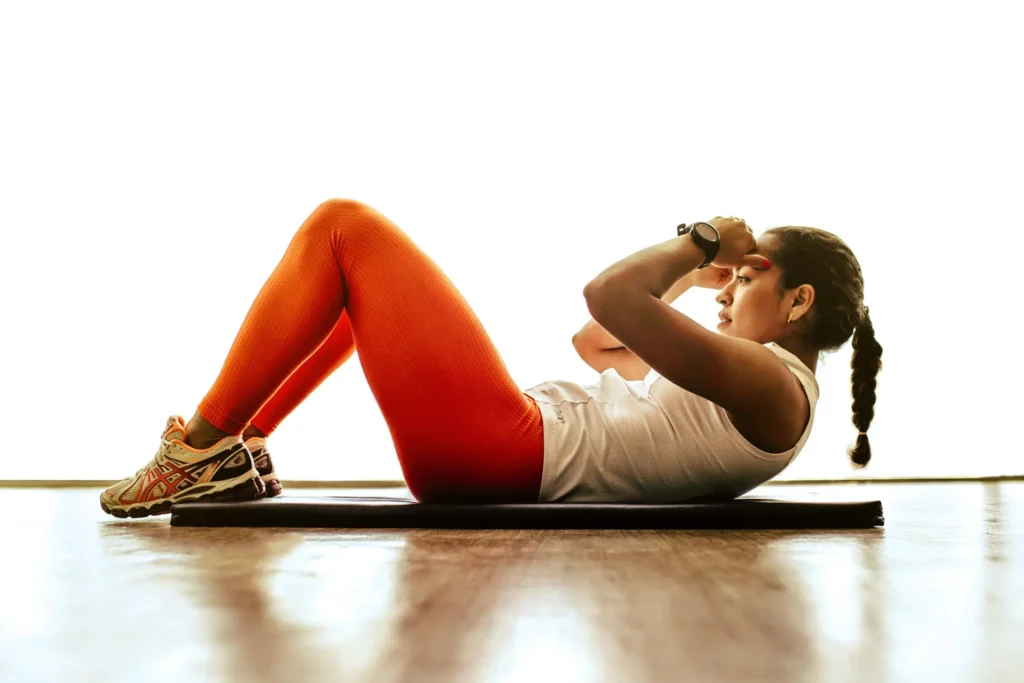
The best upper ab exercises are the ones that teach your ribs to curl toward your pelvis without pulling from your neck or hips. For an at-home routine, use slow crunches, tabletop crunches, dead bug crunches, and dumbbell crunches to train upper-ab control with simple, repeatable progressions.
Upper abs are easy to misunderstand because the “top part” of your abs is not a separate muscle you can isolate on command. But that does not make the search useless. You can still emphasize the upper region of the rectus abdominis by choosing movements where the ribs curl toward the pelvis and the hips stay quiet.
If you already organize your week around simple home training, this fits best as a small core block inside a broader upper-body training plan built around simple equipment, not as a random daily burn challenge.
I would rather make four reps feel specific than give you twelve moves that all turn into neck pulling or hip-flexor work. This guide keeps the focus narrow: better rib curl, less neck tension, quieter hips, and an upper ab workout you can repeat without turning every set into a fast burn circuit.
Quick Summary
- Upper abs are not a separate muscle you can fully isolate, but you can emphasize the top region with a cleaner rib curl.
- If crunches hurt your neck, the problem is usually how the rep starts, not the idea of crunching itself.
- Slow Crunch and Tabletop Crunch build the basic curl.
- Dead Bug Crunch teaches rib control when the lower back wants to arch.
- Dumbbell Crunch adds simple load without needing a cable or machine.
- The routine should feel controlled, not like a fast ab-burn circuit.
What Are the Best Upper Ab Exercises?
The best upper ab exercises are not the hardest ab moves. They are the movements where your ribs curl toward your pelvis while your neck stays relaxed, your hips stay quiet, and your lower back does not take over.
That distinction matters because many popular ab exercises drift away from the upper-ab goal. A full sit-up can become hip-flexor dominant. A leg raise can shift the focus toward lower-ab and pelvis control. A bicycle crunch or twist can turn into oblique work. None of those movements are useless, but they do not all solve the same problem.
For this article, the focus stays on the front-ab rib-curl pattern. Think of the upper abs as a training emphasis, not a separate muscle you can completely isolate. You are trying to shorten the distance between your ribs and pelvis with control.
That is why the routine uses four movements:
- Slow Crunch for the basic rib curl
- Tabletop Crunch to reduce momentum and keep the lower body quiet
- Dead Bug Crunch to keep your ribs down when your lower back wants to arch
- Dumbbell Crunch to add simple load without changing the movement pattern
If your main problem is feeling your hips or lower back during leg-lowering movements, that belongs more with lower-ab control work. If you are trying to train side abs, rotation, or anti-rotation, that belongs with side-ab and anti-rotation work. This article stays narrower: curl the ribs, keep the neck relaxed, and stop letting the hips take over.
4 Upper Ab Exercises for Rib Curl Control
1. Slow Crunch
Video: CarnaVita
Main Muscles Worked:
Upper rectus abdominis emphasis
Role in the Workout:
This is the baseline movement for the routine. It teaches you to curl your ribs toward your pelvis without turning the rep into a neck pull, a sit-up, or a momentum swing.
A trunk curl-up study found that small changes to curl-up setup can affect abdominal muscle involvement, which is why this article treats crunch setup, hand position, and range as important details rather than throwaway cues. You can read the trunk curl-up activation study.
How to Do It:
- Lie on your back with your knees bent and your feet flat on the floor.
- Place your hands lightly behind your head or near your ears for support.
- Exhale gently and let your ribs move down before you lift.
- Use your upper abs to curl your shoulder blades slightly off the floor.
- Pause briefly at the top, then lower back down with control.
How It Should Feel:
You should feel the upper part of your abs shortening and tightening, not your neck, lower back, or hip flexors taking over.
Practical Tip:
Slow reps make this exercise more honest. If slowing down forces you to pull on your neck, the range is too big or your abs are not starting the movement. Your hands are only there to support your head. If you feel your fingers pulling, move your hands to your temples or cross them lightly over your chest.
Troubleshooting:
If your neck gets tired, tuck your chin slightly and keep your eyes angled toward the ceiling instead of pulling your head toward your chest. If your lower back feels uncomfortable, reduce the height of the curl.
2. Tabletop Crunch
Video: WeStrive App
Main Muscles Worked:
Upper rectus abdominis emphasis
Role in the Workout:
This keeps your lower body still so you can focus on the upper-ab curl. It is useful when regular crunches turn into momentum, leg pulling, or hip-flexor work.
How to Do It:
- Lie on your back and bring your legs into a tabletop position, with your hips and knees bent around 90 degrees.
- Keep your shins steady and avoid pulling your knees toward your chest.
- Place your hands lightly behind your head or near your ears.
- Exhale, bring your ribs down, and curl your shoulder blades slightly off the floor.
- Pause at the top, then lower back down slowly.
How It Should Feel:
You should feel your upper abs doing the curl while your legs simply stay in position. Your hip flexors should not feel like they are pulling your body up.
Practical Tip:
The leg position is there to reduce momentum, not to turn the exercise into a leg raise. If the front of your hips gets tired first, put your feet back on the floor and return to the Slow Crunch.
Troubleshooting:
If your hip flexors take over, your legs may be too tense, your knees may be pulling too close to your chest, or you may be using your lower body to help the curl. If your legs get tired before your abs, lower your feet to the floor and use the Slow Crunch until the rib curl feels cleaner.
3. Dead Bug Crunch
Video: OPEX Fitness
Main Muscles Worked:
Upper rectus abdominis emphasis
Assisting Muscles:
Deep core stabilizers
Role in the Workout:
This combines an upper-ab curl with core control. It helps you keep your ribs down and your lower back stable while still training the rib-curl pattern.
A dynamic spine-stabilization EMG study found that the Dying Bug exercise mainly recruited the abdominal muscles, which supports using this family of movements for controlled abdominal work rather than only fast crunching. You can read the dynamic spine-stabilization EMG study.
How to Do It:
- Lie on your back with your legs in a tabletop position and your arms reaching up.
- Exhale gently and bring your ribs down before you move.
- Curl your shoulder blades slightly off the floor.
- Hold that small crunch position while you control the arm-and-leg movement.
- Return slowly and keep every rep stable.
How It Should Feel:
You should feel your upper abs staying tight while your core keeps your body stable. You should not feel your lower back arching, your neck straining, or your hip flexors taking over.
Practical Tip:
Keep the curl small. The goal is not to sit up higher; it is to keep your ribs down and your upper abs engaged while the rest of your body stays controlled.
Troubleshooting:
If your lower back lifts or tightens, reduce the arm-and-leg range or do only the small upper-body crunch first. Once the movement gets sloppy, it stops being useful upper-ab work.
4. Dumbbell Crunch
Video: Whats Up Dude
Main Muscles Worked:
Upper rectus abdominis emphasis
Role in the Workout:
This is the simple loading option for the routine. It lets you progress the same rib-curl pattern without jumping to cable crunches, machines, or advanced hanging movements.
A loaded crunch EMG study measured abdominal muscle activity during crunches performed with different external loads. That makes it a better fit here than a general strength-training citation because the point is specific: the dumbbell should progress the same curl pattern, not turn the exercise into a heavy swing. You can read the loaded crunch EMG study.
How to Do It:
- Lie on your back with your knees bent and your feet flat on the floor.
- Hold a light dumbbell close to your chest or upper chest.
- Exhale and bring your ribs down toward your pelvis.
- Curl your shoulder blades off the floor without swinging the dumbbell forward.
- Pause briefly at the top, then lower back down slowly.
How It Should Feel:
You should feel your upper abs working against the added load, not your shoulders lifting the dumbbell, your neck pulling, or your lower back bracing hard.
Practical Tip:
Use less weight than you think. This exercise is not about making the dumbbell heavy; it is about making the same upper-ab curl cleaner and easier to progress.
Troubleshooting:
If you swing the dumbbell, shrug your shoulders, or feel your lower back tighten, the weight is too heavy. Go back to the Slow Crunch until the path is clean, then reload it gradually.
15-Minute Upper Ab Workout at Home Routine
One-Minute Preparation
- Slow rib curls: 5 controlled reps
- Tabletop hold: 15 seconds
Main Workout
| Exercise | Sets | Reps / Time | Rest |
|---|---|---|---|
| Slow Crunch | 2–3 | 8–12 reps | 45 sec |
| Tabletop Crunch | 2–3 | 8–12 reps | 45–60 sec |
| Dead Bug Crunch | 2–3 | 6–10 reps each side | 45–60 sec |
| Dumbbell Crunch | 2–3 | 8–10 reps | 60 sec |
How to Use This Routine
Use this upper ab workout 2–3 times per week after your main training or as a short focused core session. Start with Slow Crunch so you can feel the rib curl before adding more challenge.
Tabletop Crunch comes next because your legs stay still while your upper abs do the curling. Dead Bug Crunch adds more control, especially if your lower back tends to arch during ab work. Dumbbell Crunch comes last because load only helps after the basic pattern is clean.
If your neck, hips, or lower back takes over, do not add more reps. Shorten the range, slow the tempo, or return to the easier version until the upper abs start the movement again.
If this routine feels too narrow right now, use a simpler floor-based ab session first, then come back to this upper-ab work when you can feel the rib curl more clearly.
Safety Tips: Keep every rep controlled and pain-free. Stop if you feel sharp back pain, radiating pain, numbness, or symptoms that get worse during the set. This article is for general strength training, not medical care or rehab.
Common Mistakes With Upper Ab Exercises
1. Pulling Your Neck Instead of Curling Your Ribs
If crunches hurt your neck, check how the rep starts. Many people pull the head forward before the abs do anything.
Your hands should support your head, not drag it toward your knees. Start by exhaling and letting your ribs move down. Then curl your shoulder blades slightly off the floor. If your neck still works harder than your abs, make the rep smaller.
2. Turning Every Rep Into a Sit-Up
A full sit-up is not automatically bad, but it often changes the job. The farther you sit up, the easier it is for the hip flexors to take over.
For upper-ab work, you do not need to sit all the way up. A shorter curl with a cleaner squeeze is usually more useful than a big rep that turns into pulling from the hips.
3. Letting Your Lower Back Arch
If your lower back arches during crunches, the rep is probably too big or your ribs are flaring before your abs can shorten. This often happens when you try to lift higher instead of curling better.
Bring the ribs down first. Exhale before the curl. Keep the rep small enough that your lower back does not feel like it has to brace hard.
4. Chasing Burn Instead of Control
A fast upper ab workout can make your abs burn, but burn alone does not prove the right muscles are leading. If the reps become rushed, your neck, hips, or lower back may take over before you notice.
Keep the tempo slow enough that you can tell what is working. The top of each rep should feel like a controlled upper-ab squeeze, not a race to finish the set.
5. Using Weight Before the Pattern Is Clean
Weighted upper ab exercises are useful only when the basic rib-curl pattern is already clean. If you add a dumbbell too early, you may just make the mistake heavier.
Before loading the movement, earn slow reps with no neck pulling, no hip flexor takeover, and no lower-back tension.
How to Progress Your Upper Ab Workouts
Slow Crunch
First, slow the lowering phase. Then add a short pause at the top. After that, add reps without increasing the height of the curl.Tabletop Crunch
First, keep the legs steady. Then add a longer top pause. Once the curl stays clean, add reps.Dead Bug Crunch
First, reduce the arm-and-leg range so your lower back stays stable. Then increase the range slowly while keeping the small upper-ab curl.Dumbbell Crunch
First, use a very light dumbbell. Then add a pause at the top. Only increase load when the rep still feels like an upper-ab curl instead of a shoulder lift or neck pull.
Progression should make the rib curl cleaner, not turn the exercise into a bigger compensation pattern. You do not need dragon flags, toes-to-bar, or ab rollouts to make this routine useful. Those can be strong exercises, but they are poor starting points if your neck, hips, or lower back already take over.
Frequently Asked Questions
How do I target my upper abs?
You cannot completely isolate your upper abs as a separate muscle, but you can emphasize the upper region by choosing exercises where your ribs curl toward your pelvis. The more your neck, hips, or lower back take over, the less specific the exercise becomes.
How do I work out the top part of my abs?
Start with exercises where your ribs curl toward your pelvis, such as Slow Crunch, Tabletop Crunch, Dead Bug Crunch, and Dumbbell Crunch. Keep the range small enough that your neck, hips, and lower back stay quiet.
What are the best upper ab exercises at home?
Good options include Slow Crunch, Tabletop Crunch, Dead Bug Crunch, and Dumbbell Crunch. They all train the rib-curl pattern, but each one gives you a slightly different way to control the movement.
Why do crunches hurt my neck?
Crunches often hurt your neck when you pull your head forward, tuck your chin too aggressively, or try to lift too high. Let your hands support your head, start with an exhale, and make the curl smaller until your abs lead the rep.
Why do I feel hip flexors during ab exercises?
Your hip flexors may take over when the exercise becomes more about pulling your thighs toward your torso or sitting all the way up. For upper-ab work, focus on curling your ribs toward your pelvis instead of dragging your legs or hips into the movement.
Can I train upper abs every day?
You do not need hard upper ab workouts every day. For most people, 2–3 focused sessions per week is enough. You can practice a few easy rib-curl reps more often, but hard sets still need recovery.
Do upper ab exercises burn upper belly fat?
No. Upper ab exercises can strengthen the area and improve control, but they do not burn fat from that exact spot. In a six-week abdominal exercise study, participants improved abdominal endurance, but abdominal subcutaneous fat and other body-composition measures did not significantly change. You can read the abdominal exercise and abdominal fat study.
Visible abs depend on overall body fat, nutrition, genetics, and your broader training plan.
Conclusion
Upper ab exercises work best when you stop chasing bigger movement and start making the rib curl cleaner. Slow Crunch, Tabletop Crunch, Dead Bug Crunch, and Dumbbell Crunch each help you train that pattern without turning every rep into neck pulling, hip-flexor work, or lower-back tension.
In your next session, change only one variable: slow the curl, shorten the range, pause longer at the top, or use a lighter dumbbell until the upper abs do the work first.
Medical disclaimer: This article is intended for educational and informational purposes only. It is not intended as a substitute for medical advice. For health advice, contact a licensed healthcare provider.