
Oblique Exercises at Home: 4 Moves for Side Abs and Core Control
By Zephyr · Published Jun 28, 2026
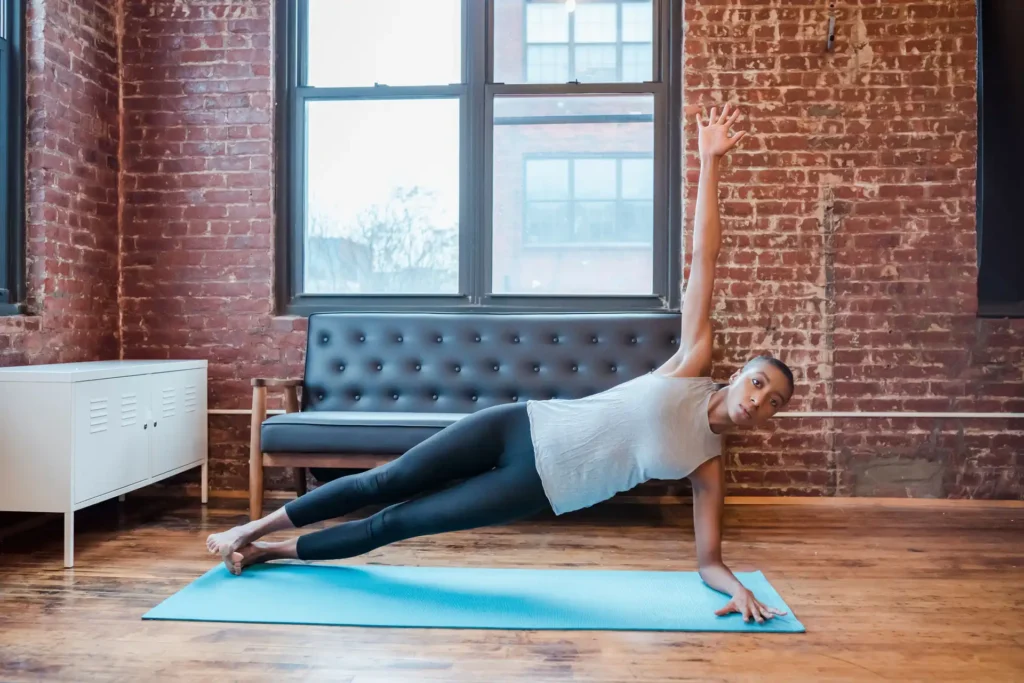
The best oblique exercises train side stability, controlled side bending, loaded side bending, and anti-rotation. For a home-friendly oblique workout, use side plank, side plank hip dip, dumbbell side bend, and band Pallof press.
Most people do not need another list of side-ab moves. They need to know which oblique exercises train stability, which ones train side bending, and which ones teach the body to resist rotation.
That is where the training gets messy. Your obliques do help with rotation, but they also help you resist rotation, hold your trunk steady, and control side bending. If every rep turns into fast twisting, your lower back can take over before your side abs do much useful work.
I would rather keep the routine narrow and useful: one hold, one controlled dip, one loaded side bend, and one anti-rotation press. This is not a love-handle fat-loss plan, a cable-machine workout, or a rehab guide. It is a simple way to train your obliques at home with bodyweight, a dumbbell, and a resistance band. The setup also stays calisthenics-friendly: floor support, one dumbbell, and one band. If you are building a complete week, place this inside a broader upper-body training plan built around simple equipment instead of treating it like a separate waist-burning challenge.
Quick Summary
- Obliques help with side bending, resisting side bending, rotation, anti-rotation, and trunk control.
- Side plank is useful, but it is not the whole oblique workout.
- Faster twisting is not automatically better for side abs.
- Each move has a job: hold, dip, bend, or resist rotation.
- If your shoulder, lower back, or hip takes over, reduce the range, hold time, load, or band tension before adding reps.
What Are the Best Oblique Exercises?
The best oblique exercises are the ones that train your side abs without turning every rep into lower-back twisting. That usually means you need more than one type of movement.
Your obliques sit along the sides of your trunk. People often call this area the side abs, but the training job is bigger than making that area burn. Your obliques help your torso bend to the side, resist side bending, rotate, resist rotation, and stay stable when your arms or legs move.
The internal and external obliques both matter, but this guide keeps the focus on movement roles instead of turning into an anatomy lesson.
That is why one exercise cannot cover everything well.
A side plank teaches you to resist side bending. A side plank hip dip adds controlled movement. A dumbbell side bend trains loaded side bending. A band Pallof press teaches anti-rotation, which means your body has to resist being pulled into a twist.
Rotation work can help, but only if you can rotate through a controlled range without yanking your lower back through the movement. For this routine, anti-rotation comes first because most people need to learn how to resist rotation before chasing faster twisting reps.
This article stays focused on home-friendly oblique exercises. Cable chops, heavy machine rotations, scoliosis rehab, diastasis recti rehab, and incontinence training belong in separate articles or with a qualified professional. If your main issue is feeling hip flexors or lower back during ab work, pair this later with lower-ab control work instead of trying to solve every core problem with side bends.
4 Oblique Exercises for Side Abs and Core Control
1. Side Plank
Video: Howcast
Main Muscles Worked:
Obliques
Role in the Workout:
This is the stability base of the oblique workout. It teaches your side abs to hold your body in position before you add twisting, dipping, or loaded movement.
A lateral-trunk EMG study found that lateral plank tasks can activate both internal and external obliques, which supports using a side-plank pattern as a direct side-core exercise rather than treating it as just a shoulder hold. You can read the lateral trunk EMG study.
How to Do It:
- Lie on your side with your forearm on the floor and your elbow under your shoulder.
- Keep your legs straight, with your feet stacked or slightly staggered.
- Brace your abs and lift your hips off the floor.
- Keep your head, shoulders, hips, and ankles in one long line.
- Hold the position without letting your hips drop or rotate forward.
How It Should Feel:
You should feel the lower-side obliques holding your body up, not your neck, shoulder, or lower back doing most of the work.
Practical Tip:
If the full version is too hard, start from your knees. A knee-supported side plank is still useful if your side abs are doing the stabilizing work.
Troubleshooting:
If your shoulder tires first, check whether your elbow is directly under your shoulder. If your lower back feels strained, your hips may be sagging or rotating.
2. Side Plank Hip Dip
Video: Nicole Nahed
Main Muscles Worked:
Obliques
Role in the Workout:
This adds controlled movement to the side plank. Instead of only holding position, your obliques now have to control your hips as they lower and lift.
How to Do It:
- Set up in a side plank on your forearm.
- Keep your body in one long line before you start moving.
- Slowly lower your hips toward the floor until they are a few inches above the ground.
- Use your side abs to lift your hips back to the starting position.
- Keep each rep controlled without rolling your chest forward or backward.
How It Should Feel:
You should feel your obliques controlling the hip drop and lift, not your shoulder pushing you up or your lower back twisting through the movement.
Practical Tip:
The range does not need to be huge. A small, controlled dip is better than dropping too low and losing side-core tension.
Troubleshooting:
If every dip turns into shoulder pressure, return to the regular side plank first. When the hold is not stable yet, the moving version usually breaks down quickly.
3. Dumbbell Side Bend
Video: The Barbell Physio
Main Muscles Worked:
Obliques
Role in the Workout:
This gives the routine a loaded side-bending pattern. The goal is not to use the heaviest dumbbell possible, but to control the path as your trunk bends to the side and returns upright. This is the routine’s dumbbell oblique exercise, but the weight only helps if it stays light enough for you to control the path.
How to Do It:
- Stand tall with one dumbbell in one hand and your feet about hip-width apart.
- Keep your other hand on your hip or resting by your side.
- Slowly bend your torso toward the dumbbell side.
- Stop within a range you can control without leaning forward or backward.
- Use the opposite-side obliques to pull your torso back to standing.
How It Should Feel:
You should feel your obliques controlling the side bend and return, not your lower back compressing or your shoulders shrugging.
Practical Tip:
Use a lighter weight than you think. This exercise gets messy fast when the dumbbell is too heavy.
Troubleshooting:
If your lower back feels pinched, reduce the range. If your body swings forward or backward, the weight is probably too heavy or your trunk is not braced.
4. Band Pallof Press
Video: UBCO Recreation
Main Muscles Worked:
Obliques
Assisting Muscles:
Deep core stabilizers
Role in the Workout:
This is how the routine trains rotation without turning into fast twisting reps. The band tries to pull your body into rotation, and your obliques work to keep your ribs and pelvis facing forward. Think of it as one of the cleanest anti-rotation oblique exercises you can do with a simple band.
A 2025 Pallof press study compared different body positions and support surfaces by measuring pelvic acceleration during the exercise. It supports the idea that Pallof press difficulty can be progressed by changing stance and stability, not just by yanking on a heavier band. You can read the Pallof press postural-control study.
How to Do It:
- Anchor a resistance band at about chest height to one side of your body.
- Hold the band with both hands and step away until there is light tension.
- Stand tall with your ribs down and your pelvis facing forward.
- Press your hands straight out from your chest until your arms are extended.
- Keep your body from rotating, then slowly bring your hands back in.
How It Should Feel:
You should feel your obliques resisting the band’s pull, not your arms forcing the movement or your lower back twisting to hold position.
Practical Tip:
The farther you stand from the anchor, the harder it gets. Start close enough that you can keep your chest and pelvis square.
Troubleshooting:
If your body turns as soon as you press out, step closer to the anchor or use a lighter band. If your shoulders tire first, you may be pressing with your arms instead of stabilizing with your trunk. The same ribs-down idea shows up in upper-body control work too, especially when you are trying to avoid flaring and keep the rib position cleaner.
20-Minute Oblique Workout at Home Routine
Two-Minute Preparation
- Side plank setup hold: 15 seconds each side
- Slow standing side bends without weight: 6 reps each side
- Band anti-rotation hold: 10 seconds each side
- Shoulder circles: 20 seconds
Main Workout
| Exercise | Sets | Reps / Time | Rest |
|---|---|---|---|
| Side Plank | 2–3 | 15–30 sec each side | 45 sec |
| Side Plank Hip Dip | 2–3 | 8–12 each side | 45–60 sec |
| Dumbbell Side Bend | 2–3 | 8–12 each side | 45–60 sec |
| Band Pallof Press | 2–3 | 8–12 each side | 45–60 sec |
How to Use This Routine
Use this as one of your oblique workouts at home 2–3 times per week, either after your main strength work or as a short focused core session. Start with the side plank so your body learns to hold position before you add movement.
The side plank hip dip comes next because it adds controlled side bending while your body is still supported. The dumbbell side bend adds load, but only after you can keep the path clean. Finish with the band Pallof press so you can practice resisting rotation when your side abs are already working.
Train both sides. If one side feels weaker, start with that side, match the stronger side to the same reps or time, and avoid adding extra sloppy volume just to even things out.
If one side feels harder to control, do not chase extra reps on that side. Start there, match the same clean volume on the other side, and let control catch up before adding load.
The goal is not to make your waist burn as fast as possible. It is to make the side plank stable, the hip dip controlled, the side bend clean, and the Pallof press square. If your shoulder, lower back, or hip takes over, make the exercise easier before you add more reps.
If this routine feels too specific right now, start with a simpler floor-based ab session before coming back to these oblique-focused patterns.
Safety Tips: Keep every rep controlled and pain-free. Stop if you feel sharp back pain, radiating pain, numbness, or symptoms that get worse during the set. This article is for general strength training, not scoliosis treatment, diastasis recti rehab, incontinence training, or medical care.
Common Mistakes With Oblique Exercises
1. Treating Every Oblique Exercise Like a Twist
Twisting is not automatically wrong, but faster twisting is not automatically better. If you rotate by whipping your lower back around, your obliques are not controlling much.
That is why this routine uses anti-rotation before faster twisting work. You first learn to keep your ribs and pelvis steady against the band. Later, if you add rotation exercises, you will have a better sense of what control should feel like.
2. Letting the Shoulder Take Over During Side Planks
Side planks should challenge your side abs, but many people feel them mostly in the shoulder. Some shoulder work is normal because your arm supports your body, but the shoulder should not be the only thing working.
Check your elbow position, shorten the hold, or use the knee-supported version if the shoulder takes over before your obliques engage.
3. Using Too Much Weight on Side Bends
Dumbbell side bends are useful when they are controlled. They get messy when the weight pulls you into a deep range you cannot own.
If your lower back feels compressed, your torso swings, or your shoulder hikes up, reduce the load. A clean side bend with a lighter dumbbell is more useful than a heavy one that turns into leaning and bouncing.
4. Skipping Anti-Rotation Work
Obliques are not just for moving your torso. They also help stop unwanted motion. That is the point of the Pallof press.
If your oblique training only includes bending and twisting, you miss the skill of resisting rotation. For home training, a band Pallof press is one of the cleanest ways to train that without needing a cable machine.
5. Chasing Love Handles Instead of Training Control
Oblique exercises can strengthen your side abs, but they do not burn fat from one specific area. If you are doing endless side bends because you want to remove love handles, the goal has drifted away from what the exercise can actually do.
Use these movements to build trunk control and side-core strength. Fat loss depends on your overall training, nutrition, and energy balance.
How to Progress Your Oblique Workouts
Side Plank
First extend the hold time. Then move from a knee-supported version to a full version. After that, make the position stricter before adding harder variations.Side Plank Hip Dip
First make every rep smooth. Then increase the range slightly. Once the movement stays controlled, add reps or a short pause at the top.Dumbbell Side Bend
First clean up the path. Then add reps. Only increase the dumbbell load when you can bend and return without swinging, twisting, or feeling your lower back compress.Band Pallof Press
First stand close enough to control the press. Then add a short pause with your arms extended. After that, step farther from the anchor or use a stronger band.
Weighted oblique exercises only make sense when the path stays clean. If adding load makes your hips shift, your lower back twist, or your shoulders take over, it is not useful progression yet.
Frequently Asked Questions
What is the best oblique exercise?
There is no single best oblique exercise for every goal. A better approach is to use a small group of moves that cover different jobs: side plank for stability, side plank hip dip for controlled side bending, dumbbell side bend for loaded control, and band Pallof press for anti-rotation.
Are side planks enough for obliques?
Side planks are very useful, but they are not the whole oblique workout. They mainly train side stability and resisting side bending. You still need controlled movement and anti-rotation work if you want a more complete routine.
Are Russian twists bad for your back?
Russian twists are not automatically bad, but they can become a problem when they are fast, sloppy, or driven by the lower back instead of controlled trunk rotation. If you cannot keep your ribs, pelvis, and lower back controlled, build anti-rotation first.
Do oblique exercises burn love handles?
No. Oblique exercises can train the muscles along the sides of your trunk, but they do not burn fat from that exact area. In a six-week abdominal exercise study, participants improved abdominal endurance, but abdominal subcutaneous fat and other body-composition measures did not significantly change. You can read the abdominal exercise and abdominal fat study.
Love handles change through overall fat loss, not targeted side-ab exercises.
Do oblique exercises make your waist bigger?
A simple home oblique workout will not suddenly make your waist bigger. Heavy weighted oblique training, high training volume, muscle growth, and body fat levels can all affect how your waist looks, but controlled home training is mainly about strength and stability.
How often should I train obliques?
For most people, 2–3 focused sessions per week is enough. You can also include a small amount of oblique work at the end of upper-body or core sessions, as long as your form stays clean.
Conclusion
Oblique exercises work best when you stop treating every side-ab move as the same job. Side plank, side plank hip dip, dumbbell side bend, and band Pallof press each train a different part of side-core control.
In your next session, do not add another random twisting move. Keep the four jobs clear: hold your side plank, control the hip dip, keep the side bend clean, and resist the band without letting your lower back twist. Then change only one variable: hold the side plank longer, dip through a cleaner range, use a slightly heavier dumbbell, or step farther from the band.
Medical disclaimer: This article is intended for educational and informational purposes only. It is not intended as a substitute for medical advice. For health advice, contact a licensed healthcare provider.