
Gluteus Maximus Exercises at Home: Stop Letting Your Lower Back Take Over
By Zephyr · Published Jul 07, 2026
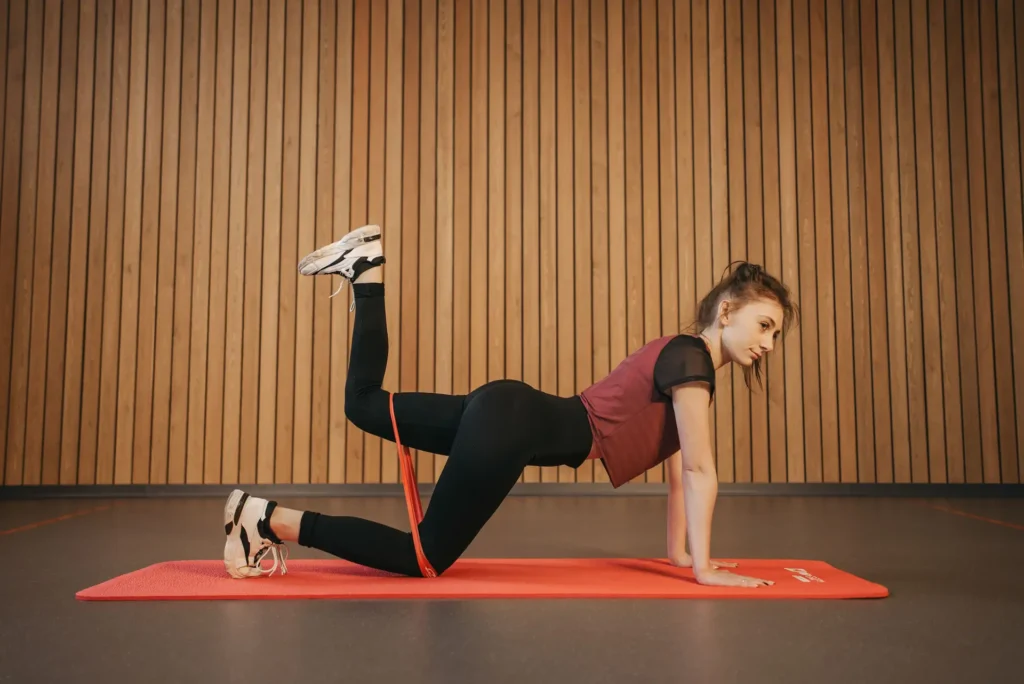
The best gluteus maximus exercises at home are the ones that make your glutes finish hip extension, not your lower back or hamstrings. A simple routine can include a dumbbell glute bridge, banded hip thrust, dumbbell single-leg Romanian deadlift, and miniband quadruped hip extension.
Glute training gets messy because almost any lower-body move can be called a glute exercise. But if your goal is the gluteus maximus, the biggest glute muscle, the question is more specific: can you extend your hips and finish the rep with your glutes instead of your lower back, hamstrings, or momentum?
That is the filter I would use here. Four clear movements beat a long list if they show you where the work should happen, how to keep your pelvis controlled, and how to progress without turning every rep into a back-extension drill. This is still a focused gluteus maximus session, not your entire leg day, so it should fit inside a balanced home routine that also includes lateral and single-leg glute work.
Quick Summary
- The gluteus maximus works hardest when the hip extends and the pelvis stays controlled.
- If glute bridges or hip thrusts go straight to your hamstrings or lower back, the issue is usually setup, range, tempo, or load.
- Not feeling a huge burn is not always a problem; feeling every rep in your back or hamstrings is
- This routine uses four movements: a floor bridge, a banded thrust, a single-leg hinge, and a quadruped hip extension.
- Progression should come from cleaner reps first, then more load, band tension, pause time, range, or single-leg control.
What Are the Best Gluteus Maximus Exercises?
The best gluteus maximus exercises are not just the hardest-looking glute moves. They are the exercises that let you train hip extension while keeping the work in your glutes. For most home workouts, that means using a mix of bridge or thrust patterns, a hip hinge, and a controlled kickback-style movement.
This muscle is heavily involved in hip extension, which means bringing the thigh behind the body or driving the hips forward from a flexed position. That is why bridges, hip thrusts, Romanian deadlifts, and hip extension drills all belong in this article.
Squats, lunges, and step-ups can also train the glutes, but they are not always the cleanest starting point for this specific goal. If your quads, hamstrings, or lower back dominate those movements, it is useful to build clearer gluteus maximus control first.
A burn is useful feedback, but it is not the whole standard. If a small activation drill makes the main lift cleaner, keep it. If it only creates a short burn and then your bridges, thrusts, or hinges still shift to your hamstrings or lower back, the setup needs more work.
You can bias how the upper or lower part of the gluteus maximus feels by changing angle, range, stance, or load, but this routine does not split the muscle into separate upper-glute and lower-glute sections. The bigger priority is clean hip extension and progressive control.
This is also not a complete glute training hub. It does not try to cover every side-glute, glute medius, or glute minimus exercise. And it is not a full beginner leg workout you can use as your whole lower-body day. This article stays focused on the gluteus maximus and the movements that help you feel it working during hip extension.
4 Gluteus Maximus Exercises to Do at Home
1. Dumbbell Glute Bridge
Video: Women’s Strength Nation by Holly Perkins
Main Muscles Worked:
Gluteus maximus
Role in the Workout:
This is the first movement because it gives you the clearest place to feel the gluteus maximus finish hip extension. Before you chase heavier hip thrusts or harder single-leg work, this exercise helps you check whether your glutes are actually driving the top position.
Research comparing glute bridge positions has looked at how setup changes gluteus maximus activity, which fits the way this routine treats bridge setup as more than a small detail. You can read the glute bridge setup study.
How to Do It:
- Lie on your back with your knees bent and both feet flat on the floor.
- Place a dumbbell across your hips and hold it steady with both hands.
- Brace your abs lightly so your ribs and pelvis stay controlled.
- Drive through your heels and lift your hips until your body forms a straight line from shoulders to knees.
- Pause at the top, squeeze your glutes, then lower slowly without letting your lower back arch.
How It Should Feel:
You should feel your glutes tighten hard at the top, not your hamstrings cramping, lower back pinching, or the dumbbell simply moving up and down.
Practical Tips:
- If your hamstrings take over, move your feet slightly closer to your hips.
- If your lower back takes over, stop the lift a little earlier and keep your ribs down.
- If one glute is harder to feel, start each set by paying attention to that side, but keep the reps even instead of forcing extra range.
- Use a lighter dumbbell until the top squeeze feels clean.
Troubleshooting:
- Hamstrings take over: Your feet may be too far away, or you may be rushing through the top.
- Lower back takes over: You may be arching at the top instead of finishing with your glutes.
- One side does less: Slow the rep down and check whether your hips are shifting toward the stronger side.
- No glute feeling: Reduce the load, pause for two seconds at the top, and lower with control.
2. Banded Hip Thrust / Hip Thrust with External Rotation
Video: Bikini Fit
Main Muscles Worked:
Gluteus maximus
Secondary Muscles Worked:
Gluteus medius
Role in the Workout:
This movement gives the routine a stronger top-position glute contraction than a floor bridge. The band also reminds your knees to stay stable, so the rep does not turn into a lower-back arch or a loose, wobbly thrust.
A review of barbell hip thrust research found high gluteus maximus activation in hip thrust variations, which supports keeping a thrust pattern in the routine while still treating setup and range as important. You can read the hip thrust research review.
How to Do It:
- Place your upper back against a stable bench, sofa, or chair edge.
- Loop a resistance band above your knees and place your feet flat on the floor.
- Set your feet so your shins are close to vertical at the top.
- Lower your hips under control while keeping light outward pressure on the band.
- Drive through your heels, lift your hips, and squeeze your glutes at the top before lowering again.
How It Should Feel:
You should feel a strong glute contraction at the top, with your side glutes helping your knees stay steady. You should not feel the move mainly in your lower back, hamstrings, or quads.
Practical Tips:
- The band is a guide, not the main goal. Do not force your knees wide just to stretch the band.
- Stop when your hips are fully extended. Do not keep pushing into a lower-back arch.
- If heavier reps make your glutes disappear, return to a lighter load with a longer top pause.
- If the bench or sofa feels unstable, use the floor bridge first.
Troubleshooting:
- Quads take over: Your feet may be too close, or you may be pushing through your toes.
- Hamstrings take over: Your feet may be too far away, or you may be missing the top squeeze.
- Lower back takes over: Shorten the range and keep your ribs down at the top.
- Only one side works: Check whether your feet are even and whether your hips are drifting as you lift.
3. Dumbbell Single-Leg Romanian Deadlift
Video: OPEX Fitness
Main Muscles Worked:
Gluteus maximus
Secondary Muscles Worked:
Hamstrings
Role in the Workout:
The first two movements train your glutes hardest near the top. This exercise trains the gluteus maximus in a stretched hip-hinge position, which helps you build control instead of only chasing a squeeze.
A study comparing single-leg deadlift and conventional deadlift muscle activity measured gluteus maximus activity during the single-leg version, which supports including a single-leg hinge when the goal is glute control and not just a top-position squeeze. You can read the single-leg hinge study.
How to Do It:
- Hold dumbbells in both hands and stand tall with your weight on the working leg.
- Keep a slight bend in the working knee as your other leg reaches behind you.
- Push your hips back and let the dumbbells travel down in front of your body.
- Lower only as far as you can keep your hips and back controlled.
- Drive through the working-leg glute to return to standing without leaning back at the top.
How It Should Feel:
You should feel the working-side glute and hamstring lengthen as you lower, then feel the glute bring you back to standing. It should not feel like a lower-back stretch, a balance trick, or a knee-wobble exercise.
Practical Tips:
- Start lighter than you think. Balance can hide poor hip control.
- Think “hips back,” not “chest down.”
- If one side feels less coordinated, start with that side while your focus is highest.
- If balance limits the exercise, lightly touch a wall or switch to a regular dumbbell Romanian deadlift.
Troubleshooting:
- Lower back feels strained: You may be lowering too far or losing your back position.
- Knee wobbles: Reduce the load and slow the rep down.
- No glute feeling: Finish by extending the hip, not by leaning your torso backward.
- One side feels much weaker: Use the weaker side to set the weight and rep target, then match it on the stronger side.
4. Miniband Quadruped Hip Extension
Video: Men’s Health
Main Muscles Worked:
Gluteus maximus
Role in the Workout:
This movement lets you practice pure hip extension with low load. It belongs near the end of the routine because it helps you finish with controlled glute work instead of turning every rep into a lower-back swing.
An EMG study comparing gluteal exercises found that quadruped hip extension variations produced meaningful gluteal activity, which supports using this kind of low-load hip-extension drill as part of a glute-focused routine. You can read the quadruped hip-extension study.
How to Do It:
- Start on all fours with your hands under your shoulders and knees under your hips.
- Pin one side of the miniband under the opposite knee, and place the other side of the band just above the working knee.
- Brace your abs lightly so your pelvis stays square to the floor.
- Drive the working thigh back and slightly up without twisting your hips open.
- Pause briefly at the top, squeeze your glute, then return slowly to the starting position.
How It Should Feel:
You should feel the working-side glute move your thigh back. You should not feel your lower back swinging, your pelvis rotating, or your hamstrings cramping first.
Practical Tips:
- Keep the range small enough that your pelvis stays still.
- A lighter band is better if the stronger band makes your lower back move.
- If you only feel the back of the thigh, slow down and make the top pause smaller but cleaner.
- The top pause matters more than kicking the leg high.
Troubleshooting:
- Lower back swings: Your range is too large. Lower the leg and move slower.
- Pelvis rotates: Keep both hip bones facing the floor.
- Hamstrings take over: Keep a soft bend in the knee and focus on the glute squeeze at the top.
- No glute feeling: Reduce the band tension and hold the top position for one controlled second.
15-Minute Gluteus Maximus Workout at Home Routine
Use this as a focused gluteus maximus workout after a short warm-up or as a lower-body accessory session.
Two-Minute Preparation
- Hip circles: 30 seconds each direction
- Bodyweight glute bridges: 10 slow reps
- Standing hip hinges: 8 slow reps
- Quadruped hip extensions: 6 slow reps each side
Main Workout
| Exercise | Sets | Reps | Rest |
|---|---|---|---|
| Dumbbell Glute Bridge | 2–3 | 10–12 reps | 45 sec |
| Banded Hip Thrust | 2–3 | 8–12 reps | 60 sec |
| Dumbbell Single-Leg Romanian Deadlift | 2–3 | 6–10 each side | 60 sec |
| Miniband Quadruped Hip Extension | 2–3 | 10–15 each side | 45 sec |
How to Use This Routine
- Do this gluteus maximus workout 1–2 times per week.
- Start with the bridge so you can feel the top-position squeeze before harder movements.
- Keep the single-leg Romanian deadlift lighter until your hips stay level.
- Stop a set when your lower back or hamstrings clearly take over.
- Add load, band tension, or pause time only after the glute contraction stays clear.
The goal is not to collect more glute exercises. It is to make the same few movements easier to feel, measure, and progress.
Safety Tips: Keep the reps controlled and pain-free. If you feel sharp hip pain, nerve symptoms, or lower-back pain that gets worse as the set continues, stop the exercise. This routine is for general strength training, not injury treatment.
Common Mistakes That Stop Your Glutes From Working
Letting Your Lower Back Finish the Rep
If the top of a bridge or hip thrust feels like a backbend, the gluteus maximus is no longer the main driver. Stop when your hips are extended, keep your ribs down, and avoid chasing extra height with your spine. If your lower back needs its own work, put that in a separate lower-back routine instead of turning every glute rep into a back-extension rep.
Letting Hamstrings Take Over
Hamstrings often take over when your feet are too far away, the load is too heavy, or you skip the top pause. Move your feet slightly closer, slow the lowering, and make sure each rep finishes with a glute squeeze.
Going Too Heavy Before You Can Feel the Glutes
Heavy reps are useful only if the target muscle stays involved. If adding weight makes the exercise shift to your lower back, hamstrings, or quads, the weight is not helping yet.
Treating Hip Thrusts as the Only Gluteus Maximus Exercise
Hip thrusts are valuable, but they are not the whole plan. A stronger routine also includes a hinge pattern, controlled top-position work, and lower-load hip extension so the gluteus maximus can work in more than one position.
Confusing a Full Leg Workout With Gluteus Maximus Training
Squats, lunges, and step-ups can train the glutes, but they also involve the quads, hamstrings, and overall leg strength. This routine stays narrower: it is built around gluteus maximus control.
How to Progress These Gluteus Maximus Exercises
- Dumbbell Glute Bridge
Start by making every rep pause clearly at the top. Then add a heavier dumbbell, a longer two-second squeeze, or a slower lowering phase. If your hamstrings take over, stay with the lighter version longer. - Banded Hip Thrust
Progress by adding a stronger band, using a heavier dumbbell across the hips, or increasing the pause at the top. Do not add resistance if your lower back starts finishing the rep. - Dumbbell Single-Leg Romanian Deadlift
Progress this exercise by improving control before increasing weight. Add load only when your hips stay level, your knee tracks steadily, and you can return to standing without leaning backward. - Miniband Quadruped Hip Extension
Progress by using a slightly stronger band, adding a longer top pause, or slowing the return. Keep the range small enough that your pelvis does not rotate.
Frequently Asked Questions
What is the most effective exercise for the gluteus maximus?
There is no single best exercise for everyone. Hip thrusts, glute bridges, Romanian deadlifts, and hip extension drills can all train the gluteus maximus well if you can feel the glutes doing the work and progress the movement over time.
Why do I feel glute bridges in my hamstrings?
Your feet may be too far from your hips, the load may be too heavy, or you may be rushing through the top of the rep. Move your feet slightly closer, pause at the top, and focus on driving through your heels without cramping the hamstrings.
Why does my lower back hurt during glute exercises?
Your lower back may be taking over when your hips reach the top position. Keep your ribs down, stop before your spine arches, and reduce the load. If pain is sharp, persistent, or worsening, stop and get professional guidance.
Are hip thrusts necessary for gluteus maximus growth?
Hip thrusts are useful, but they are not mandatory. You can still train the gluteus maximus with glute bridges, Romanian deadlifts, kickback-style hip extensions, and other movements that let you load hip extension cleanly.
Are squats enough for the gluteus maximus?
Squats can train the gluteus maximus, especially with a deeper range and good hip control, but they also involve the quads and overall leg strength. If your goal is clearer gluteus maximus work, add bridge, thrust, hinge, or hip extension patterns.
Why do I feel one glute working more than the other?
A small side-to-side difference is common, especially on single-leg movements. Use the weaker side to choose the load and rep target, keep your hips level, and avoid adding extra weight just because the stronger side can handle it.
How often should I train my gluteus maximus?
For most home workouts, 1–2 focused glute sessions per week is enough to start. If soreness is low and your form stays controlled, you can add volume gradually. More frequency is not useful if every set turns into lower-back or hamstring work.
Conclusion
These exercises work best when the glutes actually finish the movement. If your lower back arches first or your hamstrings cramp before your glutes tighten, adding more exercises will not fix the problem by itself.
In your next session, adjust only one thing: foot position, top-position pause, dumbbell load, band tension, or range of motion. Keep the movement simple enough that you can tell whether your gluteus maximus is doing the work.
Medical disclaimer: This article is intended for educational and informational purposes only. It is not intended as a substitute for medical advice. For health advice, contact a licensed healthcare provider.